Imam Raghib al-Isfahani (d. AH 502), the author of al-Mufradat fi gharib al-Qur’an, a dictionary of uncommon terms in the Qur’an, points to the distinctions among various terms used in the Qur’an to designate “heart.” One is qalb whose root meaning is “flipping or turning over.” This connotes a heart which is affected by the ebb and flow of life, feeling good at times and bad at times, with emotional and mental states in flux according to circumstances. Another term is fuaad which Imam al-Isfahani speaks of as a heart that has been kindled with eagerness or excitement. So at this deeper level — rather than the individual living life with ever-wavering “changes of heart” according to how his emotions, attitudes, decisions, etc. are being constantly affected by externalities — the individual has a heart that burns with passion, now able to be the compelling force, able to produce effects on people and events around him. Then there is lubb whose root meaning is marrow, pith, or the innermost core of something. It has thus been called the “heart of hearts.” In the Qur’an, Allah SWT refers to “people of lubb,” those who have insight and understanding, who see past the surface meanings and strive to understand the innermost reality of life and faith. They have moved beyond the ever-changing quality of the fickle heart; and they have penetrated beyond the passionate commotion and agitations of a burning heart; they find contentment by pushing further into the core where pretense falls away and true discernment resides.
“None of you will believe until you love for your brother what you love for yourself”
With these distinctions in mind, we can understand that our sense of gratitude might be contingent on the ebb and flow of life, easy to feel when things are going well for us but not so easy when things are difficult. We might be able to push further in our pursuit of self-awareness and feel gratitude even when things are bad, expressing our gratitude with things like, “Maybe I lost my job but at least I’m not homeless.” This is like looking on the “bright side of things” and perhaps we can say it is the burning flame of fuaad that throws light into our perception of such circumstances. But there is still a deeper level of gratitude, one which is independent entirely of our external circumstances in life and any given moment. This is gratitude that is able to see difficulties as gifts that deepen our understanding, our self-knowledge, and our faith. This is being thankful for life itself, for the air we breathe and the food and water that sustain our physical existence. This is gratitude that looks for the good in any situation no matter how trying it is, and knows deeply how a human being can affect others for good or ill and that it is our choice, even when someone wrongs us, to add or not to the overall currency of good.
The deepest level of gratitude is that which has penetrated to the innermost being. As Imam ‘Abd al-Qadir al-Jilani has said, “When the thankfulness of the servant is genuine, it is not only a matter of utterance by the tongue, but also the heart’s acknowledgment of the Lord’s bestowal of gracious favor.” And there is a two-way effect of gratitude: the more one practices gratitude, even if it is hard to do, even if it is at first weak, the more it moves to deeper recesses of the heart. And the more gratitude has taken up residency deep within the heart, the more it influences our lives in countless positive ways. The following stories all, in one way or another, express the depth and magnitude of gratitude’s influence on the heart.
Troubles are like dandelions
A teenage girl was complaining to her mother about the difficulties in her life — it seemed like her teacher always criticized her, her best friend borrowed things and didn’t return them, there was a leak under her bathroom sink that had soaked everything stored under there, and she had stained her favorite shirt. Her mother listened patiently to the litany of complaints. Then she said, “Sweetheart, the troubles we face in life are like dandelions. Dandelions are unpopular, considered a weed, and grow profusely where they’re not wanted. And they’re nearly impossible to get rid of. But we can shift our perception of dandelions and all of a sudden they don’t look so annoying and unwanted.” The mother continued, “Did you know that dandelions have been used in Chinese traditional medicine for over a thousand years to help the liver remove toxins from the bloodstream. Did you know, honey, that more nutrition is packed into a dandelion than most vegetables? And the fact is, dandelions have wide-spreading roots that loosen and aerate hard-packed soil and prevent erosion.”
The mother then pointed out the potential benefits of the troubles and challenges her daughter was facing, and would always face, in life: “Sweetheart, each trouble you encounter is a gift when you face it with patience and try to remember with gratitude the good things in your life. When you do that, you are using that difficulty or hardship or frustration, like a dandelion, to remove toxins from your mind and heart, toxins like impatience and discontentedness. Each inconvenience you endure with grace and gratitude is nutrition to strengthen your character. Each nuisance you deal with, staying rooted in your faith and values, loosens and spiritually aerates any hardness of your heart.” The mother then added, “Sweetheart, thank God for the dandelions. And then reframe any complaints you have about your life so that you see each difficulty as a gift.”
The Prophet (S) said, “No fatigue, nor disease, nor sorrow, nor sadness, nor hurt, nor distress befalls a Muslim, even if it were the prick he receives from a thorn, but that Allah expiates some of his sins for that” (Bukhari).
What can I find to be grateful for in this situation right now?
A mother was at the grocery store with her 18-month-old son who lately had begun throwing temper tantrums whenever he couldn’t get his way. This morning he was asking for candy and when told it was almost time for lunch and he could have a candy after lunch, the toddler began whining and kicking while in the grocery cart seat. The mother started feeling her blood pressure rise and sweat on her brow. “Another tantrum!…This is getting to be too much. I can’t take it any more. He’s impossible to deal with.” Then she remembered a statement she had read in an article about gratitude and said to herself “What can I find to be grateful for in this situation right now?” That thought was an instantaneous interrupt of her spiraling out-of-control anger and resentment toward her son for acting up. Immediately she thought, “Wow, I feel angry and resentful toward a toddler! That’s ridiculous, astaghfirullah!”
In that moment’s pause, her focus turned outward and she noticed a young man down the aisle walking with a shuffling gait, leaning on a cane for support. She thought, “May God help that man. And I am grateful for my own good health and having a child who is healthy.” This thought calmed her and she reached out and touched her son’s arm, a spontaneous reaching-out to reassure herself that yes, there he was, able-bodied and full of healthy vigor enough to squirm and whine like the childish human being that he was. Her touch also seemed to calm the boy just a little. Enough that the mother then thought, “What else can I find to be grateful for in this situation right now?” She looked around at the well-stocked shelves, food of every sort, fresh fruits and vegetables, meat, chicken…why, anything she might want. And she had money in her pocket to buy more than enough for her family. All those cans of soup and beans and… then an idea came to her and she said to her son with a big smile on her face, “Let’s count the cans of soup on this shelf and see if there are more than five!” Her son who loved to count got excited, forgot all about the candy, and started pointing to cans with his arm outstretched. “One, two, three….” The mother thought, “Let me count my blessings!”
“And if you were to count Allah’s favors, you would not be able to number them; most surely Allah is Forgiving, Merciful” (16: 18).
Oh, that’s my gratitude tree
A man and the carpenter he had hired were restoring an old farmhouse and had just finished a rough first day on the job. Everything that could go wrong did, and at the end of the day the carpenter’s pickup truck refused to start. The boss told him he would drive him home and on the way they spoke about all the unforeseen complications on the job they had encountered. The carpenter was especially burdened that his truck would not start. When they reached the carpenter’s house, the carpenter invited his boss in to meet his family. As they walked toward the front door, he paused briefly at a tree with low lying branches, touching the tips of branches with both hands. They entered the house and the carpenter underwent an amazing transformation. He had the biggest smile and he hugged his two small children and his wife like he didn’t have a care in the world.
A short time later, the carpenter walked the boss to his car and as they passed the tree, the man asked him about what he had seen him do earlier. “Oh, that’s my gratitude tree,” the carpenter replied. “I know there will always be issues during the workday, but I don’t want troubles to come between me and my family. So I just hang all my troubles on the tree every night when I come home, leaving them for God to take care of. Then in the morning I pick up whatever troubles are hanging on the tree.” He smiled as he said, “When I come out in the morning to pick them up, there aren’t nearly as many as I remember hanging up the night before. And that makes me feel so grateful to God. That tree helps me end my day feeling grateful for a wonderful family and begin each new day feeling grateful for God’s help and all His blessings.” (Author unknown)
“If you are grateful, I will certainly give you more” (Qur’an 14:7).
Be grateful for whatever you have
A teenage boy named Ali was playing soccer in the park and put his jacket on a bench. A few minutes later a teenager named Tony walked by and took the jacket as the bench was hidden from view by a row of trees. Tony had begun hanging out with a tough crowd of kids who shoplifted from local stores and slit tires just for fun. Later that night Tony, wearing the stolen jacket, was retracing his steps on his way home and walked through the park, feeling pretty smug about his new jacket. Then something caught his eye and he was surprised to see a rock on the bench where the jacket had been. As he got closer, he saw that a piece of paper was tied neatly by rope around the rock.
He removed the rope and started reading the note that was written on the paper. “To the person who took my jacket this afternoon — I was surprised when I came to get my jacket and found it was gone and at first I felt angry. Then I remembered what my grandma taught me from the time I was young. She said to always be grateful for whatever you have and love for others what you love for yourself. So I’m choosing to believe that you have been having a tough time and were unable to buy a jacket for the winter. So I would like you to have the jacket and consider it a gift from me to you. Keep warm and safe. The only thing I ask is that you remember to be grateful for good things in your life, even if they are few and far between, and to want for other people what you want for yourself.”
Tony was stunned and didn’t know what to think. Part of the way he justified doing bad things was to tell himself that the world is unfair and people deserved whatever they got like having their jacket stolen or tires slashed. He continued on his way home, folding the note and putting it in his jacket pocket. He felt a bunch of coins in the bottom of the pocket and counted them. He stopped at a convenience store with the four dollars worth of change, got a sandwich and took it to the checkout. The cashier recognized Tony as one of the group of boys who sometimes came into the store and made trouble. He gave him a nasty look and grumbled something under his breath. Ordinarily this would have set Tony off and he would have reacted angrily to the cashier. But this day had been unusual and he found himself pausing and feeling no anger. He picked up his sandwich after paying for it and said, “Thanks, man, have a great night” and then he walked out into the chill of evening. As he crossed the street, he noticed a homeless man on the corner with a sign that said, “Will work for some food.” Tony saw that he was wearing only a thin T-shirt. He took off “his” jacket, walked over to him and handed him the sandwich and the jacket. The homeless man was speechless but as Tony walked away he heard, “God bless you.” And for the first time in a long time, for as long as he could remember, Tony felt grateful.
The Prophet (S) said, “None of you will believe until you love for your brother what you love for yourself” (Bukhari and Muslim).
Hearing and sight and hearts of gratitude
A 10-year-old boy loved to work in the family’s small garden in their backyard. After a devastating storm wrecked their garden, an older man from the neighborhood heard that the boy had been really devastated that all his hard work was gone in an instant. This touched his heart so he offered to help clean up the garden and replant whatever needed to be replanted. While working on the garden, the boy expressed his thanks over and over to the man as they worked. The following week, the old man asked if the boy and his mother wanted to accompany him to volunteer at a food bank. They agreed, and while at the food bank, the boy saw that the fruits and vegetables were not fresh. He got the idea to grow produce to supply it to local shelters and food banks to ensure it would be fresh. A local farmer heard about the boy’s idea and offered an acre of land for the project.
A professional landscaper and gardener saw the story in their local newspaper and offered to help plant the plots of tomatoes, cucumbers, peppers, and other crops. A number of people from the community, heartened by the goodwill effort, volunteered to help tend the large garden. Now the community garden supplies needy families, shelters, and food banks with fresh produce. Other cities are looking at the project started by a 10-year-old boy, and thinking to begin such a garden in their communities. The lesson we can learn is that if we listen and look and fill our hearts with gratitude, we can plant seeds of goodness everywhere.
“It is He Who brought you forth from the wombs of your mothers when you knew nothing; and He gave you hearing and sight and hearts: that you may give thanks” (Qur’an 16:78).
Sitting in gratitude before his hut
There is an age-old African tradition that when a person wants to show his gratitude to someone, he goes and sits quietly for a period of time in front of that individual’s hut. That conveys not just gratitude, but also humbleness and reflectiveness. These are qualities that precede wisdom. This is shown in a story about a Muslim young man, who was considered by his community as religious, well-mannered, and much wiser than his years.
One day he listened as another young man was speaking with a non-Muslim visitor to the mosque. The wiser young man heard the other debating some point about Islam with the visitor with a tone in his voice that sounded patronizing, almost condescending, like he was speaking to a child or someone who is ignorant. After the visitor left, the wiser young man spoke privately to the other youth and told him that his answer to the visitor was very articulate and passionate. He then said, “I wish that I could be that expressive and ready to debate with anyone; but I am so thankful to one of our scholars who provided really great advice about this and I’ve spent many nights thinking about it, trying to digest that wisdom.” The other asked him what that advice was. The wiser youth quoted Imam ash-Shafi’i, “Never do I debate a man with a desire to hear him err in his speech, or to expose the flaws in his argument, and thus vanquish him. Whenever I face an opponent in debate I silently supplicate, ‘O Lord, help him so that truth may manifest itself in his heart and on his tongue. If it be that the truth is on my side, may he follow me; and if the truth be on his side, may I follow him.”
“Verily, in the creation of the heavens and the earth, and in the succession of night and day, there are indeed messages for all who are endowed with understanding [people of lubb]” (Qur’an 3:190).


 Yet, the heart is not only known for its physical function. It is also of great spiritual significance. Prophet Muhammad (s) said, “Verily, in the body there is a piece of flesh. When it is sound, the whole body is sound and when it is corrupted, then the whole body is corrupted. Verily, it is the heart.” The Prophet (s) has personally experienced two events in his life in which his heart was cleansed by the angel Jibreel. It was narrated from Anas ibn Maalik, a companion of the Prophet (s), that when the Prophet was a child, Jibreel came to him while he was playing with a group of boys and opened his chest. He took out his heart, from which he took a clot of blood and said: “This was the Shaytan’s share of you.” Then he washed his heart in a vessel of gold that was filled with Zamzam and returned the heart to its place. The boys went running to the Prophet’s mother and said, “Muhammad has been killed!” They went to him and his color had changed. Anas said, “I used to see the mark of that stitching on his chest.” The Prophet (s) experienced the cleansing of the heart again during his journey of Isra wal-Miraj, the Journey of the Night and the Ascension. Abu Dharr narrated that the Prophet (s) said: “The roof of my house was opened when I was in Makkah, and Jibreel (a.s.) came down and split open my chest, then he washed it with Zamzam water. Then he brought a golden basin filled with wisdom and faith and emptied it into my chest. Then he sealed it…” (Bukhari).
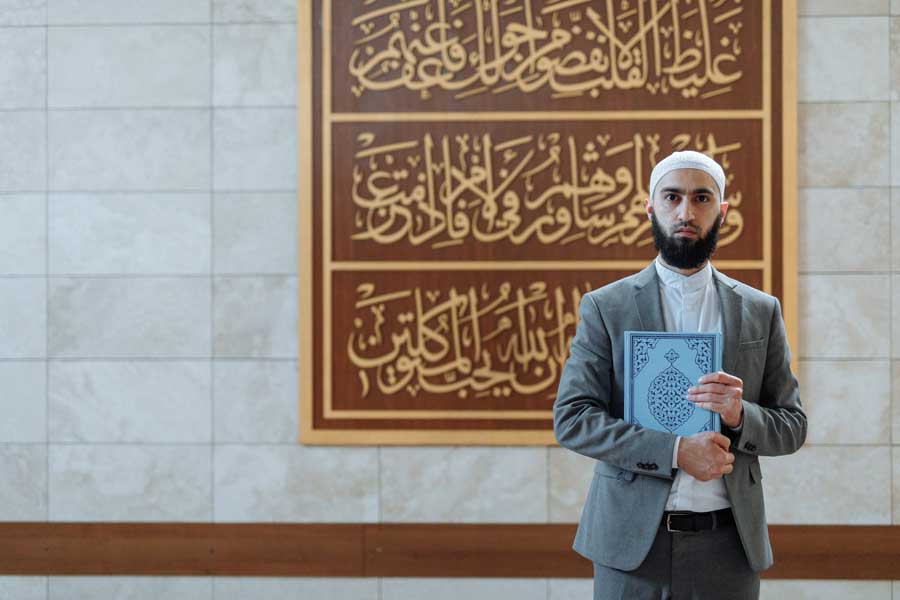 Hearts can change. Yes, they can become hardened, but they can also be softened. Yes, they can be sealed, but they can also be expanded. We must ensure that our hearts are at the right place, especially in times of hardship; and we must always remember that Allah SWT is the Most Forgiving and the Most Merciful. Some methods to ensure a healthy spiritual heart is by performing actions that strengthen our relationship with Allah SWT like making dhikr, praying, reading Qur’an, attaining Islamic knowledge, giving charity, and making du’a. This goes hand in hand with developing and acting at all times out of good character. May Allah SWT allow us all to carry pure, soft hearts filled with all wisdom, humility, compassion, and a love for Allah SWT. Ameen.