بسم الله الرحمن الرحيم

Tag: Haya

  • Protecting Generations: The Revival of Hayaa’ (Modesty)

    Protecting Generations: The Revival of Hayaa’ (Modesty)

    The Arabic word hayaa’ is a powerful and rich word with extensive meanings. Loosely translated as “modesty,” hayaa’ is linguistically linked to hayaa (life, to be alive), and the lack of hayaa’ is a lack of life in one’s spiritual heart. Hayaa’ conveys dignity, modesty in thought, character, and appearance, and it reflects true faith. It includes the soul’s discomfort with a shameless or immoral deed or situation, and it compels the believer to abstain from indecent actions, so common and pervasive in the world today, online and offline.

    To have modesty, thus, is to restrain oneself from shameful, prohibited acts provoked by base desires, and the trait of hayaa’ distinguishes human beings from animals which act solely out of instinct. Hayaa’ includes the fulfillment of peoples’ rights, a trait that would solve numerous problems of oppression, injustice, and corruption in the world today. The trait of hayaa’ keeps one from sinfulness and is both part of a human’s natural disposition as well as one that is learned through knowledge, reflection, and practice.

    Prophet Muhammad (s) reportedly said about Adam and Eve, “Indeed, the believers feel shame before their Lord because of the sins they have committed. Then, by Allah’s bounty, they know how to redeem themselves. They know they can put things right by seeking forgiveness and repenting to Allah” (Mustadrak al-Hakim).

    Contrast the trait of hayaa’ with the shameless attitude of some individuals, about whom Allah said, “Whenever they commit a shameful deed, they say, ‘We found our forefathers doing it and Allah has commanded us to do it.’ Say, ‘No! Allah never commands what is shameful. How can you attribute to Allah what you do not know?’ Say, ‘My Lord commands righteousness. Direct your worship straight to Him wherever you pray; call on Him; devote your religion entirely to Him. Just as He first created you, so shall you return’” (Qur’an 7:28-29).

    The Numerous Virtues and Blessings of Hayaa’

    In Islam it is known that hayaa’ has numerous virtues and blessings, including the following:

    A key to goodness — Hayaa’ is the key to all that is good, and it opens for individuals and society the doors of great spiritual elevation, dignity, and success. As one scholar said, hayaa’ is “among the greatest qualities, the greatest status, and the most beneficial” (Ibn al-Qayyim).

    Hayaa’ is iman (belief/faith) — The Prophet (s) said, “Hayaa’ and belief are paired together; if one vanishes, then the other vanishes too” (al-Hakim). He (s) also said, “Iman has some sixty or seventy branches. The best of them is la ilaha illa Allah [the shahadah], and the least of them is the removal of harm from the path; and hayaa’ is a branch of belief” (Bukhari).

    Prophet Suleiman (s) is reported to have said: “Hayaa is the structure of belief. If the structure is undone, all that is in it is lost” (Adaab al-Shari’ah, 277). Prophet Muhammad is reported to have said, “Hayaa’ is from belief, and belief leads to Paradise” (Tirmidhi).

    Hayaa’ is an attribute of Allah — Allah (SWT) is al-Hayiyy’ and as-Sitteer (the one who conceals something). Prophet Muhammad (s) said, “Allah is hayiyy’ and generous. When people raise their hands to Him (in du’a), it is beneath His dignity to send them back unfulfilled and disappointed” (Abu Dawud). “Allah is hayiyy and sitteer; He loves hayaa’ and concealment…” (Abu Dawud). At the same time, we keep in mind that “There is nothing like Him…” (42:11). While Allah (SWT) is described as Hayiyy’, our attempt to exemplify modesty does not resemble the attribute of God. We aim to conform to the attributes Allah commands of us, such as mercy, generosity, strength, beauty, and modesty. As one scholar said, “If anyone has hayaa’ towards Allah when obeying Him, Allah has hayaa’ towards them when they sin” (Madarij as-Salikeen).

    Hayaa’ is the Shari’ah of all prophets — “Among the early prophetic teachings that reached people is if you do not have hayaa’, then do as you please” (Bukhari). This famous hadith emphasizes that modesty is a universal prophetic teaching to all of mankind, taught by prophets throughout the millennia, and yet we are always in need of its revival in society. This hadith is not a command but rather a threat of consequences. In reality, the one who has no hayaa’ is going to do as they desire, even if it is harmful to their individual soul, to another person or persons, or to all of society. The revival of hayaa’, thus, is a revival of a teaching of all prophets.

    Hayaa’ is the quality of Islam — Prophet Muhammad (s) said, “Verily, every religion has a character, and the character of Islam is hayaa’” (Ibn Majah). Hayaa’ can be observed in the character of Prophet Muhammad, his wives and family members, his companions, and his greatest followers. One companion reportedly said, “Whoever has no shame before others has no shame before Allah” (Ibn Masʿūd). A great scholar of Qur’anic exegesis in later centuries said, “If the only benefit Muslims gain from other Muslims is hayaa’ that prevents them from sinning, then that is sufficient for them” (Ibn Kathīr).

    The Loss of Hayaa’ in Our Contemporary World

    Today, one observes the loss of hayaa’ in many parts of society, online and offline, with the simultaneous rise of subjective morality and self-worship. In practice, hayaa’ is disappearing so emphasis is put on superficial standards of beauty, vanity, and ego. Nudity has become rampant in all forms of entertainment (even for youth and children, at times), and profanity and inappropriate language has increased. There is the disappearance of etiquette and proper guidelines between the genders, and a “don’t judge me” mentality that sometimes translates to “don’t make me feel ashamed for what I’m doing.” There is also the increase in private communications and interactions that lead to prohibited relationships (or even cheating on the spouse and the resulting destruction of marriage), and so on and so forth.

    There is also an increasing sentiment among secular-influenced individuals today that everyone is to be “accepted exactly as they are” in the moral sense, even if what they’re doing is harmful to themselves and others. Acceptance of people isn’t equivalent to acceptance of immorality and self-destruction. One should ideally be accepting of people for who they are, being kind to them and wishing well for them. But that does not negate striving to help them overcome immorality, as we are all, at one time or another, in need of support and guidance in this life. There is nothing embarrassing about hoping for others to be guided to what is good, rather than accepting immorality as the standard for humanity. Ultimately, many of the problems in the world today stem from the loss of hayaa’, and many marriages are destroyed due to the loss. Many young believers end up in misguided and destructive lifestyles due to the loss of hayaa’.

    Islam Establishes and Revives Hayaa’

    Islam, on the other hand, as a criterion for objective moral values, includes hayaa’ and all decent and wholesome beliefs, values, attitudes, and standards. Islam offers a healthy, comprehensive system of life that channels feelings, thoughts, and desires to the healthiest output in action – one that is truly modest, for men and women, and for all of civilization, and one that is pleasing to Allah. Islam emphasizes guidelines and obligations in various societal interactions to preserve the hayaa’ of all generations. Some Muslims narrow down the consideration of hayaa’ to something like a college student struggling to avoid an interaction in private with someone of the opposite gender. But hayaa’ is not only about avoiding cyber-khalwa (private interactions of two individuals of the opposite gender) or late-night texts, or unnecessary conversations. It’s about protecting the two individuals and their loved ones for generations to come. Hayaa’ is about using the internet and all that it offers in a modest manner, knowing that Allah is watching. While we can recognize and utilize worldly advancements in technology, we also have to protect civilization and humanity’s future from the loss of hayaa’.

    Ultimately, what Islam offers is timeless, and yet because of society’s changing standards today and the predominant spread of secular values, Muslims will oftentimes feel like outcasts for exemplifying the beautiful standard of hayaa’. At times, even, Muslims may be mocked or insulted for living with modesty. However, for the sake of Allah, and for the sake of protecting society for generations to come, believers must hold on to hayaa’ and all the beauty of character that comes with it. For sure, modesty is a safeguard of virtue for the individual, the married couple, the family, and society.
  • Hadith 20 — The Concept of Haya’

    Hadith 20 — The Concept of Haya’

    An Excerpt from Commentary on the Forty Hadith of Imam Al-Nawawi
    Timeless Prophetic Gems of Guidance and Wisdom

    Abū Masʼūd ʼUqbah bin ʼAmr al-Anṣārī al-Badrī reported that the Messenger of Allah said: “Among the things that people have found from the words of the previous prophets was: ‘If you feel no shame, then do as you wish.’” (Related by Al-Bukhārī).

    Introduction

    Haya can be translated to mean modesty, shame, shyness, or bashfulness. The word haya is derived from the word “hayah”, which means life. Implicit in its meaning is that the person without haya is like a dead person . Islām encourages and treasures haya as it is one of the most important characteristics that a Muslim can have. Al-Imām al-Nawawī himself states: “All of Islām circles around this hadith”.

    The following are some aḥādīth which emphasize this great quality:

    “Haya and īmān are two that go together. If one is lifted, the other is also lifted” (Al-Hakim).
    “Haya is part of īmān” (Sahih Muslim and al-Bukhari).
    “Haya does not produce anything but goodness ” (Sahih al-Bukhari).

    Lessons
    A. Interpretations of this Hadith

    The text of this hadith can be interpreted in three different ways which do not contradict one another. Al-Imām Ibn Rajab points out two interpretations according to early scholars.
    The first interpretation of this hadith is that it a threat. Implied in the statement “If you have no modesty, then do whatever you wish”, is that “Allah SWT will punish you for it”. This mode of expression is well known in the Arabic language, and it is used as a form of threat. This mode is also used in the Quran for example: “Verily, those who turn away from Our āyāt are not hidden from Us. Is he who is cast into the Fire better or he who comes secure on the Day of Resurrection? Do what you will. Verily, He is All-Seer of what you do” [Sūrah Fussilat: āyah 40].

    In the second interpretation, modesty is used as a criterion in deciding on whether one is to do a certain act. The command here is to indicate permissibility. If you are thinking about performing an act which you have no reason to be ashamed of doing before Allah SWT or anyone else, then you may perform that act.
    There is a third interpretation given by Ibn al-Qayyim. He is of the view that the command is not about permissibility but rather a statement of fact. It means that if a person does not have any modesty, there is nothing to prevent him from doing anything. Haya is one of the most important factors that keep a person from committing a sinful act. If a person has no haya, he/she can do almost any evil.

    B. Manifestations of Haya

    Haya can be subdivided into natural haya and acquired haya. Natural haya is the modesty that every human being was born with through fitrah. An example of natural haya is reflected in the clothing people wear to cover their awrah. On the other hand, acquired haya is attained from awareness and realization of the glory of Allah SWT and His attributes.
    There are many manifestations of haya as mentioned by Al-Sheikh Jamāl Zarabozo in “Commentary on the Forty Hadith of Al-Nawawi”:

    i. Haya towards Allah SWT

    A Muslim should feel ashamed to have Allah SWT seeing, hearing, and/or knowing of something which displeases Him. This is especially when that Muslim is alone and out of the view of others. The awareness of Allah SWT should increase haya towards Allah.

    ii. Haya towards the angels

    A Muslim should feel ashamed to have angels, noble and dignified, in recording his/her actions that are unlawful and impermissible.

    iii. Haya towards other humans

    This is an essential characteristic that keeps people from harming one another and from performing indecent acts. A Muslim should feel ashamed to have other humans witnessing him performing an unlawful act, and acts that should provoke shame.

    iv. Haya towards oneself

    A person should feel ashamed when he performs acts that are shameful. Shame is the natural reaction after committing a sin. If he realizes that his haya level is low, he should improve it by remembering Allah SWT, getting closer to Him, and fearing Him.

    C. Challenges to Haya

    All of us are born with natural haya. However, this natural tendency can be spoilt by the environment and dominating false ideologies. For example, people can become corrupted such that they lose their natural haya and expose their awrah without feeling shame. Misuse of technology can have a negative and destructive impact on haya. It is important to be cognizant that modern western culture has greatly denigrated and distorted haya. It promotes adultery and fornication, immodesty in clothing, and other fawahish to the point that even homosexuality is accepted. Modern media, the entertainment industry, and the internet are all being used to taint and corrupt haya at all levels. […] This great concept of haya should be promoted through all possible means, at all levels by everyone whether they are educators, teachers, lecturers, parents, and duʼāt.

    If haya is distorted, īmān will be distorted as well. Recall the hadith: “Haya is part of īmān”. If haya is weakened, then the chance of committing sin will be higher. Furthermore, the delaying and/or neglecting of obligations will also be higher as well. Unfortunately, we Muslims borrow media material from the West without appropriate evaluation, censorship, or classification. Western entertainment and TV regularly display semi-naked people, violence, and other shameless behavior. Islāmic institutions and leaders need to create awareness of the harms of media, television, internet, and social media.

    D. Misusing Haya

    There are actually two types of haya. The first type is the one we have already been discussing and is the good and virtuous type. The second type of haya is actually blameworthy and is more accurately reflected by the word [خَجَل] . This means being timid and ashamed to speak or act for what is right. Thus, haya can sometimes be misused to justify neglect, indifference, or lack of concern of an obligatory act. For example, haya is sometimes used as an excuse for being silent or passive in the presence of falsehood or oppression, or for not encouraging good or discouraging evil. This is not appropriate as stated in discussion of Hadith 34, unless one expects more harm in speaking against wrong.

    Another example of abusing haya is to use it as an excuse for not seeking knowledge. In many Muslim communities, there exists a culture where asking questions regarding religious matters are viewed as being immodest or rude. Parents, teachers, and even professors add to the problem when they treat asking questions as a sign of immodesty or aggressiveness. Similarly, many students also become shy in asking question under the cloak of modesty. Such an attitude needs to be changed, since this leads to Muslims being deprived of better understanding of Islām.

    Haya can also be used as an excuse for not doing good deeds or acts. Here, a good deed is not done in front of others, even though the act is highly recommended or even obligatory. The person simply disregards the act citing haya. But this is a false meaning of haya, because it does not represent shyness in doing good deeds. We should not be shy or embarrassed to do good deeds in front of others because our intention is not to show off. Some examples of this phenomenon of using haya as an excuse are: Not giving sadaqah to a needy person in front of others, not removing a harmful object from the street or the path of other Muslims, or not helping a disabled person to cross the street. Good deeds often need to be done openly, even though it is preferred that they be done out of the view of others when possible.

    Conclusion

    Haya or modesty is a vital Islāmic concept that leads to much goodness in society. The different interpretations of this hadith enlighten us with many wisdoms and admonitions. We see that haya is a very important part of īmān and protects the Muslim from committing bad and indecent acts.

    It is essential that we guard our sense of haya similar to how we guard our īmān or belief. Modern western culture has corrupted and denigrated haya, and its influence has seeped into the Muslim community as well. Muslims need to be aware of such challenges and must exert their utmost effort to preserve haya in their homes, communities, and culture. At the same time, it is faulty logic to use haya as an excuse for not doing good deeds and actions. Not only is this blameworthy, but it also obscures the true definition and exemplification of haya.

  • A Piece of Cloth on Your Head

    A Piece of Cloth on Your Head

    The new Muslim woman, during her conversion process, goes through a transformation involving her core beliefs and worldview; this affects both her physical appearance and her mannerisms. This change is natural, and occasionally comes easily. However, it is one that has many personal and social repercussions: a shift in attire, make-up, accessories, and behavior. Everything transforms into an attitude of modesty that oftentimes clashes with what people are accustomed to. There comes a day during this transformation that the new Muslim woman feels that she no longer needs to wear tight-fitting clothing or parade around with plunging necklines to be a woman.

    Something inside her changes, and her thighs, breasts, waist, and body overall are no longer regarded as assets to be exhibited, but rather integral parts of who she is. She stops believing that “sex sells” and begins to ask herself, “What do I value?” Part of this process is the decision about wearing hijab, or the Islamic code of dress. Whether a woman wears it full-time or occasionally, it represents an attitude towards life and the externalization of a deep meaning and purpose in the life of the believer. A woman may have fullest conviction about wearing hijab as an emblem of her faith, of her dignity and modesty; or she may be working through the challenges of that important aspect of surrender to God, while that process has not yet reached its conclusion.

    Wearing Hijab – Tradition or Religious Conviction?

    When I lived in Egypt, one of the first things I noticed was the female appearance. While many women, alhamdulillah, were wearing hijab, some were wearing a pretty piece of cloth on their heads. I saw bows and a myriad of other decorations, and various colors and styles. It was then that I learned the difference between wearing hijab and internalizing its profound meaning, or merely covering your head with fabric.

    When I first arrived in Egypt from my native Colombia, I was advised to not go out in the streets without hijab, but I was not given an Islamic reason. Submission to Divine Will was not mentioned, neither was modesty or decorum, which is what Allah mentions in the following verse: “And say to the believing women that they should lower their gaze and guard their modesty, and not to display their beauty and ornaments except what [ordinarily] appears thereof; and they should draw their veils over their bosoms and not display their beauty…” (Quran, 24:31). Instead, I was told that in Egypt, some men treat women without hijab as prostitutes, so to avoid any harassment – especially considering my foreign appearance – it would be better for me to cover myself.

    This advice led me to reflect about dressing Islamically in Egypt, or any other country where doing so might be more traditional than spiritual. Some women cover their hair because this is imposed by their tradition, the customs of their country, because it is demanded by family members, or because they must camouflage themselves while in public or else attract attention. But the fact that they wear a cloth covering their hair does not make them modest or reserved. I saw women covering their tresses, but their garments did not meet the requirements of hijab.

    In the midst of this scenario, I remembered my sisters in Latin America who live in an opposite situation: there, to wear hijab on an everyday basis can result in loss of job, tension with, or rejection by, family, confrontation with peers — all because they feel a devotion to worshipping Allah and submitting to His Will. I know sisters who took their shahadah, testimony of faith, and the very next day, Allah gave them the strength to begin wearing hijab regularly. Others are just barely able to walk the path to finding that resolve, while there are still others who have been Muslim for some time, but they find that for varying reasons, they still cannot come to the conviction to wear hijab as a habit of daily living. They prefer to simply live and dress modestly, although they do not cover their hair. These sisters not only have to deal with their own spiritual development, but also the finger-pointing from Muslims who accuse them of lacking faith.

    Respecting Each Woman’s Journey of Submission

    Everyone must follow their path in life and make decisions per their situation. Every individual has his or her challenges and issues, both sisters and brothers. That is something we should all keep in mind because from time to time we forget that only Allah can judge intentions, and only He knows what is in the heart. Umar ibn Al Khattab (R) once said: “People were judged by the revealing of a Divine inspiration during the lifetime of Allah’s Apostle but now there is no longer any more [new revelation]. Now we judge you by the deeds you do publicly, so we will trust and favor the one who does good deeds in front of us, and we will not call him to account about what he is doing in secret, for Allah will judge him for that; but we will not trust or believe the one who presents to us with an evil deed even if he claims that his intentions were good” (Bukhari).

    The point is that hijab is not only a piece of cloth placed neatly over the hair, but much more than that. It represents submission, and in the case of converts, it is also a symbol of an internal process, an ongoing journey. We should never make assumptions about why a Muslim woman chooses to wear or not wear hijab. Intellectually, we can reflect on the impulse to cover the hair because of tradition, family or peer pressure, or duty, as distinct from observing the greater parameters of true hijab which emerges from eman and striving to surrender fully. As faith, modesty, dignity, and surrender manifest in the heart and in the mind, it is natural that the desire to cover the hair and dress modestly follows.

    Remember that Allah says in the Quran, “O children of Adam, We have bestowed upon you clothing to conceal your private parts and as adornment. But the clothing of righteousness — that is best. That is from the signs of Allah that perhaps they will remember” (7:26). The striving for righteousness is a lifelong dedication. And the transformation that a new Muslim woman experiences, in the beginning of that dedication, is profound and challenging, especially in our society, and the decision to wear hijab is an integral part of that. That process can be long and rigorous like a marathon, or it can be a sprint. Whatever it is, we must recognize that hijab is much more than a cloth on our head to cover the hair; it is an expression of one’s deepening faith, of modesty, dignity, and spiritual grace.

  • A Quest for Understanding  the Islamic Moral Code

    A Quest for Understanding the Islamic Moral Code

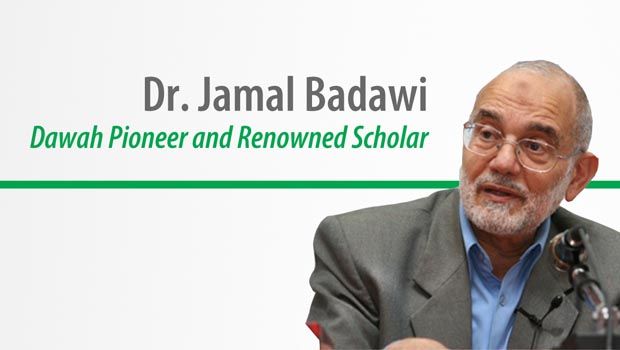
    Dr. Jamal Badawi is one of the foremost Islamic scholars of North America. Currently, he is “Professor Emeritus” at St. Mary’s University in Halifax, Nova Scotia, Canada. During its May, 2008 Convocation, Saint Mary’s University granted him an Honorary Doctorate of Civil Law in recognition of his promotion of “a better understanding of Islam” and contribution ” to civil society around the world.”Dr. Badawi is the author of several works on Islam, including books, monographs, and articles. Some of his works have been translated into several languages. In addition to his participation in lectures, seminars, and interfaith dialogues in North America, Dr. Badawi has been frequently invited as guest speaker on Islam in nearly 38 other countries. He serves on the boards of the Islamic Fiqh Council of North America, The European Council of Fatwa and Research and the International Union of Muslim Scholars.

    The main objective is to build or create an Islamic personality, a personality which lives by its deep faith in God and in loving, conscious submission and commitment to God.

    Q What are the major objectives of the Islamic moral code?

    A The main objective is to build or create an Islamic personality, a personality which lives by its deep faith in God and in loving, conscious submission and commitment to God. We want to create a personality which is nourished by divine love and restrained from temptation by the fear of displeasing God, a personality which understands and accepts its role and mission on earth as trustee of God. This would give the personality a sense of responsibility, sense of direction, clarity of vision and meaning to their existence on earth. Now if we have a large number of people who meet these criteria or are close to it we would form an Islamic community which is involved in ordaining the good and fighting off the evil and injustice in society. In other words it is not just individual salvation or individual moral elevation but something that needs to be done at a collective level within society in order for the human race as a whole to participate in fulfilling this responsibility of being the trustee of God. There is no wonder that we find that the last Prophet of Islam, Prophet Muhammad (pbuh), said in a famous hadith narrated in the collection of Malik “I was sent in order to perfect moral quality to bring perfection, completeness and comprehensiveness into the highest and most noble moral qualities that have been preached by all the prophets.”

    Q How does the Islamic moral code relate to faith?

    A Some people tend to feel that faith and moral conduct don’t have a one-to-one type of relationship. This is not so in Islam as any reform at an individual or social level must start with moral transformation. Some might appeal to patriotism, the power of the law or fear of punishment by political authorities to encourage people to practice or follow the moral code. However, if one really wants to have any profound moral elevation or a reform which is not temporary, the civilization must be concurrent with the moral code that was revealed by God. We find that the Quran has its own unique way of interpreting history. One verse in the Quran (13:11) says “Verily never will Allah change the condition of a people until they change it themselves [with their own souls].” We can talk about change in society, building this institution, removing that institution or reforming that system but it is all superficial until people change what is in their own hearts and their own commitment to God. Another place where this is found in the Quran is in (8:53): “Because Allah will never change the grace which He hath bestowed on a people until they change what is in their [own] souls.” This shows an interpretation of history and the rise and fall of different civilizations in the past and how many times, just like our present civilization, where God endows people with plenty of blessings, resources, richness and luxuries that no previous generations enjoyed but it all can be destroyed because this blessing can be changed if people change themselves and become ungrateful and disgraceful.

    We find that Prophet Muhammad (pbuh) answered the question of morals and faith in a very eloquent way in a few of his sayings. In a narration by Ahmad, one time the Prophet asked the people around him “Who among you is the most beloved by me and who will be the closest to me on the Day of Judgment?” They asked “Who would it be?” He replied “The best of you in manners and morals?” In the collection of hadith by Al-Tabarani the Prophet said that “Among the believers who are most complete in belief are the best in behavior.” In this case faith and behavior go hand in hand. In dozens of places, whenever the Quran addresses faith it also addresses good deeds. An example that is found in the Quran is “those who believe and do righteous good deeds.” Another saying by the Prophet is that “Faith is not something that comes by wishful thinking but is something that is entrenched in the heart and is confirmed by deeds.”

    Q What is the relationship of the moral code to acts of worship?

    A A Muslim’s entire life can be a continuous act of worship so long as it is done with good intentions and within the boundaries that God has placed. In Islam there are five pillars and we will take prayer, which is preformed five times a day, as an example. If one tries to relate prayer to morals one will discover that what is meant by them is not the mere ritual or movement but the whole act of prayers is a type of moral training. Prayers are moral training on a conscious loving submission to the will of God, humbleness before God, and a reminder for the individual to keep away from evil. In the Quran in (29:45) it says, “Prayer restrains from shameful and unjust deeds; and remembrance of Allah is the greatest [thing in life] without doubt. And Allah knows the [deeds] that you do.” In another collection of hadith by Al-Bazzar it is reported that God says that “I accept prayers only from those who humble themselves before My Glory, did not oppress any of My creatures, those who did not spend the night [repenting] while insisting on something wrong and immoral that they have done, those who remember Me during the day, those who are kind and merciful to the destitute, wayfarer, the widow, and those who are compassionate to those who are suffering or injured.” This is the essence of what is meant by the prayer.

    Another pillar of Islam is the zakah, or payment of poor’s dues. The intention behind zakah is not a kind of tax that one has to pay reluctantly and grudgingly. Zakah in essence relates to morality because it is a religious duty, not just something that is imposed by the state. It represents the expression of love, compassion, and mutual concern towards people who are less fortunate. An example of this is found in the Quran in (9:103): “Of their goods, take alms, so you might purify and sanctify them.” It purifies from the feeling of selfishness and lack of concern for others. Again the same term used for charity is used not only for paying money to those who are needy but as the prophet of Islam says “A good word is also an act of charity.”

    Fasting is another pillar of Islam and again the idea behind it is not only to temporarily restrain one’s self from food and drink from dawn to sunset. Like the Prophet said that some people fast and the only benefit they get from their fast is hunger and thirst, while the main moral lesson in fasting is training of the person to permanently restrain from evil. This is why the Quran in (2:183) says that “Fasting is prescribed to you as it was prescribed to those before you, that you may [learn] self-restraint.”

    Finally, hajj, the pilgrimage, is not about traveling and wearing specific clothing and going through certain rights. Pilgrimage is full of lessons of moral behavior [such as] patience, and the meeting of roughly two million people in the same place going through the same difficulties and being patient with one another. The Quran in (2:197) requires there be no argument or indecency during the pilgrimage. If we look at the acts of worship which are purely acts of devotion and worship aside from the rest of a person’s life, we find that the connection between worship and the moral codes is so strong that they are just inseparable.

    Q What is Islam’s stand on people who are active in their acts of worship but their personal behavior does not seem to be consistent with their apparent devotion?

    A The Quran does not separate belief from actions. From an Islamic point of view the lack of practice of the moral code in one’s life is an evidence of weak faith regardless of what the person claims to be. The real evidence of faith is its translation into actions and real concrete behavior on the part of the individual. Answers to this question can be found in some of the beautiful sayings of Prophet Muhammad (pbuh). Some people mentioned to the Prophet “Such and such woman prays a lot, pays lots of charity, and fasts beyond the minimum required fasting; however she seems to have the habit of hurting her neighbors with her tongue.” He replied, “She is in the hellfire.” All her worship did not make up for the lack of moral behavior. Then they asked him about “A woman who prays the minimum and a little bit more, doesn’t fast as much, and she doesn’t pay as much in charity (all the charity she can give are small pieces of cheese) but she doesn’t hurt her neighbors.” He said “She is in paradise.” So in this case the woman made less acts of worship but there was still clear evidence of faith.

    In a narration by Muslim, Prophet Muhammad said to his companions, “Do you know who is truly bankrupt?” They answered that the bankrupt one is someone who doesn’t have any money or property. He replied “No the one who is really bankrupt is the one who comes in the Day of Judgment with impressive things in his record like prayers, charity and all that and he cursed and swore at such and such a person, made false accusations against such and such person, he usurped unjustly the property of such and such a person, killed such and such person and beaten such and such person. All this person’s acts of credit will be taken and given by way of retribution to those whom he wronged until all the deeds that should have helped him get into paradise are exhausted and when there are still people who have been wronged by him who did not get their rights, then God will take from their evil deeds and add them to his own till he is thrown into the fire.”

    In another collection of hadith by Al-Bayhaqi, Prophet Muhammad said, “Good character and moral conduct melts sins and mistakes as water melts ice.” We all know we are sinners but by good deeds we can reconcile ourselves to God. Actually in this hadith he was echoing a verse in the Quran which says “Good deeds wipe away sins.” The Prophet continued that “bad character spoils good deeds just like vinegar spoils honey.” Like I said earlier, we are not saying moral character and good behavior is a substitute for faith as one can act nicely but because of rejection of faith or God, he could be in trouble. Neither one is a replacement of the other; both should go hand-in-hand.


    Q Should moral codes be updated to take into consideration new circumstances or contemporary approach?

    A If what is meant has to do with updating the fundamental principals or foundations of the moral code then the answer is definitely no. If what is meant by this is the extension of the application of the moral code or adapting the application, not the principle, then the answer is yes. When we talk about the fundamental injunctions as explained in the Quran and the sayings and deeds of Prophet Muhammad, the source of this information is revelation which comes from God. If any human being says that we are more up-to-date than God, this means they are claiming knowledge that exceeds the knowledge of God. The point that is to be made is that the basic principals that come from revelation are not bound to time. No human being, no institution religious or otherwise, no group of scholars can meet in a convention and decide to do this or that. Indeed if we open the door for this kind of relativism of our moral principles, then if people’s biases and deviations go down a certain way, then the moral standards would follow the same path and we would have nothing firm to stand upon. Islam tells us to hold firm to the revelation of God as it contains ultimate wisdom. And instead of lowering the morals, let’s elevate people’s moral behavior so that they come close to these standards. Islam is in no way against dynamic change in society; but [at the same time], if we start tampering with fundamental principles, we will have no structure and no foundation to stand on.