
What trait of character is a mark of faith and pleases Allah SWT so much so that the individual with this trait is forbidden to enter hell? This attribute guarantees that one is granted a share of goodness. It is counted as a charity whenever one acts from this trait. And this attribute of character beautifies everything that it touches. What is it? Honesty, courage, patience, tolerance, respectfulness, sincerity…?
The following story is illustrative. A teenage boy named Ali was playing soccer in the park and put his jacket on a bench. A few minutes later another teen walked by and took the jacket as the bench was hidden from view by a row of trees. This teen had begun hanging out with a tough crowd of kids who shoplifted from local stores and slit tires just for fun. Later that night, wearing the stolen jacket, he was retracing his steps on his way home and passed by the bench. He was surprised to see a rock on the bench where the jacket had been. As he got closer, he saw that a piece of paper was tied neatly by thin rope around the rock.
He removed the rope and started reading the note that was written on the paper. “To the person who took my jacket this afternoon — I was surprised when I came to get my jacket and found it was gone and at first, I felt angry. My friend was also angry and told me to report it to the police. I told him that my jacket was old and had a lot of wear and tear, so I didn’t think that it was taken because it had value. I also remembered what my grandma taught me from the time I was young. She said to always be grateful for whatever you have and love for others what you love for yourself. So, I’m choosing to believe that you have been having a tough time and were unable to buy a jacket for the winter. Maybe if I were in your position, I would be desperate and do the same thing. God knows. So, I would like you to have the jacket and consider it a gift from me to you. Keep warm and safe. The only thing I ask is that you remember to be grateful for good things in your life and want the same for other people.” The teen was flabbergasted and didn’t know what to think. Part of the way he justified doing bad things was to tell himself that people were good-for-nothing and deserved whatever they got like having their jacket stolen or tires slashed. He continued on his way home, folding the note, and putting it in the jacket pocket. He felt a bunch of coins in the bottom of the pocket and counted them. He stopped at a convenience store with the four dollars of change, got a sandwich and took it to the checkout. The cashier recognized the teen as one of the group of boys who sometimes came into the store and made trouble. He gave him a nasty look and grumbled something under his breath. Ordinarily this would have set the teen off, and he would have reacted angrily to the cashier. But this day had been an unusual day and he found himself pausing and feeling no anger. He took the change from the cashier and said, “Thanks, man, have a great night” and then he walked out into the chill of evening.
As he crossed the street, he noticed a man on the corner with a sign that said, “Will work for food.” The teenager saw that he was wearing only a thin T-shirt. He took off “his” jacket, walked over to him and handed him the just-purchased sandwich and the jacket. The homeless man was speechless, but as the teen walked away, he heard, “God bless you.” And for the first time in a long time, for as long as he could remember, the teen felt grateful, for the jacket that he could give to someone who needed it more than him, for the chance to give his sandwich to someone who was really hungry, but mostly for the kindness of the person who wrote him the note.
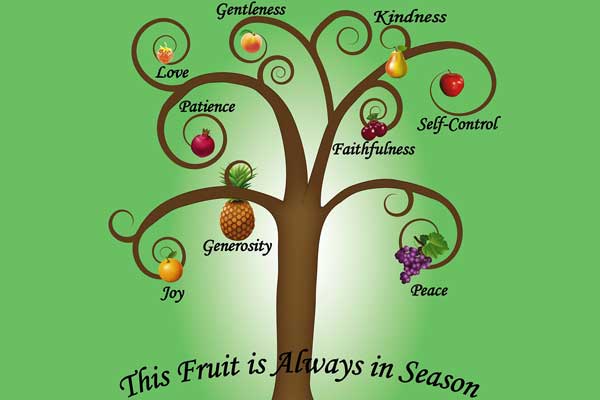
The trait, as conveyed in sayings of the Prophet (s), that is a mark of faith (Sahih Muslim), pleases Allah SWT so much so that the individual with this trait is forbidden to enter hell (al-Bayhaqi), that guarantees that one is granted a share of goodness (al-Tirmidhi), that is counted as a charity (Sahih Muslim) whenever one acts from this trait, and that beautifies everything that it touches (Sahih Bukhari) … kindness.
In the above story, kindness was expressed in the note left for the teen. That kindness softened something in him. Maybe the kindness had a positive effect only for that one day. Or maybe it started a trajectory of conscience and determination to change his life for the better.
Even Animals Extend Kindness
We don’t typically think of animals as acting out of kindness. But even in the animal kingdom, there are many examples of kind, empathetic behavior. There are numerous videos online of animals saving other animals. In one snippet, a dog jumps into a small river to retrieve a branch. He grabs it in his mouth but then gushing water pulls him into a chasm between two formations of rock. He is clearly struggling in the turbulent water. Another dog is standing on one of the rocks and as the dog in the water is passing by, with the branch still in his mouth, the dog on the rock grabs the other end of the branch and pulls the water-logged dog to safety atop the rock. In another clip on the video, two racoons are trying to rescue a third racoon who has fallen over a wall. One racoon is behind the other on the high ground at the top of the wall and has the other racoon’s leg in his mouth to anchor him and keep him from falling while he leans way over the wall to pull the third racoon up. The one hanging over the side of the wall gets the stranded racoon by the nape of the neck and the two racoons on the ground above the wall pull the third one up the wall to safety.
One might think that only animals of the same species would think to help another. But that is not the case. According to The Science Explorer, “Dolphins have been known to rescue swimmers from sharks and guide stranded whales back to the sea”. Other examples include a monkey who adopted a stray puppy, an orangutan who saved a baby bird from drowning, a male Labrador who took on the care of orphaned ducklings.
Believing in the Goodness and Kindness of People
Being kind obviously benefits the recipient of kindness. But it also has benefits for the person extending kindness. In one study done at the University of British Columbia, participants were individuals afflicted with anxiety, to the extent that it negatively impacted their lives. They were instructed to do six or more acts of kindness, however small, each week for a month. They self-reported at the end of the four weeks that they had more positive moods, greater satisfaction in their relationships, and a decrease in avoidance of social interactions. In another study at UC Berkeley’s Greater Good Science Center, half the participants “reported that they feel stronger and more energetic after helping others; many also reported feeling calmer and less depressed, with increased feelings of self-worth,” said Christine Carter, a Senior Fellow at the center.
Kind people bring out the good in other people. There are many people who, through their experiences, have become disillusioned, cynical, even bitter. The fact is that you can be the reason that someone once again believes in the goodness and kindness of people. Allah SWT says in the Qur’an, “Could the reward of good be anything but good?” (55:60).