
بسم الله الرحمن الرحيم

Tag: empowering muslim women

  • The Burqa Ban: Déjà Vu from the Dark Ages

    The Burqa Ban: Déjà Vu from the Dark Ages

    During the Dark and Medieval Ages of Europe, religious intolerance was encouraged by the Catholic Church as well as the various European kingdoms scattered across the continent. They would often call for “inquisitions,” where Catholic militias and gangs would purge Jews, Muslims, and non-Catholic Christians from their localities. Minorities were either expelled, killed, or forcibly converted to Catholicism. Many were also forced to live in ghettos; in fact, the word “ghetto” originated in Italy to describe a Jewish locality in Venice. Although the inquisitions have long ended in Europe, a new approach for a similar objective — to root out the beliefs, traditions, and/or symbols of the “other” — has been undertaken, and intolerance is now resurfacing.

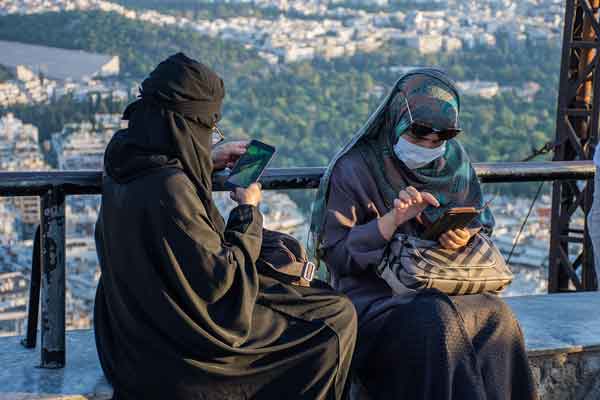
    Today, several European countries including Austria, Belgium, Denmark, France, the Netherlands, and most recently Switzerland, have imposed complete or partial bans on the Islamic dress for women, namely the hijab, niqab, and burqa. In these states, fines or jail time has been prescribed as punishment for those wearing a burqa or niqab in public and wearing even the hijab at a university or school is enough to warrant removal from the institution. Claiming concern about security, female liberty, and secularism, many European countries have given Muslims, and Muslim women in particular, two practical options: integrate into European society by compromising their faith or practice their faith elsewhere to avoid the punishment. Similar to the Medieval Ages, Europe today refuses to validate and give full rights to “others,” and instead of encouraging the diversity and freedom of expression that secularism champions, it has given Muslims the option to either give up the tenets of their faith or face the consequences — a dangerous déjà vu from the Dark Ages.

    The Claim of Security

    One of the most widespread claims against the burqa or niqab being worn in public is that they are a security concern. In April of 2017, Paul Nuttal, a now-former member of the European Parliament representing the United Kingdom Independence Party, claimed that “if CCTV is to be effective, in an age of heightened terror, you need to see people’s faces.” Mr. Nuttal was a vocal advocate for a ban on burqas and niqabs in the United Kingdom throughout his tenure. However, when asked to provide data as to how effective a burqa ban would be, The Home Office, Scotland Yard, and the National Police Chiefs Council all told Fact Check they were not aware of any statistics showing the proportion of people who cannot be identified on CCTV, or any records of the reasons why. David Videcette, a former officer with Scotland Yard’s Anti-Terrorist Squad, asserted that burqas did not pose a security threat, stating that “CCTV generally often just shows people’s bodily movements and what they did somewhere, as opposed to identifying them facially.” Instead of providing increased security, the burqa bans may be emboldening those who see Muslim women as targets for harassment. The Collective Against Islamophobia in France stated in a 2011 report, the same year that France imposed the burqa ban, that 94 percent of victims of anti-Muslim physical and verbal abuse are women, and over 84 percent of all reported Islamophobic acts are targeted at women. The report also stated that the increasing Islamophobic attacks are often aimed at Muslim women who are singled out because they are wearing a hijab, burqa, or niqab. Interestingly, since the start of the COVID-19 Pandemic, European countries such as France have imposed strict guidelines for the required use of face masks in public and no security concerns were raised by either politicians or the populace.

    The Claim of Female Oppression

    Many European politicians have also claimed that the burqa is a symbol of female oppression imposed by Muslim men. Former French president Nicolas Sarkozy, who is often seen as the pioneer of the “burqa ban” movement, stated in 2009 that the burqa is “a problem of liberty and women’s dignity,” before also stating that the burqa is “not a religious symbol, but a sign of subservience and debasement.” Several European politicians have made similar claims. Ironically, these self-portrayed champions of female liberty refuse to take into account the opinions of those who they claim to be liberating. In all of the “burqa ban” debates in European parliaments, not one burqa- or niqab-wearing Muslim woman was consulted, which makes it difficult to take at face value the seemingly good intentions of these politicians. It has indeed been mostly men creating legislation regarding the manner in which a woman dresses — a major issue that modern feminists should oppose and bring to light. Moreover, the European Court of Human Rights out rightly rejected the argument that a burqa ban was necessary for liberating women, commenting that “A State Party cannot invoke gender equality in order to ban a practice that is defended by women.” The applicant in that particular case asserted that she wore the niqab voluntarily like the vast majority of Muslim women who wear the burqa and niqab did. If European politicians are actually concerned for the rights of Muslim women, perhaps they should consult some of the “victims” before speaking for them.

    The Claim of Secularism

    Perhaps the greatest element of irony in the arguments of those who want to ban the burqa or niqab being worn in public is the claim of defending the values of secularism. European politicians such as Mr. Sarkozy have often stated their intention to “protect secular values” and maintain the separation of church and state when imposing bans on hijabs in schools and universities. However, even a superficial analysis of the tenets of secularism shows that the freedoms of religion and expression are well supported and encouraged in a secular society. In openly secular societies such as the United States, for example, the French burqa ban was strongly condemned. Former spokesperson of the State Department, Philip Crowley, bluntly declared that “We [The United States] do not think that you should legislate what people can wear or not wear associated with their religious beliefs,” before further asserting that “in the United States, we would take a different step to balance security and to respect religious freedom and the symbols that go along with religious freedom.” Furthermore, Article Nine of the European Convention of Human Rights addresses the freedoms of religion and expression, giving the right to practice one’s religion “in public or private, through worship, observance, practice, and teaching.” Amnesty International, in response to a ban on face veils in Belgium, explicitly stated that it “would violate the right to the freedom of expression, and of religion, of women who choose to express their identity or their beliefs in this way.” When Switzerland moved to ban the burqa in March of 2021, Ravina Shamdasani, the United Nation’s Human Rights Office spokeswoman, expressed her dismay at Switzerland “joining the small number of countries where actively discriminating against Muslim women is now sanctioned by law.” She further stated that the move was “deeply regrettable.”

    For years, European politicians have claimed that the burqa ban is in the interest of security, women’s rights, and the values of secularism. However, as a study by Shaira Nanwani of Emory University found, “the burqa ban is disproportionate to both of its stated aims of promoting gender equality and promoting public safety.” Not only does the ban fail in its alleged aims of promoting security and female liberty, it is also clearly not in line with secular values. The upholders of secularism, especially feminists, must now work to save secularism in the cradle which birthed it — Europe. Several European states have sent a strong message to Muslims: give up your religion or face the consequences. This is the same message that Europe sent to Jews, Muslims, and other minorities during the Dark and Medieval Age Inquisitions. Given that none of the stated objectives of the burqa ban have been achieved, it is time to wonder if modern Europe’s motives are the same as they were all those centuries ago.
  • For Muslim Women, Islam is Empowerment, Not Oppression

    For Muslim Women, Islam is Empowerment, Not Oppression

    As I stare at my laptop post-election day, typing this article about Muslim women, tears cloud my vision. For the first time in history, not one, but two Muslim women have been elected to Congress. One is Rashida Tlaib, a Palestinian-American woman from Michigan, and the other is Ilhan Omar, a Somali-American, hijab-wearing woman from Minnesota. Omar started her acceptance speech with “assalamu alaikum.”

    For the first time in many years, when I look around today at influencers and change-makers, I see people who look like me — Muslim women in Congress, Muslim women in magazines, Muslim women in advertisements, Muslim women on billboards, Muslim women in the Olympics, Muslim women in spaces where we were marginalized and largely ignored for many years. This does not mean that Muslim women need to seek validation from a power-driven society to be heard and seen. What this does mean is that Muslim women have a compelling voice and viewpoint; that Muslim women are an important thread in the fabric of society; and perhaps, most importantly, Muslim women are empowered, not oppressed, by our religion.

    Giving Voice

    With the contentious issues surrounding the Kavanaugh hearings, the disheartening scandals involving a number of Muslim leaders, and the grievous trauma of abuse and violence experienced by women around the world, the struggle to hear the voices of more than half the world’s population continues. The Women’s March, celebrations such as International Women’s Day, and the hashtag campaigns of #MeToo, #MWD, and #CanYouHearUsNow? are all publicized powerhouse statements of women’s achievements and calls to action. Along with these campaigns, we have seen a deluge of articles, blogs, and lectures that address what it means to be a woman in today’s world and that ask the perennial question of why the rights of women are so often denied.

    Unfortunately, too many people in our own Muslim communities respond to these questions with a shrug, and sometimes wonder, or even ask out loud, “why does it matter?” These issues about women and women’s rights matter because according to the World Health Organization’s statistical data, every 15 seconds a girl or woman somewhere in the world is assaulted, abused, or raped; because more than a third of all women worldwide (35.6%) will experience physical or sexual violence in their lifetime; because every year, 60 million girls are assaulted on their way to school; because in some parts of the world, a girl is more likely to be raped than to go to school (WHO, 2017); because 38% of all murdered women are killed by their partner (London School of Hygiene & Tropical Medicine, 2013); because women perform 66% of the world’s work and produce 50% of its food, but earn only 10% of its income and own less than 1% of its property.

    Until we acknowledge this reality and work daily towards changing it, girls and women will continue to be victims of violent and sexual assault. They will continue to be underappreciated for their work and contributions to families and communities, and they will continue to be denied opportunities to reach their full potential. We want to raise daughters who will be judged on the trails they blaze rather than the fashionable blazers they wear. We want our daughters to live in a reality where they can confidently say that smart is better than cute, in which they see the beauty that exists within themselves and refuse to succumb to a definition of womanhood that stymies their dignity and strength. This would be a world where equality isn’t about women striving to be like men, but about women recognizing that their value stands both on its own female merit and on the worthiness that Allah SWT endowed all humans with. In such a world, females would not be judged as a lesser gender nor would they be forced to feel diminished or powerless.

    A Religion of Empowerment

    Proudly proclaiming that Islam is a religion of empowerment for women is neither an empty statement nor a public relations campaign. Looking to the Quran and the Sunnah, we are often reminded that empowerment of human beings is divinely ordained. The reminder of la hawla walla quwattah illa billah, there is no transformation or power except by Allah (Sahih Muslim), is firmly rooted in the recognition that our definitions and pursuit of self-empowerment as Muslim women must only come from Allah and His guidance. From the punishment alluded to for those who violate the sanctity of an infant girl’s life in Surat At-Takwir, in which the practice of female infanticide is clearly condemned (81:8-9), to the verses of Surat Al-‘Ahzab, where Allah (SWT) promises “forgiveness and a great reward” for those who believe, regardless of gender (33:35); to the beautiful example of the Prophet (pbuh) and his respect and love towards the women in his life, including those in his family as well as the female companions of his ummah — we find our empowerment in a faith that demands justice for all, and highlights the beauty of transformative action fueled by the strength of faith. As a Muslim woman, the way I dress, the way I pray, the way I act, and the way I live my life are all a direct response to the commandments of my Lord. I will not limit the dignity that Allah (SWT) has blessed me with by conforming to humanly defined boundaries of womanhood.
    Islam provides the ultimate definition of equality, encompassing both faith and deeds. In Surah an-Nahl, Allah (SWT) reminds us, “Whoever works righteousness, man or woman, and has faith, verily, to him [or her] will We give a new life, a life that is good and pure; and We will bestow on such their reward according to the best of their actions” (16:97). Since the Quran and the Sunnah are so clear, so simple, and so direct in stressing the equality of men and women regarding belief and deeds, why do we have so many discussions today about the definitions of womanhood and female value? Why are there so many heated debates about the concept of feminism, a word that admittedly has come to represent negative ideas such as hatred of men by a faction of feminists, but means, in its straightforward definition, “the advocacy for women’s rights”? Why such hostility toward that advocacy when it is integral to our faith to fight against oppression of any vulnerable community? Why are there still so many questions swirling about what a woman should or should not do, what she should or should not say, how she should or should not act? Why do gender studies at the university level include a litany of classes such as Women’s Studies, Women in Islam, Women Throughout the Ages, etc., rather than Men’s Studies or Men in Islam?

    The Impact of Women

    The answer to these questions is simply that historically women have been oppressed and denied their full rights. For those in the faith community, there is an additional answer— the subject of women’s rights is fascinating because women are the bearers of future generations. The impact that one woman can make on generations to come is more powerful than even we, as women, may recognize. The venerable status of the mother in Islam is indisputable, but it’s not only the child-bearing, nurturing, and rearing that gives a woman so much influence. Think of Prophet Adam (pbuh) and his wife Hawa (RA). Their marriage relationship provided mutual tranquility and comfort, setting the foundation for the first family on earth. The evolution of strong women continues in the story of Hajar (RA) and the strength of character that she maintained when left in the desert with her infant. Upon realizing that this was a commandment from Allah (SWT), she willingly put all her trust in His grace and did not doubt that He would protect her and her child. This mother’s purity of devotion allowed her to raise a child who echoed that same trust in Allah when, years later, his father was commanded to sacrifice him. And think of Maryam (RA) who inspired her guardian, Prophet Zakaria (pbuh), to make dua for a child of his own against all improbabilities when he witnessed this young woman’s simple faith in the power of Allah (SWT) to command the heavens and earth and to say “…Be and it is” (Quran 16:40).
    Great is the influence and the power wielded by the woman who is daughter, wife, mother, and most importantly, believer in Allah (SWT) and His commandments. Although it is imperative for us to know our history and to understand the impact of Muslim women in the past, it’s just as critical for us to know what we stand for today. Just as Khadija (RA) could balance the role of being a successful business woman, a respected community leader, an ideal mother to her and the Prophet’s (pbuh) daughters, and a supporting wife, so too do we have multiple roles to balance. I don’t pretend to speak for all Muslim women, but I do speak in the voice of our faith when I say we are important. We matter! We count! And we need to recognize our worth as ordained by God and not limit ourselves by any societal definition of who we are.
    Fulfilling Our Relationship with Allah (SWT)
    We, as Muslim women, owe it to ourselves and to our future generations to fulfill the sanctity of our relationship with Allah (SWT). We have the right to recognize who we are and to not sell ourselves short. We have the right to perform many roles and to accomplish many goals in this brief life. We have the right to think and to act for ourselves in accordance with the commandments of Allah (SWT). We have no need to compare ourselves to others and to feel like we just don’t measure up. We don’t need to denigrate ourselves or to act on human definitions forced upon us when Allah (SWT) has empowered and elevated us through Islam. Only Allah’s guidance can anchor us; otherwise, we are like an unmoored ship, bound to float aimlessly without a compass or a destination towards a greater ideal.

    When I think of strong women who inspire me, I think of those who have defeated adversity. I think of the women in our Islamic history like Asiya (RA), who lived in the most unjust of conditions but maintained her trust in Allah (SWT); Aisha (RA), the young wife who narrated thousands of hadith; Fatima (RA), the devoted daughter, mother, and wife; and the female companions, Nusayba, Somaya, and Shifa’ Bint Abdallah, who along with countless others, come to life through their struggles and their shared stories.
    I also think of women today — the single woman who struggles daily to make ends meet or wants nothing more than to start a family and settle down; the young university student trying to balance her deen and her dunya; the divorced or widowed woman struggling to raise her children in a world that acts like she’s invisible; refugee women who have lost parents, spouses, children, and homes; victims of abuse, trafficking, sexual assault, rape, and many other unspeakable horrors; the mother who must bury her child, whether after a school shooting in a state nearby or after incessant bombings in a country thousands of miles away. These are women who have or can overcome their hardships through their strong faith and love of Allah (SWT). As women continue to educate others, to faithfully raise children, to battle injustice, to help those who are needy or hurting, they work so hard to make a difference in their own lives while touching the lives of others every day. As Muslim women, we’ve been blessed with a sense of empathy that we need to share. We cry in joy together when we learn that our sisters have won a seat in Congress. And we cry in frustration together at the injustices of this world.

    Empowered, Not Oppressed

    When we think of women who inspire us to do more, to be better, and to achieve for His sake and out of love for Him, we are reminded to honor our Creator (SWT) by honoring ourselves. We must find and protect our dignity and self-respect. We must take time for ourselves, and to love ourselves for who we are. We are worth it—don’t listen to anyone who tells you otherwise.
    We are Muslim women. We work hard for the sake of Allah (SWT) in our homes, in our communities, in our masjids, in our schools, in hospitals, in corporations, and in governments. Today, we are featured on billboards, on televisions, in magazines and throughout the public sphere. Our sons and our daughters see us and hear us. We will not be silenced. We will not be left unheard. We will not be invisible.
    We are Muslim women, empowered by Islam, not oppressed by it.