بسم الله الرحمن الرحيم

Tag: climate change

  • Religion, Science, and the Climate Change Debate

    Religion, Science, and the Climate Change Debate

    “If you believe in God, then intellectually you cannot believe in man made global warming… You must be either agnostic or atheistic to believe that man controls something that he can’t create.” That is the statement of Rush Limbaugh, conservative radio talk-show host. The notion he expresses pits science against belief in God. Yet, it takes little analysis to collapse the argument. One example will do: A human being did not create his own nature; God did. Yet, religion aims to enlighten every individual as to how to purify and elevate, that is, control, his nature — restrain the lower impulses, effectively manage emotions, and ennoble his or her intentions, words, and deeds.

    Historically, two court trials have done more than anything else to advance the general understanding that science and religion are at odds with each other. The first, the Roman Catholic Church’s Inquisition of Galileo over his confirmation of Copernicus’ heliocentric position (that the sun is the center of the solar system), took place in 1633. The second, the Scopes Monkey Trial in 1925, brought to trial a school teacher who refused to comply with Tennessee’s Butler Act, which made it unlawful to teach, in public schools or universities, the evolution of man, that humans have descended from a lower order of animals. In each of these cases, scientific theories appeared to contradict the commonly accepted interpretation of scripture. However, a careful examination highlights the role of political, economic, and social factors that contributed much to the cases’ outcomes, overlaying the scientific opposition to the traditional understanding of biblical text. This essay examines these factors and then presents factors influencing the public debate around climate change. This essay attempts to discern the influence of external factors in the contemporary debate surrounding climate change while keeping the Inquisition of Galileo and the Scopes trial in mind.

    The Inquisition of Galileo

    Galileo’s work on heliocentrism was based on that of the Renaissance astronomer Copernicus, who seventy years earlier had proposed the model as an alternative to geocentrism. The Copernican model had raised questions about the interpretation of select biblical passages but did not provoke a response from the Catholic Church. In the wake of the Protestant Reformation however, the Catholic Church had become more forceful against dissenting opinions. So when Galileo wrote a letter to the Grand Duchess Christina, drawing upon the arguments of St. Augustine in support of an allegorical rather than literal reading of the scripture when astronomical or other physical matters or principles are mentioned in its text, Catholic theologians and the Holy Office responded with hostility and the controversy led to a first hearing of Galileo. A formal censure of heliocentrism followed in 1616, declaring it to be heretical.

    With the historical background of the Church’s attempts to obstruct the Protestant Reformation, we see in the case brought against Galileo additional factors of both political and personal motivation. In 1623, one of Galileo’s close friends ascended the papal throne as Pope Urban VIII. The new Pope was known to be an intellectual and a moderate on the heliocentric position. In his bid to revive the debate about heliocentrism, Galileo met with the Pope who granted him permission to write about heliocentrism, with arguments both for and against, while also cautioning him not to openly advocate a position favoring the heliocentric theory. Galileo’s subsequent work, Dialogue Concerning the Two Chief World Systems, featured three characters: Simplicio, a simpleton frequently caught in his own errors while defending the Aristotelian geocentric view; Sagredo, a Venetian nobleman who is open-minded and willing to listen to both sides of the argument; and Salviati, who advanced arguments supporting the Copernican model. Although Galileo concluded the dialogue with heliocentrism presented more as mathematical hypothesis than established scientific fact, he delivered some of the Pope’s statements from their earlier meetings through Simplicio, a disrespectful gesture that angered the Pope and led to the trial of Galileo in 1633. Galileo was forced to recant his heliocentric views and was subsequently placed under house arrest. As Lindberg and Numbers note in When Science & Christianity Meet, Galileo’s trial “was about disobedience and flagrant insubordination: the issues dealt with in the decree of 1616 [geocentrism and heliocentrism and which one was in harmony with Scripture] were not reexamined; its conclusions were merely reasserted” [that Galileo was to relinquish the theory of heliocentrism]. Scientifically, while Galileo’s telescopic observations had drawn attention to the flaws in Ptolemy’s geocentric model, it did not conclusively prove the heliocentric model. The trial was therefore viewed as pitting “biblical certainties against improbable scientific conjectures,” write Lindberg and Numbers.

    The Scopes Monkey Trial

    In the Scopes Monkey case, political and economic factors first led to the trial, yet fictionalized representations of the case later sketched the whole affair as nothing more than a conflict between science and religion. With the passage of Tennessee’s Butler Act in 1925, the American Civil Liberties Union (ACLU) actively sought school teachers who were willing to challenge the statute’s constitutionality in court. The offer piqued the interest of a civic leader in the small town of Dayton, Tennessee, who saw it as an opportunity to advance Dayton’s economic interests. Through his efforts, a local schoolteacher, John Scopes, took up the ACLU’s offer and not only did he admit to teaching evolution in class, but he also coached his testifying students in their answers. None of this was captured in the movie Inherit the Wind, which in spite of its systematic and substantive inaccuracies continues to be viewed as a documentary drama.

    The prosecuting attorney, William Jennings Bryan, who was drawn into the case due to his concerns about the implications of social Darwinism, was portrayed as a close-minded, hypocritical, and insincere person. The defense on the other hand was consistently portrayed as a voice of reason who was subjected to abuse and threats from fundamentalist Christians. Clarence Darrow, the attorney for the defense, argued that the Butler Act violated the principle of separation of church and state, as mandated by the Constitution, as well as impinging on John Scope’s academic freedom of expression. So while the trial dealt with political issues of the relationship between church and state and the individual liberty of teachers, due to the strong religious sentiments surrounding the trial, it was subsequently portrayed in a simplistic and reductionist way as a conflict between science and religion.

    The Climate Change Debate

    Unlike the issues of heliocentrism and evolution, climate change does not immediately evoke religious sensitivities, as the scientific proposition that there are changes in global and regional climate patterns, correlated with human activity, does not contradict any religious teachings. However, a significant number of Christians question the idea that humans can negatively impact the divinely created environment. The Pew Research Center conducted a survey in 2010 and reported that 50 percent of American adults believe that the earth is getting warmer due to human activity. Although the survey reported “only a modest effect of religion on attitudes about environmental protection,” that number changed significantly among members of different Christian denominations, ranging from 77 percent of Hispanic Catholics to only 28 percent of White Evangelicals. This difference is more likely related to the nature of the structure of authority within each of the denominations than their religious teachings.

    In the absence of a central religious authority, Evangelical Christians are greatly influenced by Evangelical political leaders who have historically opposed any government intervention on climate change. The Catholic Church on the other hand has been a long-time supporter of government action for the protection of the environment. In June 2015, Pope Francis released his groundbreaking encyclical on climate change, encouraging governments around the globe to take necessary action to help reverse conditions leading to global warming. While this effort drew praise from supporters around the world, conservatives in the U.S. were quick to criticize the pontiff’s climate change remarks. Rebuking the Pope, then Republican presidential candidate Rick Santorum remarked that the church is “better off leaving science to the scientists and focusing on what we’re really good at, which is theology and morality,” as reported in the Washington Post in June, 2015.

    Some of the other reasons for disagreement on climate change are not related to the science itself, but to the solutions offered to address the problem. The nature of the issue is such that individuals acting alone cannot adequately address climate change and so collective action involving the government becomes necessary. Being strong proponents of limited government, conservatives, therefore, oppose any government solutions to problems. In an interview with Bill Moyers, climate scientist Katharine Hayhoe, herself an Evangelical Christian, said, “So with climate change, we have people who we trust in our community… And these are the people standing up telling us it’s a hoax, it’s not real. Or even maybe it’s real, but it’s not a big deal and we don’t have to worry about it…” In an article by Chris Mooney on Slate.com, she is quoted as saying, “We have been given information about climate change that is not true. We have been told that it is incompatible with our values, whereas in fact it’s entirely compatible with conservative and with Christian values.”

    Economically, climate change differs from the controversies over heliocentrism and evolution in that it has a measurable economic impact on the lives of people, especially for those in the agricultural and livestock industries. In a recent example, after suffering from two years of severe drought, Cargill, one of North America’s largest beef processing company, closed its meat processing plant in Plainview, Texas, leaving behind 10 percent of that city’s population unemployed. Some who have suffered economic hardship from circumstances attributed to global warming have subsequently switched their opinion, no longer denying climate change. This was confirmed by a Pew survey in which 18 percent of respondents indicated that their opinion on global warming had changed based on their personal experiences.

    Scientific data on climate change alone, however convincing, does not necessarily provide the impetus to galvanize people into action. The potential to mobilize however, comes natural to religion and with more than eight-in-ten of the global population identifying with one religion or another, according to Pew, religion could serve as a broader platform to increase awareness of the perils of climate change and to highlight the ethical and religious responsibility that practitioners have towards the protection and conservation of the environment and its limited resources. This provides a rare opportunity to build alliances between religious and scientific communities for working towards a shared purpose – one that can potentially extend to other domains of perceived conflict and allow for a much-needed dialogue between the two.
  • Islamic Declaration on Global Climate Change

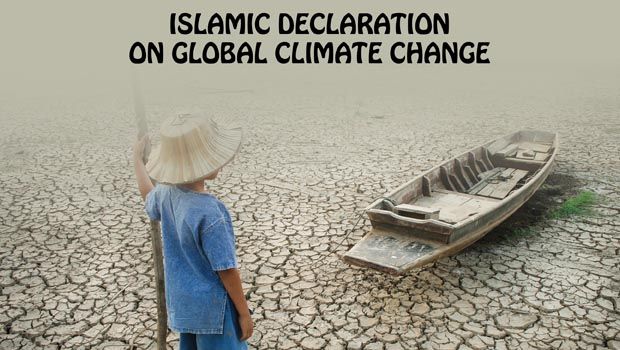
    Islamic Declaration on Global Climate Change

    Muslim scholars from 20 countries met for an International Islamic Climate Change Symposium on August 17-18, 2015 at Istanbul and issued what they term “An Islamic Declaration on Climate Change”, calling on the world’s 1.6 billion Muslims to do their part to eliminate dangerous greenhouse gas emissions and commit to renewable energy sources. We have presented below the entire text of the Declaration. (Editor)

    In the name of Allah, Most Merciful, Most Compassionate

    PREAMBLE

    God – Whom we know as Allah – has created the universe in all its diversity, richness and vitality: the stars, the sun and moon, the earth and all its communities of living beings. All these reflect and manifest the boundless glory and mercy of their Creator. All created beings by nature serve and glorify their Maker, all bow to their Lord’s will. We human beings are created to serve the Lord of all beings, to work the greatest good we can for all the species, individuals, and generations of God’s creatures.

    Our planet has existed for billions of years and climate change in itself is not new. The earth’s climate has gone through phases wet and dry, cold and warm, in response to many natural factors. Most of these changes have been gradual, so that the forms and communities of life have adjusted accordingly. There have been catastrophic climate changes that brought about mass extinctions, but over time, life adjusted even to these impacts, flowering anew in the emergence of balanced ecosystems such as those we treasure today. Climate change in the past was also instrumental in laying down immense stores of fossil fuels from which we derive benefits today. Ironically, our unwise and short-sighted use of these resources is now resulting in the destruction of the very conditions that have made our life on earth possible.

    The pace of Global climate change today is of a different order of magnitude from the gradual changes that previously occurred throughout the most recent era, the Cenozoic. Moreover, it is human-induced: we have now become a force dominating nature. The epoch in which we live has increasingly been described in geological terms as the Anthropocene, or “Age of Humans”. Our species, though selected to be a caretaker or steward (khalifah) on the earth, has been the cause of such corruption and devastation on it that we are in danger ending life as we know it on our planet. This current rate of climate change cannot be sustained, and the earth’s fine equilibrium (m?z?n) may soon be lost. As we humans are woven into the fabric of the natural world, its gifts are for us to savour. But the same fossil fuels that helped us achieve most of the prosperity we see today are the main cause of climate change. Excessive pollution from fossil fuels threatens to destroy the gifts bestowed on us by God, whom we know as Allah – gifts such as a functioning climate, healthy air to breathe, regular seasons, and living oceans. But our attitude to these gifts has been short-sighted, and we have abused them. What will future generations say of us, who leave them a degraded planet as our legacy? How will we face our Lord and Creator?

    We note that the Millennium Ecosystem Assessment (UNEP, 2005) and backed by over 1300 scientists from 95 countries, found that “overall, people have made greater changes to ecosystems in the last half of the 20th century than at any time in human history… these changes have enhanced human well-being, but have been accompanied by ever increasing degradation (of our environment).”

    “Human activity is putting such a strain on the natural functions of the earth that the ability of the planet’s ecosystems to sustain future generations can no longer be taken for granted.”

    Nearly ten years later, and in spite of the numerous conferences that have taken place to try to agree on a successor to the Kyoto Protocol, the overall state of the Earth has steadily deteriorated. A study by the Intergovernmental Panel on Climate Change (IPCC) comprising representatives from over 100 nations published in March 2014 gave five reasons for concern. In summary, they are:

    • Ecosystems and human cultures are already at risk from climate change;
    • Risks resulting from climate change caused by extreme events such as heat waves, extreme precipitation and coastal flooding are on the rise;
    • These risks are unevenly distributed, and are generally greater for the poor and disadvantaged communities of every country, at all levels of development;
    • Foreseeable impacts will affect adversely Earth’s biodiversity, the goods and services provided by our ecosystems, and our overall global economy;
    • The Earth’s core physical systems themselves are at risk of abrupt and irreversible changes.

    We are driven to conclude from these warnings that there are serious flaws in the way we have used natural resources – the sources of life on Earth. An urgent and radical reappraisal is called for. Humankind cannot afford the slow progress we have seen in all the COP (Conference of Parties – climate change negotiations) processes since the Millennium Ecosystem Assessment was published in 2005, or the present deadlock.

    • In the brief period since the Industrial Revolution, humans have consumed much of the non-renewable resources which have taken the earth 250 million years to produce – all in the name of economic development and human progress. We note with alarm the combined impacts of rising per capita consumption combined with the rising human population. We also note with alarm the multi-national scramble now taking place for more fossil fuel deposits under the dissolving ice caps in the arctic regions. We are accelerating our own destruction through these processes.
    • Leading climate scientists now believe that a rise of two degrees centigrade in global temperature, which is considered to be the “tipping point”, is now very unlikely to be avoided if we continue with business-as-usual; other leading climate scientists consider 1.5 degrees centigrade to be a more likely “tipping point”. This is the point considered to be the threshold for catastrophic climate change, which will expose yet more millions of people and countless other creatures to drought, hunger and flooding. The brunt of this will continue to be borne by the poor, as the Earth experiences a drastic increase in levels of carbon in the atmosphere brought on in the period since the onset of the industrial revolution.

    It is alarming that in spite of all the warnings and predictions, the successor to the Kyoto Protocol which should have been in place by 2012, has been delayed. It is essential that all countries, especially the more developed nations, increase their efforts and adopt the pro-active approach needed to halt and hopefully eventually reverse the damage being wrought.

    WE AFFIRM
    • We affirm that Allah is the Lord and Sustainer (Rabb) of all Praise be to Allah, Lord and Sustainer of all beings (1:1)

    He is the One Creator – He is al-Kh?liq.

    He is Allah – the Creator, the Maker, the Giver of Form (59: 24).

    He Who has perfected every thing He has created (32: 7).

    Nothing that He creates is without value: each thing is created bi ’l-haqq, in truth and for right. And We did not create the heavens and earth and that between them in play. We have not created them but in truth (44: 38).

    • We affirm that He encompasses all of His creation – He is al-Muh?t. All that is in the heavens and the earth belongs to Allah. Allah encompasses all things (4:125)
    • We affirm that – God created the Earth in perfect equilibrium (m?z?n); By His immense mercy we have been given fertile land, fresh air, clean water and all the good things on Earth that makes our lives here viable and delightful;

    The Earth functions in natural seasonal rhythms and cycles: a climate in which living beings – including humans – thrive;

    The present climate change catastrophe is a result of the human disruption of this balance –

    He raised the heaven and established the balance so that you would not transgress the balance. Give just weight – do not skimp in the balance. He laid out the earth for all living creatures. (Qur’an 55: 7-10)

    • We affirm the natural state (fitrah) of God’s creation – So set your face firmly towards the (natural) Way as a pure, natural believer, Allah’s natural pattern on which He made mankind. There is no changing Allah’s creation. That is the true (natural) Way. But most people do not know it. (Quran 30: 30)
    •  We recognize the corruption (fas?d) that humans have caused on the Earth due to our relentless pursuit of economic growth and consumption. Its consequences have been –
      • Global climate change, which is our present concern, in addition to:
      • Contamination and befoulment of the atmosphere, land, inland water systems, and seas;
      • Soil erosion, deforestation and desertification;
      • Damage to human health, including a host of modern-day diseases.

    Corruption has appeared on land and sea, Because of what people’s own hands have wrought, so that they may taste something of what they have done; So that hopefully they will turn back. (Qur’an 30: 41)

    • We recognize that we are but a miniscule part of the divine order, yet within that order, we are exceptionally powerful beings, and have the responsibility to establish good and avert evil in every way we can. We also recognize that
      • We are but one of the multitude of living beings with whom we share the Earth;
      • We have no right to oppress the rest of creation or cause it harm;
      • Intelligence and conscience behoove us, as our faith commands, to treat all things with care and awe (taqwa) of their Creator, compassion (rahmah) and utmost good (ihsan).

    There is no animal on the earth, or any bird that wings its flight, but is a community like you. (Qur’an 6: 38)

    The creation of the heavens and the earth is far greater than the creation of mankind, but most of mankind do not know it (Qur’an 40: 57)

    • We recognize that we are accountable for all our actions –

    Then he who has done an atom’s weight of good, shall see it; and he who has done an atom’s weight of evil, shall see it. (Qur’an 99:6-8)

    • In view of these considerations we affirm that our responsibility as Muslims is to act according to the example of the Prophet Muhammad (God’s peace and blessings be upon him) who –
      • Declared and protected the rights of all living beings, outlawed the custom of burying infant girls alive, prohibited killing living beings for sport, guided his companions to conserve water even in washing for prayer, forbade the felling of trees in the desert, ordered a man who had taken some nestlings from their nest to return them to their mother, and when he came upon a man who had lit a fire on an anthill, commanded, “Put it out, put it out!”;
      • Established inviolable zones (harams) around Makkah and Al-Madinah, within which native plants may not be felled or cut and wild animals may not be hunted or disturbed;
      • Established protected areas (himas) for the conservation and sustainable use of rangelands, plant cover and wildlife.
      • Lived a frugal life, free of excess, waste, and ostentation;
      • Renewed and recycled his meagre possessions by repairing or giving them away;
      • Ate simple, healthy food, which only occasionally included meat;
      • Took delight in the created world; and
      • Was, in the words of the Qur’an, “a mercy to all beings.”
    WE CALL

    We call upon the Conference of the Parties (COP) to the United Nations Framework Convention on Climate Change (UNFCCC) and the Meeting of the Parties (MOP) to the Kyoto Protocol taking place in Paris this December, 2015 to bring their discussions to an equitable and binding conclusion, bearing in mind –

    • The scientific consensus on climate change, which is to stabilize greenhouse gas concentration in the atmosphere at a level that would prevent dangerous anthropogenic interference with the climate systems;
    • The need to set clear targets and monitoring systems;
    • The dire consequences to planet earth if we do not do so;
    • The enormous responsibility the COP shoulders on behalf of the rest of humanity, including leading the rest of us to a new way of relating to God’s Earth.

    We particularly call on the well-off nations and oil-producing states to –

    • Lead the way in phasing out their greenhouse gas emissions as early as possible and no later than the middle of the century;
    • Provide generous financial and technical support to the less well-off to achieve a phase-out of greenhouse gases as early as possible;
    • Recognize the moral obligation to reduce consumption so that the poor may benefit from what is left of the earth’s non-renewable resources;
    • Stay within the ‘2 degree’ limit, or, preferably, within the ‘1.5 degree’ limit, bearing in mind that two-thirds of the earth’s proven fossil fuel reserves remain in the ground;
    • Re-focus their concerns from unethical profit from the environment, to that of preserving it and elevating the condition of the world’s poor.
    • Invest in the creation of a green economy.

    We call on the people of all nations and their leaders to –

    • Aim to phase out greenhouse gas emissions as soon as possible in order to stabilize greenhouse gas concentrations in the atmosphere;
    • Commit themselves to 100 % renewable energy and/or a zero emissions strategy as early as possible, to mitigate the environmental impact of their activities;
    • Invest in decentralized renewable energy, which is the best way to reduce poverty and achieve sustainable development;
    • Realize that to chase after unlimited economic growth in a planet that is finite and already overloaded is not viable. Growth must be pursued wisely and in moderation; placing a priority on increasing the resilience of all, and especially the most vulnerable, to the climate change impacts already underway and expected to continue for many years to come.
    • Set in motion a fresh model of wellbeing, based on an alternative to the current financial model which depletes resources, degrades the environment, and deepens inequality.
    • Prioritise adaptation efforts with appropriate support to the vulnerable countries with the least capacity to adapt. And to vulnerable groups, including indigenous peoples, women and children.

    We call upon corporations, finance, and the business sector to –

    • Shoulder the consequences of their profit-making activities, and take a visibly more active role in reducing their carbon footprint and other forms of impact upon the natural environment;
    • In order to mitigate the environmental impact of their activities, commit themselves to 100 % renewable energy and/or a zero emissions strategy as early as possible and shift investments into renewable energy;
    • Change from the current business model which is based on an unsustainable escalating economy, and to adopt a circular economy that is wholly sustainable;
    • Pay more heed to social and ecological responsibilities, particularly to the extent that they extract and utilize scarce resources;
    • Assist in the divestment from the fossil fuel driven economy and the scaling up of renewable energy and other ecological alternatives.

    We call on all groups to join us in collaboration, co-operation and friendly competition in this endeavour and we welcome the significant contributions taken by other faiths, as we can all be winners in this race.

    He (God) wanted to test you regarding what has come to you. So compete with each other in doing good deeds (Qur’an 5: 48). If we each offer the best of our respective traditions, we may yet see a way through our difficulties.

    Finally, we call on all Muslims wherever they may be –

    Heads of state, Political leaders, Business community, UNFCCC delegates, Religious leaders and scholars, Mosque congregations, Islamic endowments (awqaf), Educators and educational institutions, Community leaders, Civil society activists, Non-governmental organisations, Communications and media

    Do not strut arrogantly on the earth. You will never split the earth apart nor will you ever rival the mountains’ stature. (Qur’an 17: 37)

    We bear in mind the words of our Prophet (peace and blessings be upon him): The world is sweet and verdant, and verily Allah has made you stewards in it, and He sees how you acquit yourselves (Had?th related by Muslim from Abu Sa‘?d Al-Khudr?)

  • Climate Change: Recognizing the Consequences, Rectifying the Harm

    Climate Change: Recognizing the Consequences, Rectifying the Harm

    Fossil fuels are deposits of organic material that have formed within the earth from remains of dead plants and animals. Over millions of years, these remains have been subjected to great pressure and heat and turned to petroleum, coal, and natural gas. These hydrocarbons fueled the Industrial Revolution in the 18th century and bolstered economic growth and technological advancement, providing a better standard of living to many human beings around the world. Fossil fuels, nuclear power, and renewable energy such as hydropower and solar power, are referred to as primary energy sources. World consumption has increased from 3.8 billion metric tons in 1965 to 11.1 billion in 2007.

    We have to recognize the individual and collective madness that’s been wrought upon this earth. Then we have to rectify the harm.

    Certain gases such as carbon dioxide, methane, nitrous oxide, and chlorofluorocarbons are emitted from the burning of fossil fuels and these absorb heat. As atmospheric concentration of these gases increases, the temperature rises, causing what is called a “greenhouse effect.” The earth is less able to release heat from the earth’s surface, through the atmosphere, and into space. Scientists now realize that the issue is not just global warming but the more comprehensive issue of climate change, disruption of ecosystems, and harmful impacts on human survival.

    According to the Intergovernmental Panel on Climate Change (IPCC) which includes more than 1,300 scientists from around the world, global temperatures will rise 2.5 to 10 degrees Fahrenheit over the next 100 years, far higher than the 1.8 to 5.4 degrees that they predict would cause significant climate change. “Taken as a whole,” the IPCC states, “the range of published evidence indicates that the net damage costs of climate change are likely to be significant and to increase over time.”

    While some areas will see benefits such as a longer frost-free season for growing crops, the potential damage from climate change is striking. Increased precipitation in some areas such as the northern U.S. has the potential for destructive and deadly flooding; other areas of the U.S. such as the southwest will continue to experience heat waves and droughts. Extreme heat days were considered one-day events every 20 years or so. Now they are projected to occur, by the end of this century, every two or three years throughout the U.S. According to NASA, hurricanes are becoming stronger and more intense, increasing since the early 1980s. They also project a rise in sea level of 1-4 feet by the end of the century, as a result of melting icecaps, with an ice-free Arctic Ocean in summer projected by mid-century.

    NASA notes, “In the next several decades, storm surges and high tides could combine with sea level rise and land subsidence to further increase flooding in many of these regions. Sea level rise will not stop in 2100 because the oceans take a very long time to respond to warmer conditions at the Earth’s surface. Ocean waters will therefore continue to warm and sea level will continue to rise for many centuries at rates equal to or higher than that of the current century.”

    Climate Change and Extinction of Species

    According to the Nature Conservancy, a conservation organization, some species are forced to migrate when changes in weather and vegetation threaten their survival. More chilling is their projection that 25 percent of earth’s species are at risk for extinction by 2050 due to climate change. They list the already-documented wildlife victims, as well as projected ones:

    In 1999, the death of the last Golden Toad in Central America marked the first documented species extinction driven by climate change.

    Due to melting ice in the Arctic, polar bears may be gone from the planet in as little as 100 years.

    In the tropics, increased sea temperatures are causing more coral reefs to “bleach,” as the heat kills colorful algae that are necessary to coral health and survival.

    Several U.S. states may even lose their official birds as they head for cooler climates — including the Baltimore oriole of Maryland, black-capped chickadee of Massachusetts, and the American goldfinch of Iowa.

    The Convention on Biological Diversity’s “Global Biodiversity Outlook 3” states that the population of wild vertebrate species declined by roughly one-third from 1970 to 2006; 42 percent of amphibian species are falling in numbers, and 40 percent of bird species. An article in The Guardian, “Protect nature for world economic security, warns UN biodiversity chief,” by their environment editor, John Vidal, states, “ According to the UN Environment Programme, the Earth is in the midst of a mass extinction of life. Scientists estimate that 150-200 species of plant, insect, bird and mammal become extinct every 24 hours. This is nearly 1,000 times the ‘natural’ or ‘background’ rate and, say many biologists, is greater than anything the world has experienced since the vanishing of the dinosaurs nearly 65m years ago.”

    Climate Change and Heat-related Illness

    Warmer temperatures increase the spread of infectious diseases and epidemiologists warn that insects and microbes that carry disease can migrate to regions where once the colder temperatures were inhospitable to their survival. The heat itself, of course, is a risk factor. An extreme heatwave in Europe in 2003 killed an estimated 30,000 to 70,000 people. The most vulnerable to extreme heat are children, the elderly, poor people without air conditioning, and individuals with asthma or heart disease. “Global warming is one of the gravest health emergencies facing humanity. It’s life-threatening and it’s affecting us now,” said Dr. Peter Wilk, M.D., executive director of Physicians for Social Responsibility. “The science confirms that the frequency and duration of heat waves has increased significantly over the last 50 years. In the United States, heat waves already kill more people during a typical year than floods, tornadoes and earthquakes combined. Given these worsening trends, taking decisive action to stop global warming becomes a medical necessity.”

    Climate Change and Desertification

    Desertification is defined as “the process by which fertile land becomes desert, typically as a result of drought, deforestation, or inappropriate agriculture.” One-third of the earth’s landmass is desert. The World Meteorological Organization, in a report “Climate change and desertification,” states that carbon dioxide-induced climate change and desertification are “inextricably linked.” Desertification is exacerbated by alteration of patterns in “temperature, rainfall, solar radiation and winds.” They forecast that at lower latitudes, crop productivity will be negatively impacted by even small temperature increases. African agriculture will be disturbed by shorter growing seasons and thus potential crop yield, especially in the semi-arid and arid regions will be less. Effects in Latin America include salinization and desertification of fertile land. More frequent droughts in Europe will diminish water reserves, limit hydropower, and impact crop yield.

    Climate Change and Conflict

    U.N. Secretary General Bam Ki Moon, in a 2007 Washington Post opinion piece, linked climate change with geopolitical conflict. He said, “Almost invariably, we discuss Darfur in a convenient military and political shorthand — an ethnic conflict pitting Arab militias against black rebels and farmers. Look to its roots, though, and you discover a more complex dynamic. Amid the diverse social and political causes, the Darfur conflict began as an ecological crisis, arising at least in part from climate change. Two decades ago, the rains in southern Sudan began to fail. According to U.N. statistics, average precipitation has declined some 40 percent since the early 1980s. Scientists at first considered this to be an unfortunate quirk of nature. But subsequent investigation found that it coincided with a rise in temperatures of the Indian Ocean, disrupting seasonal monsoons. This suggests that the drying of sub-Saharan Africa derives, to some degree, from man-made global warming.” Other analysts see the conflict in Syria as partly caused by climate change induced drought. Severely dry conditions devastated agriculture starting in 2006 and many farmers fled to urban areas in search of work. Aaron Wolf, a professor of geography, environmental sciences, and marine resource management who specializes in water resources policy and conflict resolution, as well as Middle East geopolitics, observes, “You had a lot of angry, unemployed men helping to trigger a revolution.”

    Many researchers advise caution in linking climate change and conflict. But many studies see climate change as a “threat multiplier,” if not a direct cause of conflict. There are many factors at play including poverty, ethnic tensions, oppression, political instability, and territorial disputes. Certainly, though, climate change and the negative impacts on food and water availability, forced migrations, illness and death – all contribute to and exacerbate conflict.

    Climate Change Via Corporate and Political Corruption

    As reported on Voice of America’s website (VOA is the U.S. government’s official broadcaster outside the U.S.), John Kerry noted in his speech at the international anti-corruption summit in London on May 12, “We are fighting a battle — all of us — for our states, for our countries, for our nation state. Corruption is as much of an enemy because it destroys nation states as some of the extremists we are fighting.” He continued, “The extremism we see in the world today comes in no small degree from the utter exasperation that people have with the sense that the system is rigged,“ adding, ”And we see this anger manifesting itself in different forms in different elections around the world — including ours.” The corruption he is referring to is the tax evasion and money laundering that is highlighted in the Panama Papers. But corruption is like an octopus, extending its tentacles as far as it can reach. It includes the kleptocratic nations in which state revenues provide for lavish lifestyles for the political and business elites while the general population languishes in poverty. This is often the case in resource rich countries. Nigeria is just one example. The largest nation is Africa, with 47 percent of West Africa’s population, Nigeria has Africa’s largest natural gas reserves. Oil has fueled economic growth; however, roughly 70 percent of Nigerians live on less than $1.25 per day according to the International Food Policy Research Institute.

    Corporate tax evasion is yet more far-reaching. Global Financial Integrity (GFI), an international organization that monitors corruption, reports that from 2001 through 2010, $5.86 trillion in illicit funds was taken out of developing nations. GFI’s director, Raymond Baker, states, “The corrupt component that stems from bribery and theft from government officials is really quite small-it’s only about three percent, or four percent, or five percent of the global total.” Baker continues, “The larger parts of these cross-border flows are the criminal component, which in our estimation is about 30-35 percent of the global total. But the commercially tax avoiding component — at about 60-65 percent of the total — is by far the biggest part of this problem.”

    But going even further into the black hole of corruption, we hear from Janine R. Wedel, professor in the School of Public Policy at George Mason University and a Senior Research Fellow of the New America Foundation. In her book, “Unaccountable,” she writes, “…it’s clear that we must pay heed to the new corruption — which helped spark the outrage that has fueled today’s far-flung protest movements. In the new corruption, no envelope is passed under the table. No laws are clearly broken. Indeed, the players we meet in this book are far too subtle and sophisticated for the bribe-dispensing or even conventional lobbying of yesteryear. They are difficult to monitor and to hold to account precisely because their ‘corruption’ is elusive, hard to detect – and legal.”

    The corrupt mindset that offers or accepts bribes, that enriches itself at the expense of many, that games the system to acquire and protect its power, privilege, and wealth, is the same mindset that pursues profits no matter the cost to the well-being of people, to safety, to the ecological balance of the planet. Despite the urgent call for clean energy alternatives and the science community’s warnings that fossil fuel must largely be left in the ground, the oil/energy companies have increasingly divested from alternative energy research and development and double-downed on their investments in “dirty energy” — drilling, fracking, and other pursuits of biofuel.

    At the same time, some corporations use their wealth and lobbying power to thwart actions that government must take to address climate change. The Union of Concerned Scientists, in their report “A Climate of Corporate Control: How Corporations Have Influenced the U.S. Dialogue on Climate Science and Policy (2012),” state, “Unfortunately, many U.S. companies are using their influence to muddy the waters—casting unwarranted doubt on the science, adding confusion to the policy discussion, and holding back or slowing down action on solutions.”

    Islamic Declaration on Climate Change

    In 2015, the Islamic Declaration on Climate Change was adopted at an International Islamic Climate Change Symposium in Istanbul. The declaration calls on Muslims around the world to actively support and advocate for global, national, local, and personal measures to combat climate change. The Declaration speaks of the corruption (fasad) that results from following a model of ever-expanding economic growth and immoderate consumption. They detail the toxic consequences in addition to climate change – “contamination and befoulment of the atmosphere, land, inland water systems, and seas; soil erosion, deforestation and desertification; damage to human health, including a host of modern-day diseases.” The Declaration states that humans are accountable for their actions and that Muslims should live according to the example of Prophet Muhammad.

    The Declaration calls for the reduction of greenhouse gas in the atmosphere, with clear targets and effective monitoring. It advocates investment in a green economy, and eschewing profit-making that harms the environment. The Declaration reminds us that “to chase after unlimited economic growth in a planet that is finite and already overloaded is not viable. Growth must be pursued wisely and in moderation.” It also, very importantly, enjoins a new “model of wellbeing” to replace the financial model that operates as the primary paradigm of business operations and government policy-making, recognizing that the current model of putting profits before all other considerations, including the safety and well-being of people, “depletes resources, degrades the environment, and deepens inequality.”

    The Islamic Declaration on Climate Change is well worth reading in its entirety, and it is included in this issue for readers’ easy access.

    Guardianship – Inwardly & Outwardly

    Conservation implies watching over, guarding, protecting. As to the natural world, that is to guard its integrity, its unimpaired and undiminished condition. It is to protect its balance and equilibrium, its seasons and cycles, its interdependence of eco-systems. As to the human world, we are enjoined to protect our integrity as well, in the smallest to the grandest matter. That is the conserving part. The other just as essential part is the growth aspect of our human condition. There are many constructs of transformation in Islam. Fundamental examples include Islam to eman to ihsan; or the lower, base soul to the self-reproaching soul to the tranquil soul. Along these lines, the Quran tells us, “You shall surely travel from stage to stage” (Quran 84:19). And the Prophet (peace be upon him) said, “He whose two days are equal surely is a loser” (Al-Daylami). Imam Al-Shafa’a was asked why he often used a walking stick since he was not old or ill. He said that the walking stick reminded him that he was journeying (Kitab Madarej Al-Salekeen). And of course there is the oft-quoted verse, “Verily never will Allah change the condition of a people until they change what is in themselves” (Qur’an 13:11).

    These examples and references all connote transformation — expanding consciousness and self-awareness, action-taking, and chiefly, purifying of the heart. That is devotion to cutting through the egoic constructs that keep us stuck in useless or detrimental habits of thought, emotion, and/or behavior – as individuals, groups, and nations. We must protect the earth. We must change any conscienceless habits in our daily lives. The natural expression of life must be a passion for humaneness. Otherwise it is nothing more than compulsive drive for dominance, with all the destructive force that entails – exploitation, conflict, dispossession, death. Our devotion, our zeal, must be to cultivate in our minds and hearts a corrective to the ego’s self-serving promptings and, thus, the incapacity to harm others or commit injustice.

    Activism to Rectify the Harm

    The activism necessary to pressure our government officials to rectify the harm done by burning fossil fuels is the same activism necessary to pressure corporations to prioritize human well-being and environmental integrity before profit. That same activism must infuse our will to transform ourselves. The pollution we see around the globe is all the negativity we hold within our minds and hearts, expressed in resentment, envy, hatred, anger, feelings of superiority or inferiority, and so on; inner pollution that humanity projects outward. Part of the surrender to God is an acceptance, on the most basic existential level, of the inner and outer conditions we face. Then we can liberate ourselves from resistance to what beleaguers us. This frees up incredible energy to take action to change whatever needs to be, and can be, changed. The path beginning in Toledo, Ohio encircles the globe and comes back upon its starting point. No trajectories lead out of the connected, interdependent whole. To realize that is to know that our mutuality can reside in peace or agonize in disharmony.

    In a state of disharmony, appalling dissolution is at hand when so many are willing to poison the oceans and rivers, cut down the forests and destroy the habitats of a myriad of species, or drill out of the earth the organic residue, formed over eons, that when burned causes a dangerous imbalance in nature, threatening survival of life on this planet. We have to recognize the individual and collective madness that’s been wrought upon this earth. Then we have to rectify the harm.

    Purify the heart, guard our relationships, feed and protect the needy, dispossessed, and vulnerable; honor and respect women, elect mature and ethical government officials, rally to end the culture of browbeating, coercive foreign policy and endless war-making; advocate sustainable energy, push for an economy that puts people and living in harmony with nature before profits. That’s enough to start.

    “And We will surely test you until We make evident those among you who strive and persevere in patience; and We will test your affairs” (Quran 47:31).

  • Caretakers of the Earth: An Islamic Perspective

    Caretakers of the Earth: An Islamic Perspective

    Environmental stewardship is an integral part of Islam. We’re currently experiencing a revival in practice and scholarly engagement in this important area. Ibrahim Abdul-Matin, as one example, has notably developed a contemporary understanding of ecological principles in Islam as antedating modern environmentalism. In a logical and compelling way, he has inspired many to re-engage the subject through his book “Green Deen,” and I will present some of his suggestions at the end of this article.

    Quran and hadith contain numerous textual evidences in support of environmental stewardship. The Quran says, “It is He who has appointed you vicegerent on the earth…” (Quran 6:165). And indeed, the Muslim’s character (khulq) is one that is to be inclined to moderation and conservation rather than excess and wastefulness. The role of human beings in general, and Muslims by extension even more so, as caretakers of the environment, is stressed in seven Quranic verses that tie stewardship (khalifa) to the earth (fil ardh). There is a responsibility charged to human beings to carry out this trust (amana). The Prophet (peace be upon him) said, “The world is beautiful and verdant, and verily God, the exalted, has made you His stewards in it, and He sees how you acquit yourselves” (Saheeh Muslim).

    Walk Gently and Share Resources

    Although the earth is created to serve the purposes of man, it should never be degraded in any way – contaminated or immoderately exploited. Its resources are available to humanity, but are to be used in ways that are sustainable and without harmful impact to the environment and the ecological balance. The Quran tells us, “The servants of the Lord of Mercy are those who walk gently upon the earth…” (Quran 25:63). Islamic teachings oppose using resources in excess or in pursuit of an opulent lifestyle; extravagant excess by some typically deprives others of a basic standard of decent and secure living.

    There should always be justice (‘adl) in resource distribution. Allah SWT instructs us about the sharing of resources, using the example of the tribe of Thamud: “And let them know that the water [of their wells] is to be divided between them, with each share of water equitably apportioned” (Quran 54:28). Inequitable distribution of water has been a catalyst for conflict in several Muslim-majority countries. Consulting the prophetic example could offer a starting point to inspire solutions. There are no fewer than four hadith that speak to this. The first, transmitted via Abdullah Ibn Abbas, affirms that “humans are co-owners in three things: water, fire and pasture.” Another, relayed in Mishkat al Masabih, warns “No one can refuse [to share] surplus water without sinning against Allah and against man.” Still another, transmitted via Muhmmad al-Bukhari, relays, “There are three types of people whom Allah will not look at on the Day of Judgment, nor will He purify them, and theirs shall be a severe punishment. One of those is a person who possessed superfluous water on a path and withheld it from travelers.”

    The fourth hadith, transmitted via Muhammad al-Bukhari, tells the story of the Ruma Well, which during the time of the Prophet was owned by a man who was charging a high price for people to use it. The Prophet said “For anyone who will purchase the Ruma Well and use its water jointly with other Muslims, a wonderful place in the Garden of Eden will be prepared.” The Prophet’s companion Uthman bought the well and made its use free for all people of Medina. Uthman would continue to maintain the well as he ascended to leadership as the third khaliph.

    Land Preservation and Sanctuary for Wildlife

    The Prophet was also a pioneer when it came to land preservation and providing sanctuary for wildlife. He designated special areas where water, wildlife, and forestry use would be restricted (haram) or left alone altogether (hima). These are precedents for what’s currently referred to as a nature reserve or preserve. The Prophet believed that animals, land, and water were not the possessions of mankind, but rather provisions from Allah to use in moderation and wisdom. The Quran says, “…waste not by excess, for Allah loves not the wasters (Quran 7:31).

    In line with protecting wildlife, the Prophet has instructed us that hunting is for valid reasons such as obtaining food or when necessary for the safety of humans, but never for sport or pastime. He mentioned: “If anyone wrongfully kills a sparrow or anything greater, God will question him about it” (An-Nasa’i).”

    Recycling and the Balance of Nature

    Recycling should be a reflex. In many places it’s as easy as placing non-food remains in the appropriate bin. And where composting is available (which can be anywhere food is grown), most waste can be reused as nutrients to fertilize the soil for further growing of fruits and vegetables. Things that we typically throw in the trash can be re-used in one way or another. Metals, plastics, and glass should not be going to landfills as they can be reused or recycled. The paper that comes from a chopped-down tree is worth far more than a single use.

    The balance (mizan) of nature is complex and intricate and must be maintained. And all living things have a symbiotic relationship, and that interdependence should be mutually beneficial. Corrupting the balance of nature has far-reaching consequences. The Quran tells us, “Corruption has appeared on land and sea because of what the hands of humans have wrought, that He may make them taste a part of that which they have done, in order that they may return [to guidance]” (Quran 30:41).

    Reinstating a Clean Environment

    Our industrialized societies emit large amounts of carbon every day. Trees were once able to absorb the lower-level amount of emissions, but the balance (mizan) of greenery to carbon-fueled activity has tipped toward the latter. Carbon dioxide emissions, which account for roughly 80 percent of greenhouse gas emissions in the U.S., come from burning fossil fuels, generating electricity, vehicle fuel emissions, manufacturing, and burning of waste. Exposure to even low levels of carbon dioxide can cause a wide array of health hazards, particularly respiratory complications. The imbalance that humanity has created has also resulted in a warmer atmosphere that catalyzes extreme weather occurrences like hurricanes, floods, heat waves, and droughts.

    We should approach the need to reinstate the balance and clean up the environment with urgency but also optimism. We now, more than ever, have access to information, resource optimization, renewable energy, and recycling infrastructure. More and more people feel motivated and the tools are available. Wholesale lifestyle changes aren’t practical as they are not likely to be made, but incremental adoption can provide tremendous benefit.

    Abdul-Matin details a number of smart suggestions that can help us change, and address the sources and circumstances surrounding climate change. And we should not forget what Allah SWT tells us: “…truly, Allah does not change the condition of a people until they change what is in themselves…” (Quran 13:11). Abdul-Matin points out that we can change our global narrative from one of scarcity to emphasizing that we have all we need if we use the resources equitably and in moderation. Both organic and halal food can become affordable and readily available when demand sensibilities change and folks refuse to buy unhealthy foods. There are ways to not only eat smarter, but also to build with greater efficiency. Islamic infrastructure, like mosques, can naturally optimize resource efficiency. Mosques in hot-dry climates are optimally built with heavy, thick materials and minimal openings (windows, doors) to keep hot air out. Mosques in hot-humid climates are better served by shade via plants, awnings, and courtyards, as well as good ventilation. And if mosques in cold climates are appropriately weatherized they can optimize energy efficiency by preventing air leakage.

    As Muslims we should, naturally, be a community that consumes less, and uses the bounty provided on the earth in ways that are healthier, more efficient, and more equitable. Through this we facilitate more fair access to resources, preservation of public health, and cultivation of local economies. These practices promote social harmony, as well as charity (zakat and sadaqah) by shunning excessive consumption and the disharmony (fitna) that results. Recycle, repurpose, reuse, and reflect on Allah’s bountiful blessings. Look around and observe, in nature and in the environment, the multitude of signs of Allah, and the beautiful interweave of ecosystems and species that make up a oneness of creation, all beholden to the order and sustenance put in place by the creator.

  • Climate Change and Our Responsibility

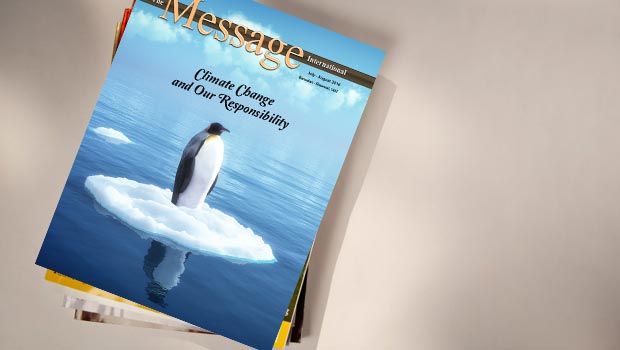
    Climate Change and Our Responsibility

    Climate change is a serious global concern, and with the passage of time, the situation is worsening. In 2007, scientists from the International Panel on Climate Change (IPCC) predicted that sea levels could rise 7-23 inches by the year 2100. That report did not take into account the impact of melting glaciers.

    Our concern for the environment must go beyond words and translate into actions

    By 2014, the IPCC’s Fifth Assessment Report factored in the melting of the ice sheet, and projected a global sea level rise of 10 to 38 inches by the turn of the century. Densely populated coastal communities and the infrastructure that supports them would be severely affected worldwide. Some areas would be flooded, or at least more vulnerable to destruction from deadly storms. In some regions, drought could be more frequent and long-lasting. Even seemingly less dramatic local changes in temperature, precipitation, and soil moisture can severely affect agriculture and food supplies, human health, water availability, and much more. As a result, habitats and resources could be decimated, and various plant and animal species, as well as countless human lives, could be lost. Many experts are warning that we are fast approaching a tipping point at which time the harm cannot be contained and the wide-ranging effects irreversible.

    The cause of climate change and global warming has been debated extensively and the scientific consensus is that there is a natural variability in climate but that human activity has pushed that variability to extremes. Recent studies also suggest that most of the warming over the last 50 years is due to human activity. In its 2007 report to the United Nations, the IPCC concluded that it is more than 90 percent likely that the accelerated warming of the past 50-60 years is due to human contributions. In this context, it is worth mentioning what the Quran declared fourteen hundred years ago: “Corruption has appeared on land and sea because of what people’s own hands have wrought, that He may make them taste something of what they have done, in order that they may turn back” (Quran 30: 41).

    In Quran and hadith, we are reminded that humanity is designated as caretakers of this earth. The Quran says, “It is He who has appointed you vicegerent on the earth…” (Quran 6:165). The Prophet (peace be upon him) has also said, “The world is beautiful and verdant, and verily God, the exalted, has made you His stewards in it, and He sees how you acquit yourselves” (Muslim). In order to carry out this trust, we need to behave with moderation and responsibility. There is no denying that the use of fossil fuels threatens to destroy the gifts – beauty, balance of nature, and resources — bestowed on us by God. Our failure to appreciate and care for these gifts poses such a serious threat, and yet humanity continues on the path of abusive exploitation of the earth.

    Having been inspired by Islamic teachings, Muslim environmental activists from 20 countries gathered in Istanbul last year and issued an “Islamic Declaration on Climate Change,” calling on the world’s 1.6 billion Muslims to do their part to eliminate dangerous greenhouse gas emissions and commit to renewable energy sources. The Declaration noted the following: “We recognize that we are but a miniscule part of the divine order, yet within that order, we are exceptionally powerful beings, and have the responsibility to establish good and avert evil in every way we can. We have no right to oppress the rest of creation or cause it harm. Intelligence and conscience behoove us, as our faith commands, to treat all things with care and awe (taqwa) of their Creator, compassion (rahmah) and utmost good (ihsan).” The Declaration also calls upon people everywhere and all national leaders to “commit themselves to 100% renewable energy and/or a zero emissions strategy; invest in decentralized renewable energy, which is the best way to reduce poverty and achieve sustainable development; and realize that to chase after unlimited economic growth in a planet that is finite and already overloaded is not viable. Growth must be pursued wisely and in moderation; placing a priority on increasing the resilience of all, and especially the most vulnerable.”

    For the last few years, at the initiative of the United Nations, World Environment Day is observed annually on June 5th to create greater awareness of climate change. In conferences and summits, leaders and activists commit to minimizing further environmental degradation in the attempt to protect the world from the serious threats resulting from climate change. These are, no doubt, good initiatives. Yet, some individuals in our own country, including politicians and lawmakers, continue to deny climate change. And even when grand initiatives are put forth, they are too often unmatched by implementation. This issue of our magazine focuses on the need for practical action. Indeed, our concern for the environment must go beyond words and translate into actions.