

بسم الله الرحمن الرحيم

Tag: blessings

  • How to Increase Barakah (Blessings) in Life

    How to Increase Barakah (Blessings) in Life

    Some societies invest billions of dollars in the pursuit of efficiency and instantaneous results. University students, for example, often search for productivity hacks and study tips to help them achieve their desired outcomes more quickly. Many companies today are exploring how artificial intelligence can be utilized to streamline processes and achieve objectives more efficiently.

    An interesting concept in Islam is that of barakah. Consider a half-full water bottle. If that water is imbued with barakah, a divine blessing, it will quench your thirst with less. Having more water in the empirical sense does not necessarily mean having more barakah. Barakah refers to growth and increase, a blessing enjoyed by some of Allah’s servants. Our Prophet Muhammad (s) prayed for barakah for various individuals and occasions, including for Anas ibn Malik (r). Prophet Muhammad (s)ﷺ prayed, “O Allah, increase his wealth and offspring, and bless what You have given him” (Bukhari).

    Allah SWT answered the Prophet’s (s) supplications, making Anas one of the wealthiest among the Ansar, blessed with abundance, and over a hundred of his children and grandchildren. Allah also blessed his lifespan, allowing him to live over a century.

    Barakah is generally understood as a divine gift from Allah SWT, the giver of all good things and the source of all barakah. Barakah can manifest at any point in one’s life, enhancing even the smallest of blessings and greatly benefiting larger ones. The ultimate purpose of barakah is to use these blessings in obedience to Allah SWT, such as dedicating one’s wealth or time to acts of worship.

    What actions increase barakah in one’s life?

    1. Sincere intentions

    Everything you do starts from within. In the famous hadith, the Prophet(s)ﷺ mentioned: “Actions are based on intentions…” (Bukhari). Ikhlaas – sincere intentions in one’s devotion to Allah – can move mountains. It can change lives. It can revive the ummah. It can be a source of protection. Sincere and intentional devotion can be a means of ripple effects in continuous charity long after one has left this world. It can be the reason you have more blessings in your time and wealth than the person next to you who has the same 24 hours and same bank balance.

    Renew your intention daily and reflect on it before you sleep, when you wake up, and before you engage in acts of worship; and keep purifying your intention in your thoughts and attitudes, in your speech, and in your actions, both small and large.

    1. Ties of kinship

    The Prophet (s) said: “Whoever would like his rizq (provision) to be increased and his life to be extended, should uphold the ties of kinship” (Bukhari). He also said, “Nothing can ward off the divine decree except du‘a (supplication) and nothing can increase lifespan except honoring one’s parents” (Tirmidhi).

    1. Connect to the Qur’an

    It is not surprising that the Qur’an is one of the greatest sources of barakah for the believers, as Allah says about it: “a blessed Book which We have revealed to you  so that they may contemplate its verses, and people of reason may be mindful”  (Qur’an 38:29).

    Although the entire Qur’an is blessed and a source of barakah, the Prophet (s) specified in one hadith, “recite Surat al-Baqarah, for doing so leads to barakah” (Bukhari). And abandoning it  leads to regret and loss. And it cannot be overcome by al-batalah, which can refer to two things: 1) it cannot be penetrated by the sorcerers, so it’s a form of protection, and 2) it cannot be attained by those who are lazy and slow to acts of worship.

    If one reads Surat al-Baqarah, it becomes a source of blessings in one’s time. Of course, the test for the servant is knowing that Surat al-Baqarah is the lengthiest surah in the Qur’an, and yet it is the one singled out in the hadith as being a source of blessings. Many times, people memorize or recite al-Baqarah without realizing that it was a cause of great blessings in their lives, but they had not associated those blessings with the surah.

    1. Seek barakah in time

    Barakah in time means having the same 24 hours in a day as everyone else, but being able to get more out of it. In era of productivity hacks, shortcuts, and instant gratification, the believer seeks barakah in time in order to get more out of life, even if one’s lifespan itself is shorter than average.

    For students, barakah in time is the ability to get more studying done with less time; for professionals, it is the ability to fulfill one’s work responsibilities while having the time to excel and do more. For parents, it is the experience of raising one’s children with more benefit in their overall development. Some scholars had so much barakah in their time, it’s as though they finished in a day what it would take others a week to accomplish.

    One way to seek more barakah in time is to sincerely ask Allah for it, consistently, and to use one’s time wisely. A second way to seek barakah in time is to specifically utilize the morning time.

    The Prophet (s) made du’a over 1400 years ago, “O Allah bless my ummah in its morning time” (Tirmidhi). The effects of this du’a are well known to all who take advantage of the early hours of the morning.

    When people neglect time, they tend to regret it in later years. Many people look back at their high school and college years wishing to have done greater good with their time. The Prophet (s) informed us in the famous hadith, “There are two blessings many people waste: good health and free time” (Bukhari). In other words, many people waste their good health until they’re ill and then they regret not doing more with it, and the same with time. Life only increases in responsibilities and commitments for the productive believer, and there’s no concept of “true boredom” for the Muslim who values every precious minute of this short life.

    Some people were given only 30 years in this world, but were able to accomplish more in quality than people who lived decades longer. The believers are those who do the best with their situation, living each day as though it’s the last, and not procrastinating goodness for a future that may not arrive.

    1. Du’a and dhikr

    Du’a is the essence of worship, and we should spend time every single day to call upon Allah with sincere, humble hearts, persistently asking for the best of this life and the next. There are many examples of what to ask for in terms of barakah, such as in one’s time, health, and wealth.

    Additionally, an example of barakah is starting many actions with “bismillah” (in the name of Allah), sincerely hoping for reward, blessings in the action, and protection. Another example of a daily practice is the du’a famously used in the witr prayer, but can be employed any time of the day:

    “O Allah, guide me with those whom You have guided, and strengthen me with those whom You have given strength. Take me to Your care with those whom You have taken to Your care. Bless me for what You have given me. Protect me from the evil You have ordained. Surely, You command and are not commanded, and none whom You have committed to Your care shall be humiliated and none whom You have taken as an enemy shall taste glory. You are Blessed, Our Lord, and Exalted” (Abu Dawud).

    Du’a for barakah is also frequently used in Islam when it comes to wanting blessings for other people, such as when someone has a newborn and you pray for blessings in their child, or blessings for those who get married, as well as those who purchase new items (e.g., houses, cars, devices).

    1. Honesty in trading and income

    Sincerity and morality when conducting business is a way to increase barakah in one’s income. The Prophet (s) said, “The buyer and the seller have the option of cancelling or confirming the bargain, unless they part from each other, and if they spoke the truth and made clear the defects of the goods, then they would be blessed in their bargain, and if they told lies and hid some facts, their bargain would be deprived of Allah’s blessings” (Bukhari).

    1. Charity

    Some people say they feel like they have no blessings in their wealth as money seems to slip through their fingers. Some feel like it’s due to their lack of giving charity, while justifying spending on countless forms of entertainment and unnecessary leisure activity.

    The Messenger of Allah (s) said, “Allah said, ‘O son of Adam! Spend, and I shall spend on you’” (Bukhari).With charity, one’s wealth has increased barakah and goes much further in terms of benefit. This barakah oftentimes spreads to one’s home and material wealth as well.

    1. Food

    “The Messenger of Allah (s) said: “Eat together and do not eat separately, for the blessing is in being together” (Ibn Majah). This is a simple act of worship that can be implemented easily. We are living in an era when individualism and aloneness has increased, even in eating.

    On another note, related to food and barakah, the Prophet (s) said: “Take a meal before dawn [i.e., suhoor], for there is a blessing in taking a meal at that time” (Bukhari). Later at sunset, upon breaking fast, he commanded, “When one of you breaks his fast, then let him do so with dried dates, for they are blessed. Whoever does not find dates, then water, for it is purifying” (Tirmidhi).

    Finally, one should never waste any food, even if it’s a small amount left on one’s plate, utensils, or hands. Jabir reported that the Messenger of Allah (s) commanded  the licking of fingers and the dish, saying: “You do not know in what portion the blessing lies” (Muslim).

    1. Consistent repentance and seeking forgiveness

    Sinfulness, in the Islamic worldview, might be the reason a believer is prevented from a provision, relief from hardship, or divine blessings. Allah says, “…Seek your Lord’s forgiveness; He is truly Most Forgiving. He will shower you with abundant rain, supply you with wealth and children, and give you gardens as well as rivers” (Qur’an 71:10-12).

    1. Gratitude

    Allah says, “…If you are grateful, I will increase you…” (Qur’an 14:7).

    While “increase” generally refers to an increase in faith and righteous deeds, there’s also the increase of provisions because the believer uses the existing wealth or resource with true gratitude. Gratitude, thus, is to use the blessings of Allah in a manner that is pleasing to Him. To be grateful with health is to use one’s energy to do good, and to be grateful with one’s time is to use it for Allah’s sake.

    While the list above is not exhaustive, it is a helpful starting point for all of us to review our daily practices and pursuit of divine blessings. May Allah bless  us in all that has been given to us.
  • The Amazing Blessings of Charity

    The Amazing Blessings of Charity

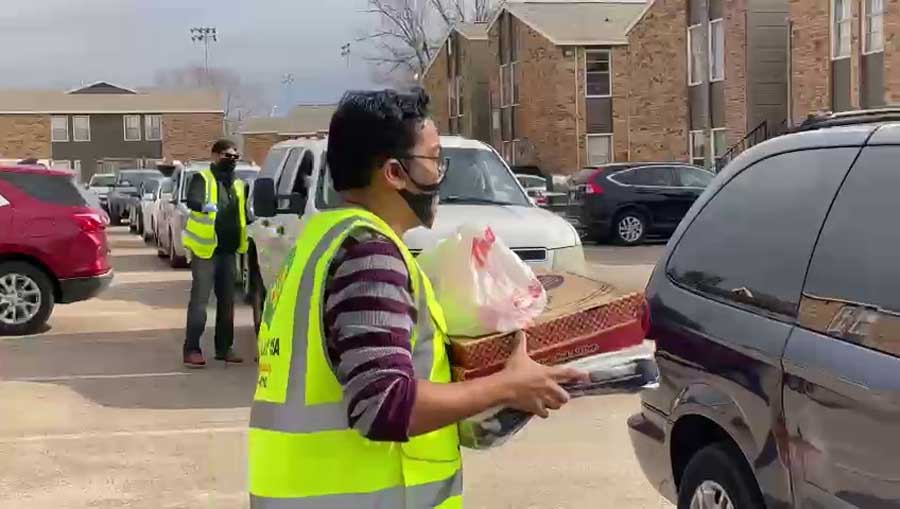
    One of the greatest and most rewarding acts of worship is the giving of charity for the sake of Allah SWT, but oftentimes people limit their donations to the month of Ramadan rather than year-round. This is when many pay zakat, which is one of the pillars of Islam. Zakat is obligatory and is considered a “cleansing” of one’s wealth. It is 2.5 percent of surplus wealth that has been in one’s possession for a lunar year. Another aspect of charity is sadaqah which is voluntary. It can be the donating of money for the sake of Allah SWT, but it beautifully encompasses so much more. It can be any act of goodness done for the sake of Allah like supporting in any way one can the orphans, widows, and the needy. But it also includes kindness, compassion, and even a good word, or greeting another with a smile. So, we can keep in mind that charity in Islam has wide meaning and is often referred to as “spending in the cause of Allah.”

    In Surat al-Hadeed, a number of the amazing blessings of charity can be understood, such as the following: “Believe in Allah and His Messenger and spend [on others] from that which He has made you trustees. So those of you who believe and spend [in Allah’s cause] will have a mighty reward” (57:7).

    Reflection 1: You are a trustee of any wealth you possess in this life.

    The verse says “…spend [on others] from that which He has made you trustees” (57:7). This makes clear that any wealth you have in this world is a test from Allah SWT, that you are considered a trustee of that wealth. Whatever has been acquired by you, from any source, you are commanded to use it for the sake of Allah SWT, and you will be held accountable about the means by which you received it and how you spent it. If you fail as a trustee by disobeying Allah and hoarding your wealth or by spending it in any way that contributes to that which is false, wrong, or unjust, you will be held accountable for it.

    It is not permissible for the caretaker and trustee of Allah’s wealth to hold back stingily or to spend in a prohibited manner. Imam Ahmad recorded that `Abdullah bin Ash-Shikhir said, “I came to Allah’s Messenger as he was reciting, ‘the worldly pursuit of abundance distracts you’ [Qur’an 102:1]. Then he (s) said, ‘The son of Adam says, “My wealth, my wealth.” But is there anything belonging to you, except that which you consumed, which you used, or which you wore and then it became worn, or you gave as charity and sent it [forward to the afterlife]?’” Imam Muslim also collected the hadith with the addition: “Everything other than that, you will part from it and leave it behind for other people.”

    Reflection 2: Your caretaker role is temporary.

    Another crucial reflection from this verse is that the wealth you have now is completely temporary. Wealth is constantly moving about, transferring from person to person, and yesterday’s trustee was replaced with today’s caretaker, and today’s caretaker will be replaced by another trustee of that wealth tomorrow.

    Your wealth today will transfer onwards and away from you upon death, and when that time of departure arrives, know that you will be questioned about what you did during the limited time the wealth was entrusted to you. If you spend it for the sake of Allah SWT with sincerity, with intention to undertake good deeds, Allah will bless you with an eternal – permanent – return on your act of spending for His sake. The one who disobeyed Allah and refused to spend in acts of charity, lost out on that opportunity.

    One should keep in mind that investing one’s wealth is not prohibited but instead encouraged in Islam, in order to benefit more people and to keep a healthy economy running, so long as the investment is done in a manner pleasing to Allah. Hoarding wealth, however, is dangerous spiritually for the individual and, further, is unhealthy for society.

    In many situations today, the head of the household will usually have an emergency fund or a savings fund, without interest, for the sake of serving their families in times of great need such as loss of one’s job or source of income, sickness or injury, etc. This is permissible so long as it is not extravagant to the extent that it is hoarding an excessive amount of wealth.

    Reflection 3: The reward for belief and charity is mighty.

    “So those of you who believe and spend [in Allah’s cause] will have a mighty reward” (57:7). Acquiring and spending any amount of wealth in this life, whether it is through monetary donation, spending for the common good, or spending time and energy in public service or to help the needy, if it is for the sake of Allah SWT, it is linked to a great reward in the afterlife (i.e., Allah’s pleasure and the reward of paradise). Allah SWT informs us that He has purchased from the believers their lives and their wealth, in exchange for paradise (Qur’an 9:111). Therefore, one who disobeys Allah and rejects His command, and pridefully thinks that they’ll be saved by their wealth, fame, power, or accomplishments in life (which are blessings from Allah), is foolish and in loss unless they repent and return to their Creator sincerely. You can purchase paradise, by believing in Allah SWT, doing righteous deeds, and giving charity.

    Abu Hurayrah (r) narrates that, “The Messenger of Allah (s) said, ‘Whoever gives charity equal to a date from good [halal] earnings – for Allah does not accept anything but that which is good – Allah will take it in His right hand and tend it for the one who gave it as any one of you tends his foal, until it becomes like a mountain” (Bukhari).

    Reflection 4: Allah is the King, the Provider, and the Inheritor of the universe.

    There’s a significant reminder in Surat Al-Hadeed to spend in the cause of Allah and simultaneously remember that Allah is the King and Owner of the universe. Allah is the provider, so give without fear of loss, poverty, or scarcity. Allah is Al-Waarith. The name of Allah as Al-Waarith is found in different forms. In the Qur’an, there are several notable references, such as: “Surely it is We Who give life and cause death. And We are the [eternal] Successor (Waarithoon)” (15:23).

    As one scholar said, “Al-Waarith is the One who remains when all of the creation perishes, and He retakes all of their possessions when they die, and only Allah SWT will remain” (Al-Khattabi).

    Interestingly, Al-Waarith is not combined with any other Name or Attribute of Allah SWT in the Qur’an, it is always mentioned as a standalone, and we reflect on how Al-Waarith alone remains when all of the creation perishes. Everything belongs to Allah, and everything will perish in this universe, and yet Allah will always remain.

    Reflection 5: Whatever you give in charity, Allah will replace.

    Spending for the sake of Allah SWT is in proportion to how much you believe that everything belongs to Allah, and that provision comes from Him, and that what you give – He replaces. “And whatever you spend [in His cause], He will compensate it. For He is the Best Provider” (Qur’an 34:39). It was narrated from Abu Hurayrah (r) that the Messenger of Allah (s) said: “Allah said: ‘Spend, O son of Adam, and I shall spend on you’” (Bukhari).

    Reflection 6: Charity in times of difficulty or hardship is more rewarding.

    In Surat al-Hadeed, Allah SWT mentions that the companions who spend of their wealth and possessions before the liberation of Makkah would have a greater reward than those who did so afterwards, although all will be rewarded for their good deeds (57:10). There’s a massive reward when someone donates in a time of great need. For example, think of the global Covid-19 pandemic when it began in early 2020 in many countries and how many people and organizations struggled, and shortly afterwards how many amazing individuals and institutions stepped forward to aid and assist as many people as possible during a time of great difficulty. Fear causes people to limit their charities and services, and therefore those who step forward during such times are given a greater reward.

    Reflection 7: Allah SWT is aware of your situation and your every charity, no matter how small.

    The verse concludes with yet another emphasis on the knowledge of Allah SWT. Allah is All-Aware of your actions. Since Allah is aware of everything, He also will reward and compensate people in different ways, therefore every good deed performed is beneficial and no good deed should be belittled, as the Messenger (s) taught us. People are rewarded based on their sincerity and circumstances, which are known to Allah, as in the example of the man who donated one dirham, whose charity surpassed that of the man who gave 100,000 dirhams. Because Allah is All-Knowing, He knows that the man who gave one dirham in charity only had two dirhams total, and thus spent half of his wealth in charity, and Allah is aware of the man’s intention (e.g., perhaps the man would have spent half as well if he had a million dirhams and would wish to give more). The man who gave 100,000 dirhams perhaps had much more than that, and it was easier for him to donate, and Allah is aware of their situations with perfect knowledge.

    Therefore, this verse serves as a powerful motivation for all believers to do their best with their respective circumstances. If you cannot pray as many voluntary prayers anymore because there has been a change in your life circumstances that prevents that, but you used to pray qiyaam consistently, know that Allah is aware of your situation and intentions, and that if your circumstances were slightly different – such as not working 2-3 jobs out of necessity, or raising multiple young children – that you would pray more voluntary prayers. As mentioned above, the man who donated one dirham might earn a greater reward with Allah than the man who donated 100,000, and the woman who prayed just two units of qiyaam prayer at night might earn a greater reward than the woman who prayed one-hundred units of prayer, and Allah knows best.

    A man mentioned to his friends how he used to ask in du’a (supplication) for great wealth and told himself that he would then give in charity. He one day realized that he was lying to himself because he already had a six-figure salary and was living more than comfortably. He realized that if he wasn’t giving in the present, he probably would find excuse not to give in charity when he earned more. He made an intention to begin immediately to give in charity and to do good with his wealth from then on. He soon after noticed an increased barakah in his life and, especially, a sense of peace and contentment. This is a good lesson to us that giving does not depend on, and should not be delayed until, having great wealth. The Messenger (s) said, “Protect yourself from hellfire even by giving a piece of a date as charity” (Bukhari).

    Reflection 8: The ‘good loan’ (i.e., charity) will be multiplied many times over.

    “Who is it that will lend to Allah a good loan which Allah will multiply for him, and he will have an honorable reward?” (57:11). This ayah refers to all believers with good intentions who spend for the sake of Allah SWT in any of countless ways. In this verse, “…will multiply for him” means manifold times — 70, 700, or millions of times — for the deed. Reflect on how generous Allah SWT is and how amazing an opportunity this presents. One good deed could result in 700 times the return! One good deed could result in millions of rewards. What better transaction could exist, better than this one with Al-Razzaq, the Provider of sustenance, and Al-Kareem, the Generous and the Beneficent?

    Why is charity here referred to as a qard hasan (a good loan)? Ibn al-Qayyim mentions that charity here is referred to as a good loan to motivate the desires of people (who want a repayment), and to make it easier for those who struggle to give, thinking that they are losing when giving charity. It has been likened to a loan because the promise of Allah is that a sincere charity will be replaced and compensated. The qard hasan requires that the one giving charity be sincere and truthful in his intention; that he is seeking Allah’s pleasure without any showing off or caring about human praise, or puffing up of his reputation or ego; that he is giving in charity from the best of what he has, and for the wealth to be pure/halal in how it was attained.

    May Allah SWT accept our charities, public and private, and make them sincere and impactful.