

بسم الله الرحمن الرحيم

Tag: blacks

  • Black History Month:  Redlining and Public-School Segregation

    Black History Month: Redlining and Public-School Segregation

    It’s February, and that means it’s Black history month in the U.S. While big and small businesses alike attempt to turn this important month into a marketing campaign to attract new customers, the month remains an important one for all those in America who recognize the injustices that have befallen Black Americans.

    Since the death of George Floyd, there has been an increased effort within the Muslim community to pay attention to the current oppression against Black communities. However, more can and must be done to further develop a consciousness about their struggles. By diving deep into the history of policies and laws that have hindered Black Americans, we can be better prepared to prevent further injustices.

    Two such important topics are redlining and segregation in public schools. The first hindered Black Americans’ ability to own homes and the second to receive a good education. Why are these significant? Because the ability to own property and have a quality education are fundamental to ensuring generational wealth.

    Redlining

    In 1933, the federal government created the Home Owners’ Loan Corporation (HOLC) as part of the New Deal. Under the leadership of President Franklin D. Roosevelt, the HOLC was intended to refinance home mortgages under default to prevent foreclosure and to expand home buying opportunities for Americans. The HOLC placed neighborhoods into categories based on a number of factors such as age and quality of construction of the homes, availability of infrastructure such as transportation, amenities such as parks, and especially based on their racial makeup. The different categories were color coded on maps for every metropolitan area in the country. The areas marked in red (hence redlining) were considered high risk for mortgage lenders. These areas were anywhere that African Americans lived or lived nearby.

    The logic of the Federal Housing Administration, which was founded on zero research, was premised on the idea that if African Americans and other communities of color bought homes in those suburbs, or even near those suburbs, the value of homes owned by Whites would decline, and therefore those loans would be at risk. Richard Rothstein’s book, The Color of Law, according to an NPR article, educates the public about specific segregationist policies outlined in federal handbooks like the Underwriting Manual of the Federal Housing Administration. The article notes that Rothstein points out that regulations that are written policy and published in government publications like the Underwriting Manual “are as much a de jure [e.g., legally recognized] ( . . . ) expression of government policy,” even if it is unconstitutional, “as something written in law.”

    The U.S. government today acknowledges the harm done to Black communities by such policies. The Federal Register, a federal government journal, notes that “The creation of the Interstate Highway System, funded and constructed by the Federal Government and State governments in the 20th century, disproportionately burdened many historically Black and low-income neighborhoods in many American cities. Many urban interstate highways were deliberately built to pass through Black neighborhoods, often requiring the destruction of housing and other local institutions. To this day, many Black neighborhoods are disconnected from access to high-quality housing, jobs, public transit, and other resources.” In some cases, highways were designed to separate Black neighborhoods from White neighborhoods.

    The 1968 Civil Rights Act included Title VIII and Title IX, known as the Fair Housing Act, which prohibited discrimination in the selling, renting, or financing of housing because of race, color, national origin, religion, sex, (and later amended to include) family status, or disability. While the Fair Housing Act of 1968 modestly addressed future discriminatory practices, it could not undo decades of discrimination that resulted in vast disparities of home ownership and the building of wealth by Blacks, as compared to Whites.

    In October 2021, the Department of Justice announced a new initiative to combat redlining. In their press release, they not only admitted that it was their previous policy to deny credit to communities of color, but that they were going to engage in new initiatives to “ensure that federal fair lending laws are vigorously enforced and that financial institutions provide equal opportunity for every American to obtain credit.”

    Public School Segregation

    The effects of redlining not only prevented many African American families from owning homes, building wealth through home equity, and passing that ownership and wealth on to their children, but it also impacted where their children were able to go to school.

    Due to Jim Crow segregation laws, Black children attended Black schools and White children attended White schools. With the Civil Rights era came a wave of Supreme court cases that cut against segregationist laws. One such monumental case was Brown v. Board of Education of Topeka (1954). There, the U.S Supreme Court ruled that racial segregation in public schools violated the Fourteenth Amendment. While this was a massive success in the battle for racial equality, it was resisted by the South which wanted to maintain school segregation. In instances like the famous case of the Little Rock Nine, where nine Black high school students attempted to enroll in an all-White high school, they faced mobs and death threats. Most Southern schools developed plans to delay or deny implementation of desegregation even though it was federally mandated.

    Although, there were subsequent orders from the Supreme Court in Brown II that directed states to take “deliberate speed” when implementing desegregation policies, most children still attended segregated schools in 1964. The federal government used funding incentives to get schools to move quickly on desegregation. However, the biggest obstacle was in moving children in urban areas to the suburbs where the White schools were. The majority of Black children had to be bused to attend those schools. This often meant leaving their home very early in the morning to attend school sometimes twenty or more miles from home. In those new schools, children often faced racism from both their fellow students and teachers. It wasn’t only the Southern states that protested integration. Northern cities like Boston and Detroit had historic protests from White parents who didn’t want busing to occur.

    Today, we continue to see public school segregation. In a recent study released by the U.S Government Accountability Office (GAO), more than a third of students (about 18.5 million) attended a predominantly same-race/ethnicity school during the 2020-21 year. Furthermore, 14% of students attended schools where almost all of the student body was of a single race/ethnicity. The studies also show that the lack of diversity means the Black and Brown children are more likely to attend under-funded schools.

    We can see the intersection of redlining and school segregation, and the resulting wealth gap and educational achievement gap between Black and White students. Yet, there are ways to address underfunded schools and some states are doing so.

    Funding for public schools in a district come from property taxes, as well as state and federal contributions. Since more affluent school districts receive more funding from property taxes than do lower income districts, the only way to level the playing field is to allocate more state and federal monies to low-income districts than to those with greater funding from property taxes. A number of states have already implemented this strategy including Utah, Ohio, South Dakota, Georgia, and others, and they have seen increases in students’ academic achievement. These reforms target not just greater funding for economically disadvantaged students, it also invests in the ongoing acquisition of knowledge and development of skills of the teachers, and greater funding for early childhood education. Other states such as Massachusetts, Minnesota, and New Jersey “have undertaken reforms based on these practices and, in turn, have narrowed achievement gaps.”

    Conclusion

    Redlining and school segregation have had lasting impacts on how Black people were and are able to succeed in this country. The systematic tactics to prevent them from owning their own home in the suburbs not only contributed to ongoing segregation, but they also impacted their children’s ability to get a good education in properly funded schools.

    I believe it’s important to learn more about these and other discriminatory policies so that we can better support Black communities. In addition, we must understand the past injustices, so we don’t allow the same types of wrongs to repeat themselves in the future. Muslims should look towards the well-known hadith for inspiration on what to do when they see an injustice: The Messenger of Allah said, “Whosoever of you sees an evil, let him change it with his hand; and if he is not able to do so, then with his tongue; and if he is not able to do so, then with his heart — and that is the weakest of faith” (Muslim). Following the footsteps of our beloved Prophet (s), we must do our best to take action by arming ourselves with knowledge on important history. This is how we can begin to effect change.
  • Black History Month 2022

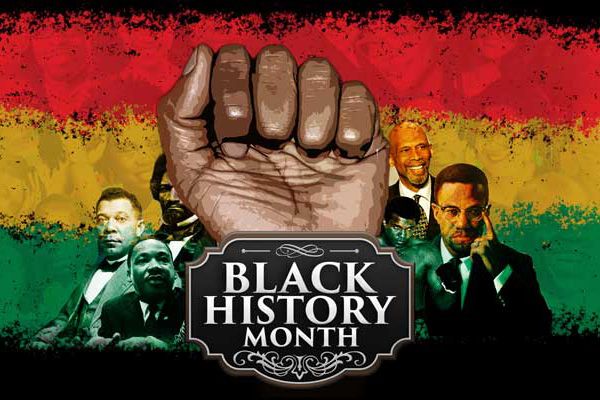
    Black History Month 2022

    The life stories of generations of people of African descent in the United States are testimonials to the capacity of human beings to overcome, with Allah’s help, adverse life circumstances that typically cripple the social advancement of even the most highly motivated individuals. Such is the case of Carter G. Woodson, born in 1875 to enslaved parents in Canton, Virginia, as he would rise to become one of the most celebrated figures of the 20th century. Although blessed with a brilliant intellect, Woodson was forced to interrupt his pursuit of higher education to work in the coal mines of West Virginia to help support his family. Yet, due to his academic prowess, Woodson achieved teaching and graduate degrees at a relatively early age. He was the second African American, after Dr. W.E.B. Dubois, to receive a doctorate degree from the prestigious Harvard University. Dr. Woodson spent most of his professional career as a professor and administrator at Washington, DC’s Howard University.

    Frustrated by the scarcity of teaching materials on the accomplishments of African Americans, Dr. Woodson vowed to document the contributions of Black people to American society and throughout the African Diaspora. In 1915, he established the Association for the Study of Negro Life and History and the Journal of Negro History in 1916, earning him the honorific title, Father of Black History. Negro History Week was initiated by the Association in the second week of February 1926. Black students, faculty, and staff at Kent State University expanded Black History Week to Black History Month in 1970. Every U.S. president since that time has designated the month of February as Black History Month.

    To fully appreciate the astounding contributions of African Americans to American society, one must understand the environmental context in which inventions were produced, scientific breakthroughs made, prose and poetry composed, acts of heroism displayed, and faith communities of various religious traditions established and perpetuated. Every decade since the founding of the United States of America in 1776 has witnessed unrelenting systems of racial terrorism, property denial, and limited access to and mobility in the labor market against people of African descent. Black advancement in American society is inextricably tied to social justice movements that have struggled to eliminate many egregious discriminatory laws or practices like pro-enslavement legislation, race-based denial of entry or service at places of public accommodation such as restaurants, retail stores, libraries, parks, etc., and inequitable funding of public schools located in African American communities.

    It is commonly acknowledged today that every immigrant population from Asia or Africa that has settled in the United States since the 1965 Immigration Act, Hart-Celler Act, owes a debt of gratitude to the historic social justice struggles of the 1950s-1970s of persons like Medgar Evers, Fannie Lou Hammer, Ella Baker, Septima Clark, Queen Mother Moore, A. Phillip Randolph, Harry Belafonte, H. Rap Brown (Imam Jamil Abdullah A-Amin), Andrew Young, John Lewis, Dr. Martin Luther King, Jr., Malcolm X (El-Hajj Malik El Shabazz), and a host of others. Even though anti-Black racism, anti-immigrant hatred, misogyny, and Islamophobia continue to plague the nation, we are a better nation today because of the struggles of these and other august Black history makers.

    Black History Month is cause for the celebration and recognition of the accomplishments of those from America’s most historically despised group, the descendants of African people in America. Muslims have much to learn from the history and struggle of African Americans in this land. As Muslims in America better understand the history of social justice movements in this country, particularly in the African American community, we will better understand our role in organizing for and demanding justice for all people in this country. It is a divinely mandated imperative for Muslims to take a stand for justice while not being silenced by the fear of retribution from those committing or sponsoring oppression. Black History Month 2022 comes at a pivotal moment in American history. Muslims must decide, “What side of history are we going to be on?”

  • ‘Daddy Changed the World’

    ‘Daddy Changed the World’

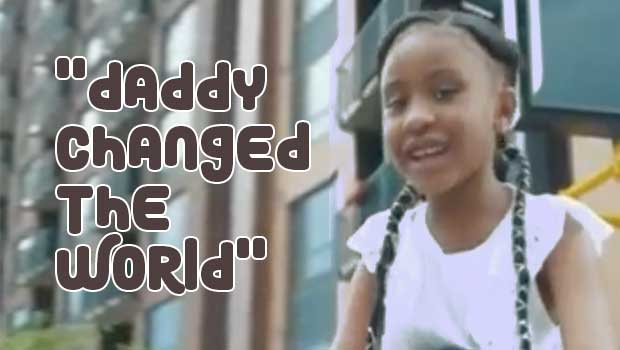
    Some words and images are indelibly etched into the recesses of our minds. Such is the case of George Floyd’s six-year-old daughter Gianna sitting on the shoulders of her father’s close friend, Stephen Jackson, after a Minneapolis press conference just days after Mr. Floyd was murdered by local cops. A smiling Gi-Gi, the nickname for the pint-sized young girl, perceptively captured the historical significance of the moment by raising her arms and confidently declaring, “Daddy changed the world.” “Yes Gi-Gi, Daddy did change the world,” Jackson responded. With this brief comment, Jackson affirmed to Gianna what millions of people around the world have recognized — that the senseless murder of Mr. Floyd triggered an unprecedented and so long suppressed public discussion of anti-Black racism in the United States. It created a demand for Americans to face the generational harm caused to the victims of structural/systemic racism in this country and around the world.

    Colleges, universities, and major corporations, religious organizations, and other entities have apologized for the roles that their institutions played in benefitting from and/or perpetuating chattel slavery in the Americas.

    In the aftermath of Mr. Floyd’s agonizing nine-minute death by suffocation, no sector of civil society in this nation has been unaffected by demands for the redress of racial disparities in the distribution of wealth, housing, educational opportunities, and dispensation of justice in the courts. Perhaps the most critical right of citizenship is the right to live one’s life without fear of life-threatening encounters with law enforcement, white bigots, or any other self-appointed enforcers of the status quo. American citizens of African descent have been denied this most basic right of citizenship since the inception of the country. The racial hierarchy established in the formative days of the republic has persisted up to this day. Beside the disparities in accessible resources and opportunities and in fairness in the justice system, citizens of African descent have suffered from racist characterizations and stereotyping that contribute to the wholesale devaluation of Black lives.

    Nowhere is this racial hierarchy more dangerously manifested today than in the mistreatment of African Americans by federal, state, and local law enforcement officers, judges, probation/parole officials, and prison personnel. The horrors of roughly 250 years of “legal” chattel slavery in North America may have disappeared from the social landscape, but the denial of full humanity and the devaluing of lives continues unabated. African American males are killed by police officers at a disproportionate rate to White males. And they are sentenced to longer incarcerations for the same offenses as their White counterparts. The number of unarmed Black men like George Floyd, Rayshawn Brooks, and now Jacob Blake who are shot by cops without provocation, continues even after the world’s attention focused on excessive use of lethal force used against Black men, women, and children.

    Refusing to Hide the Ugliness of Hate

    On August 6, 1955, 14-year-old Chicago native, Emmett Till, went south to Money, Mississippi to spend time with relatives. While there, he was accused by a White woman, Carolyn Davis, of flirting with and whistling at her in a downtown store. That night Emmett was forcibly dragged from his uncle’s home by the woman’s husband and his half-brother, tortured and murdered before having his lifeless body thrown into a river with a commercial fan tied around his neck. His mother, Mamie Till, could not recognize him since his face had been so disfigured from the beatings. She retrieved her son’s body and went back to Chicago for his funeral. She insisted that despite his horribly beaten face and body, Emmett would have an open casket. Numerous historians mark the start of the modern Civil Rights Movement with the 1955 murder of Emmett Till. Southern White supremacist savagery toward Black people was put on full display for the world to see during his funeral. The resultant outrage energized Blacks and some Whites to organize and mobilize for the next two decades to try to dismantle the system of racial apartheid that pervaded the country. The accuser of Emmett Till, Carolyn Davis, recanted her testimony about four years ago, finally admitting, more than 60 years after the murder, that she had lied about Emmett Till flirting with or whistling at her.

    The appalling image of George Floyd, laying on his stomach, handcuffed behind his back, pleading with the cop to take his knee off his neck, cannot be unseen. For racists, hardened and reinforced in their attitudes by decades of social acceptance and public toleration, there has been little incentive to change their thinking or behavior, until now. Numerous city and county governments across the country, prompted by protests and calls for changes in policing, are developing plans to redirect money from police departments (defunding) to social services, while assigning tasks to counselors, social workers, and others who are unquestionably more qualified than police officers to handle certain situations. Colleges, universities, and major corporations, religious organizations, and other entities have apologized for the roles that their institutions played in benefitting from and/or perpetuating chattel slavery in the Americas. An honest discussion about racism in the United States was virtually taboo until the May 25th Memorial Day murder of George Floyd. Like the sadistic murder of Emmett Till in the last century that ignited the modern Civil Rights Movement, Mr. Floyd’s murder has been the catalyst for Americans to collectively confront their racist past while boldly charting a course that facilitates the cleansing of racism from the American system and psyche.