بسم الله الرحمن الرحيم

Tag: black history month

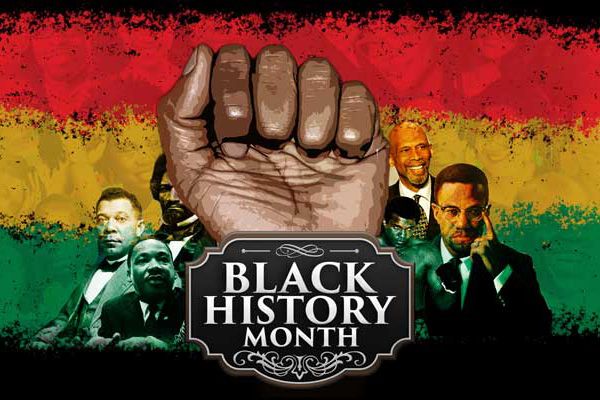
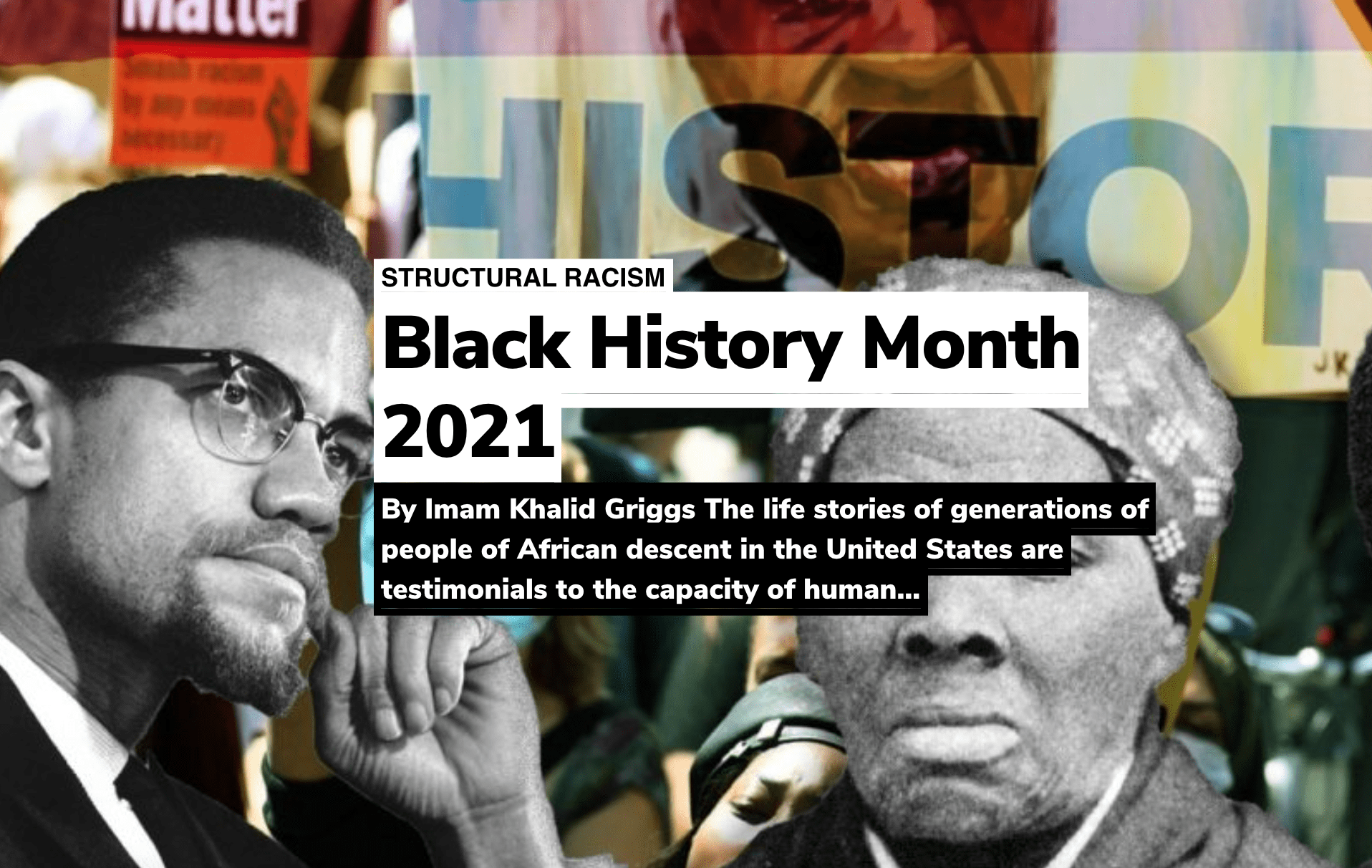
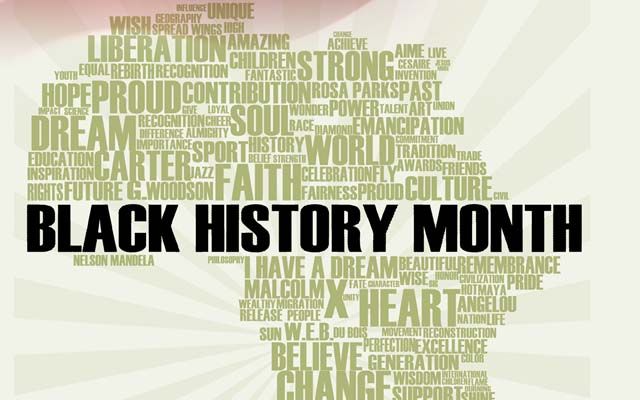
  • Black History Month 2022

    Black History Month 2022

    The life stories of generations of people of African descent in the United States are testimonials to the capacity of human beings to overcome, with Allah’s help, adverse life circumstances that typically cripple the social advancement of even the most highly motivated individuals. Such is the case of Carter G. Woodson, born in 1875 to enslaved parents in Canton, Virginia, as he would rise to become one of the most celebrated figures of the 20th century. Although blessed with a brilliant intellect, Woodson was forced to interrupt his pursuit of higher education to work in the coal mines of West Virginia to help support his family. Yet, due to his academic prowess, Woodson achieved teaching and graduate degrees at a relatively early age. He was the second African American, after Dr. W.E.B. Dubois, to receive a doctorate degree from the prestigious Harvard University. Dr. Woodson spent most of his professional career as a professor and administrator at Washington, DC’s Howard University.

    Frustrated by the scarcity of teaching materials on the accomplishments of African Americans, Dr. Woodson vowed to document the contributions of Black people to American society and throughout the African Diaspora. In 1915, he established the Association for the Study of Negro Life and History and the Journal of Negro History in 1916, earning him the honorific title, Father of Black History. Negro History Week was initiated by the Association in the second week of February 1926. Black students, faculty, and staff at Kent State University expanded Black History Week to Black History Month in 1970. Every U.S. president since that time has designated the month of February as Black History Month.

    To fully appreciate the astounding contributions of African Americans to American society, one must understand the environmental context in which inventions were produced, scientific breakthroughs made, prose and poetry composed, acts of heroism displayed, and faith communities of various religious traditions established and perpetuated. Every decade since the founding of the United States of America in 1776 has witnessed unrelenting systems of racial terrorism, property denial, and limited access to and mobility in the labor market against people of African descent. Black advancement in American society is inextricably tied to social justice movements that have struggled to eliminate many egregious discriminatory laws or practices like pro-enslavement legislation, race-based denial of entry or service at places of public accommodation such as restaurants, retail stores, libraries, parks, etc., and inequitable funding of public schools located in African American communities.

    It is commonly acknowledged today that every immigrant population from Asia or Africa that has settled in the United States since the 1965 Immigration Act, Hart-Celler Act, owes a debt of gratitude to the historic social justice struggles of the 1950s-1970s of persons like Medgar Evers, Fannie Lou Hammer, Ella Baker, Septima Clark, Queen Mother Moore, A. Phillip Randolph, Harry Belafonte, H. Rap Brown (Imam Jamil Abdullah A-Amin), Andrew Young, John Lewis, Dr. Martin Luther King, Jr., Malcolm X (El-Hajj Malik El Shabazz), and a host of others. Even though anti-Black racism, anti-immigrant hatred, misogyny, and Islamophobia continue to plague the nation, we are a better nation today because of the struggles of these and other august Black history makers.

    Black History Month is cause for the celebration and recognition of the accomplishments of those from America’s most historically despised group, the descendants of African people in America. Muslims have much to learn from the history and struggle of African Americans in this land. As Muslims in America better understand the history of social justice movements in this country, particularly in the African American community, we will better understand our role in organizing for and demanding justice for all people in this country. It is a divinely mandated imperative for Muslims to take a stand for justice while not being silenced by the fear of retribution from those committing or sponsoring oppression. Black History Month 2022 comes at a pivotal moment in American history. Muslims must decide, “What side of history are we going to be on?”

  • Structural Racism

    Structural Racism

    The life stories of generations of people of African descent in the United States are testimonials to the capacity of human beings to overcome, with Allah’s help, adverse life circumstances that typically cripple the social advancement of even the most highly motivated individuals. Such is the case of Carter G. Woodson, born in 1875 to enslaved parents in Canton, Virginia, he would rise to become one of the most celebrated figures of the 20 th century. Although blessed with a brilliant intellect, Woodson was forced to interrupt his pursuit of higher education to work in the coal mines of West Virginia to help support his family. Due to his academic prowess, Woodson achieved teaching and graduate degrees at a relatively early age. He was the second African American, after Dr. W.E.B. Dubois, to receive a doctorate degree from the prestigious Harvard University. Dr. Woodson spent most of his professional career as a professor and administrator at Washington, DC’s Howard University.

    Frustrated by the scarcity of teaching materials on the accomplishments of African Americans, Dr. Woodson vowed to document the contributions of Black people to American society and throughout the African Diaspora. In 1915, he established the Association for the Study of Negro Life and History and the Journal of Negro History in 1916 earning him the honorific title, Father of Black History. Negro History Week was initiated by the Association in the second week of February 1926. Black students, faculty, and staff at Kent State University expanded Black History Week to Black History Month in 1970. Every US president since that time has designated the month of February as Black History Month.

    To fully appreciate the astounding contributions of African Americans to American society, one must understand the environmental context in which inventions were produced, scientific breakthroughs made, prose and poetry constructed, acts of heroism displayed, and faith communities of various religious traditions established and perpetuated. Every decade since the founding of the United States of America in 1776 has witnessed unrelenting systems of racial terrorism, property denial, limited access to and mobility in the labor market against people of African descent. Black advancement in American society is inextricably tied to social justice movements that have struggled to eliminate many egregious discriminatory laws like pro-enslavement legislation, race- based denial of public accommodation, and inequitable funding of secondary schools located in African American communities.

    It is commonly acknowledged today that every immigrant population from Asia or Africa that has settled in the United States since the 1965 Immigration Act, Hart-Celler Act, owe a debt of gratitude to the historic social justice struggles of the 1950s-1970s of persons like Medgar Evers, Fannie Lou Hammer, Ella Baker, Septima Clark, Queen Mother Moore, A. Phillip Randolph, Harry Belafonte, H. Rap Brown (Imam Jamil Abdullah A-Amin), Andrew Young, John Lewis, Dr. Martin Luther King, Jr., Malcolm X (El-Hajj Malik El Shabazz), and a host of others. Even though anti-Black racism, anti- immigrant hatred, misogyny, and Islamophobia continue to plague the nation, we are a better nation today because of the struggles of these and other august Black history makers.

    Black History Month is cause for the celebration and recognition of the accomplishments of those from America’s most historically despised group, the descendants of African people in America. Muslims have much to learn from the history and struggle of African Americans in this land. As Muslims in America better understand the history of social justice movements in this country, particularly in the African American community, we will better understand our role in organizing for and demanding justice for all people in this country. It is a divinely mandated imperative for Muslims to take a stand for justice while not being silenced by the fear of retribution from those committing or sponsoring oppression. Black History Month 2021 comes at a pivotal moment in American history. Muslims must decide, “What side of history are we going to be on?”
    Article Courtesy: ICNACSJ

  • Racism After Ferguson:  Where Do We Go From Here?

    Racism After Ferguson: Where Do We Go From Here?

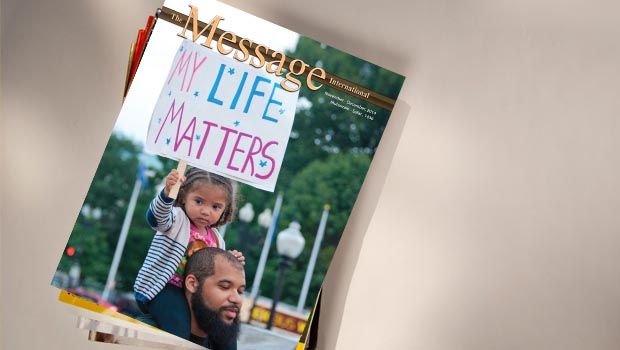
    Following the fatal shooting in Ferguson on August 2014 of an unarmed African American teenager, Michael Brown, by white police officer Darren Wilson, protests were sparked in Ferguson. The protests spread nationwide in November when a Missouri grand jury decided not to indict Wilson and then the soon-to-follow decision not to indict the Staten Island police officer who put a chokehold on Eric Garner, resulting in his death. The killing of Michael Brown, along with other similar incidents throughout the country, has heated up a debate about racism, excessive force by police officers, and the targeting of young black men. Some Americans are asking the hard questions: Where do we go from here? How can we stop this heinous extrajudicial killing of African American males by law enforcement in the streets of our cities? More fundamentally, how can we as a nation address racism and improve race relations in America?

    Many Americans now recognize what African Americans have been  saying for a long time –  that there is institutional  racism and there is  still much work to do…”

    A Guardian columnist, Isabel Wilkerson, has recently noted, “Not terribly long ago in a country that many people misremember, if they knew it at all, a black person was killed in public every four days for often the most mundane of infractions, or rather accusation of infractions – for taking a hog, making boastful remarks, for stealing 75 cents. For the most banal of missteps, the penalty could be an hours-long spectacle of torture and lynching. No trial, no jury, no judge, no appeal. ” While America has come a long way from that horrific stage in its history, one wonders if we are regressing. How is it possible that coming well into the new century, the rate of police killings of black Americans is nearly the same as the rate of lynching during a time when blacks were denied due process and whites discriminated against and victimized them with impunity?

    Isabel Wilkerson has also said, “ Even though white Americans outnumber black Americans fivefold, black people are three times more likely than white people to be killed when they encounter the police in the US, and black teenagers are far likelier to be killed by police than white teenagers.” Imam Khalid Griggs has rightly observed: “Ferguson and St. Louis, Missouri are, unfortunately, not aberrations, but social barometers of the relationship of the law enforcement community to African American males nationwide. Urban enclaves have too often been reduced to being incubators for the Prison/Industrial Complex and its voracious appetite to incarcerate Black males.”

    The tragedy in Ferguson makes it imperative that Americans of all races and backgrounds call for national action to address the issues of systemic racism and police profiling – issues that the shooting of Michael Brown brought to the surface. That these issues have been simmering for a long time is without question, and we must be willing to confront racism, whether overt or hidden away under the cover of political correctness. A position paper on racism put out by the Australian Psychological Society describes the challenge: “Modern racism still involves a rejection of minority groups and discrimination, but is now framed in terms of values and ideology rather than a straightforward dislike. Research has demonstrated that the modern variant of racism is more insidious, entrenched, resilient and difficult to counteract.”

    If there is any good to have come out of the heartbreaking Ferguson incident is that many Americans now recognize what African Americans have been saying for a long time – that there is institutional racism and there is still much work to do to create a society in which people ‘’will not be judged by the color of their skin, but by the content of their character.’’ It is encouraging that President Obama has issued an executive order to establish oversight of the increasing militarization of police departments; it also calls for funding for body cameras for officers.

    We urge all Americans to contact their elected officials to support passage of the End Racial Profiling Act (ERPA) and any similar legislation that addresses unconstitutional actions by law enforcement. We also call upon the Department of Justice to complete its independent investigation of the killing of Michael Brown in a transparent and thorough manner. We strongly feel that people of conscience in all walks of life must work together to seek an end to racial profiling and the injustices perpetrated against racial, ethnic, or religious minorities.

    Last but not least, we would like to remind everyone that racism is primarily a moral and spiritual problem. The pathology of racism therefore requires a spiritual remedy at both the individual and the collective levels. We pray that our fellow citizens recognize this. Then we might all open our minds and hearts to the spiritual cure Islam freely offers. The Qur’an declares: “O Mankind, We created you from a single [pair] of a male and a female and made you into nations and tribes, that you may know one another. Verily the most honored of you in the sight of God is he who is the most righteous of you” (Qur’an 49:13). This is indeed divine wisdom that can break the vice grip of racism. The quicker we recognize this and submit ourselves to it, the better for all of us.


  • Reflections on Black History Month

    Reflections on Black History Month

    Black History Month should be of interest to every Muslim, especially in America. It is estimated that upwards to 20 percent of the Africans enslaved in the Americas were Muslim. In some areas, such as the coast of the Carolinas, Georgia, and parts of Virginia, the percentages of Muslims in the slave population may have approached 40 percent. The fact that the search of a random African American, Alex Haley, for his roots led him to a Muslim village in West Africa is indicative of the widespread Muslim presence among the enslaved population here in the Americas.

    At this critical time in the history of our country, it is important for Muslims, whose legitimate existence in this country is being challenged in some quarters, to connect to our American Muslim roots.

    At this critical time in the history of our country, it is important for Muslims, whose legitimate existence in this country is being challenged in some quarters, to connect to our American Muslim roots. As Muslims, our story in this country did not begin with the coming of Syrians, Lebanese, Albanians, or Yemenis at the turn of the 20th Century and later. It began with the lives of those courageous African Muslim slaves whose blood, sweat, and tears were instrumental in building this country. Their struggle is our struggle, and our struggle should be viewed as a continuation of theirs.

    In identifying with those African Muslims, we must not allow ourselves to forget that they were part of a greater community, a community which has evolved to almost fifty million African Americans. The struggle of that community, its pain, perseverance, triumphs, and defeats, cannot be separated from the struggle of its Muslim members. If we as Muslims are moved by the suffering of our coreligionists who were exposed to the dehumanizing cruelties of a vicious system, we should similarly be moved by the plight of their non-Muslim African brothers and sisters who suffered the same injustices.

    We must also be moved to work with unwavering conviction to address, within the parameters of our organizational missions, the vestiges of institutional racism which continues to disproportionately affect African Americans and other racial minorities in this country. One statistic alone should be sufficient to alert us to the presence of such racism – 50 percent of this nation’s 2.3 million incarcerated individuals come from her 12 percent African American population. Similarly discouraging statistics are found in areas ranging from access to higher education, teen pregnancies, high school dropout rates, youth homicides, and many other indicators.

    African American Muslims have a particular responsibility in addressing such racism. In beginning to do so, we can take our lead from our formerly enslaved brothers. Despite their lack of freedom, many of them were never “owned.” This fact is strikingly clear in their increasingly widespread biographies. Individuals such as Ayyub bin Sulayman (Job Ben Solomon), Ibrahim Abdul-Rahman, and Yarrow Mamout, to name a few, did not allow the ravages of chattel slavery to rob them of their dignity, honor, nor their human worth.

    As we endeavor to address the imperfections of society, in race relations and other areas, we must do so with dignity, honor, grace, and with free and open minds. Those of us who hail from the historically oppressed minority communities of this land must resist the temptation to allow the triumvirate of rage, a sense of victimization, and vengeance to distort our ability to calmly assess and then pragmatically address the many issues confronting us. When such a distortion occurs, delusional thinking and irrational politics usually result.

    Our forefathers attracted people to Islam and conquered lands with the loftiness of their character and ethics.

    One of the greatest delusions challenging us lies in seeing our situation as paralleling that of our brothers and sisters in foreign lands governed by repressive, authoritarian regimes. By viewing our situation as parallel to theirs we are tempted to view the paradigm of resistance which governs their struggles as valid for our situation. Such an assessment is fallacious for a number of reasons.

    First of all, most of the significant “third world” liberation struggles pitted oppressed majorities against oppressive minorities. In this country, the white majority and significant segments of the nonwhite minorities are not so severely affected by structural violence or institutional racism that they view violent or even aggressive challenges to the status quo as legitimate forms of political expression.

    Secondly, alternative means of political expression, available in this country, are unavailable in most “third world” dictatorships or authoritarian regimes. Hence, the mechanisms whereby the Jews, by way of example, once a despised and demeaned minority, were able to favorably situate themselves within the system are not available in the previously referenced countries. Although some of their advancement was facilitated by their ability to benefit from their “whiteness,” most of it is due to hard work and effective planning. Similarly, the progress achieved by African Americans in affirmative action, progress which has been steadily eroded, no doubt, could not have been hoped for by oppressed minorities in many other countries. Whether we view these realities as truly empowering or ultimately cooptive does not negate the fact that they do exist, and as long as they exist, they will be powerful mechanisms to damper the appeal and feasibility of radical challenges to the status quo.

    Thirdly, while the feasibility of an aggressive, or even violent challenge to the status quo may be debatable in a small, minority-based, “third world” dictatorship, in a society as large, complex, diverse, and, ultimately, as politically conservative as the United States, such challenges could be used to legitimize severe repressive measures which would serve to render even milder forms of dissent less acceptable. While presented here in hypothetical terms, this is actually a recurrent lesson which American history has taught us.

    The history of “third world” revolutionary change is no more encouraging. The Algerian experience is illustrative of the legacy of revolutionary violence in Africa. Frantz Fanon, in The Wretched of the Earth, his analysis of the Algerian decolonization struggle, saw decolonizing violence as a cathartic agent which would create a new liberated man. The sad reality created by that violence is documented by Fanon in the last chapter of his work. It led to a litany of mental disorders, which Fanon, a trained psychiatrist, documented all too well, wrecked lives which the leaders of the nationalist struggle were ill-prepared to repair. Furthermore, thirty years later, the heirs of the nationalist regime which the revolution brought to power would be all too willing participants in a bloodbath that would rival anything the former French colonizers had visited upon the Algerian people.

    Archbishop Dom Helder Camara has pointed out that once a spiral of violence begins, it operates on its own internal logic. Injustice leads to revolt. Revolt induces repression. Repression leads to greater injustices, which in turn encourage more radical forms of revolt. These then induce more severe forms of repression. This spiral continues, unbroken. The challenge for theologians in this age, when the potential destructiveness of war is so great it threatens the very existence of our world, is to devise strategies which can meaningfully enhance our collective wellbeing by peacefully altering the mechanisms of structural violence and institutionalized racism. Muslim theologians, if we are truly “Heirs of the Prophets,” peace and blessings of God upon them, should not shy away from this challenge. However, in attempting to meet it, we must resist the temptation to resuscitate the failed strategies, stale ideas, and outdated methods of an ineffective “third world” revolution.

    On the other hand, we must not allow ourselves to be divorced from the struggles of the less fortunate members of the human family. In a not too distant past, when standards of political correctness were more closely associated with the truth and not selfish and narrow political agendas, John Kennedy said, “Those who make peaceful revolution impossible will make violent revolution inevitable.” The great theologian Reinhold Niebubr declared, “In the social struggle we are either on the side of privilege or need.” If these two white Americans, who were “privileged” in every sense of that somewhat trite expression, can advocate for the need to challenge oppressive social relations, it would be an unforgivable travesty for our voices to fall silent.

    The question for us is, “How can we best address the oppressive mechanisms facing us, and those facing our co-religionists in so many locations scattered around the globe?” In answering this question, we can gain valuable insight from the lives and struggles of our African Muslim forebears. Superior erudition was the key to the liberation of Job Ben Solomon. Herein is a sign for us. As American Muslims we have been blessed to reside in the most intellectually dynamic society in history. Also, the primal command in our religion is to read. We should enthusiastically pursue the mandate created by these twin facts and push ourselves to become the most educated community on Earth –in religious and worldly knowledge. In so doing, the miracles which were so clearly manifested in the life of Job Ben Solomon will surely bless our lives.

    The dignity, nobility, an erudition of Ibrahim ‘Abd al-Rahman, qualities which earned him the epithet, “Prince,” were instrumental in his liberation from of shackles of bondage. Our day is witnessing the steady degradation of our collective human dignity. We should be a community whose dignity and nobility readily impresses all who deal with us, and more importantly a community whose ethics are a reflection of the true value and depth of the prophetic teachings. Sadly, as Muslims, generally speaking, we have dishonored the prophetic legacy we been entrusted with. Our ethics oftentimes reflect a utilitarian approach to life. If something proves effective, and effectiveness for many of us is increasingly viewed in terms of money or security, we too often look to find a way to provide it with religious sanction. Such an approach may ensure our short-term prosperity, but it will never open the hearts and minds of masses of people to Islam.

    Our forefathers attracted people to Islam and conquered lands with the loftiness of their character and ethics. We oftentimes repulse dignified outsiders who come into our midst. At the height of American chattel slavery, Yarrow Mamout, an elderly Muslim who had gained his freedom, so impressed the artist Charles Wilson Peale with his dignity, nobility, and grace that the latter, who painted six portraits of George Washington, was inspired to paint Mamout. Who among us would inspire a similarly placed artist today?

    It is not the purpose of these ruminations to suggest a specific program of empowerment. Power, as the Qur’an emphatically affirms, is God’s to give to whomsoever He chooses (Al-Qur’an 3:26-27). However, a deep knowledge of God, self, and society will certainly yield insights conducive to conformity to the divine ways God has established to invite His empowering grace upon a particular community. Furthermore, history affirms that dignity, nobility of character and courage have been the indispensable characteristics of those who were able to take the oftentimes unpopular stands which helped to usher in fundamental change –by the Will of God.

    In speaking of unpopular stands, we are not merely speaking of those which may place us in opposition to an unjust power structure, but similarly those which may place us in opposition to our race, tribe, class, or even member of our faith. Popularity has never been a condition for greatness. However, the acts of a great woman may certainly render her popular to those whose lives are bettered by her acts.

    In conclusion, Islam is calling us to be bigger than what the world has made us. If the world has made us members of a “disadvantaged” race, class, ethnicity, or gender, the world wants us to be dehumanized by the ensuing rage, sense of victimization, and a quest for vengeance. The collective weight of those forces can easily lead to a dehumanizing loss of hope. For our African Muslim ancestors enslaved in this land, Islam was always a source of hope, dignity, and for many, as we have mentioned, the key to their liberation. For those who never escaped the shackles of physical bondage, Islam provided the basis for their rising above the dehumanization of the chattel system. In the words of Dr. Sylviane A. Diouf, “The African Muslims may have been, in the Americas, the slaves of Christian masters, but their minds were free. They were the servants of Allah.” As they were so too should we be.

    This article is excerpted from Imam Zaid’s book, Scattered Pictures: Reflections of an American Muslim.
    Book available at http://astore.amazon.com/newisladire-20//

  • African American Muslims and the Social Justice Movement

    African American Muslims and the Social Justice Movement

    The Quran and Sunnah (authentic traditions of Prophet Muhammad, peace be upon him) are clear in articulating the purpose of revelation as being the liberation of human beings from the false worship of anything other than the Creator and the establishment of justice for all creation, including the human and natural worlds. According to the Quran, the most definitive historical account of the transcendent struggle between truth (haqq) and falsehood (batil), societal justice must be based on divinely revealed principles if human efforts are to be beneficial in both this world and the life to come. Through total submission to this Divine dictum, mankind positions itself to be expunged of the soul-deforming conditions of racism, sexism, classism, religious bigotry, and economic exploitation. The message of all of the Prophets was that of worshipping the One God only and establishing the inherent dignity and humanity of all human beings. As a result, the first and largest group to affirmatively respond to the call of a prophet were the poor and oppressed.

    Slavery in History, Arab Society, and Islamic Practice

    Slavery, one of the oldest human practices of oppression, evolved to be the most repugnant institution in human history. Although it was not until the advent of the trans-Atlantic slave trade that race became the exclusive criterion for subjugation in chattel slavery, pre-Islamic Arabs similarly associated the worst forms of enslaved labor as being the sole domain of blacks. The number of sub-Saharan African blacks enslaved by Arabs during the trans-Saharan slave trade is commonly believed to be approximately equal to the number of black Africans enslaved during the 376 years of the trans-Atlantic slave trade. Prophet Muhammad, peace be upon him, did not completely eliminate slavery from Arab society, but the economic and social incentives to keep slaves were removed by Islam. Abu Dharr, one of the illustrious companions of Prophet Muhammad, peace be upon him, when asked why one of his slaves dressed in clothing like his, responded that he heard the Messenger of Allah (pbuh) say, “Your slaves are your brothers whom Allah has placed in your hands. He who has his brother in his hands must feed him what he eats; clothe him with that which he wears. He should not burden him with that which is beyond his capacity, but if he entrusts him with that, he should lend him a hand.” In his Farewell Sermon, delivered on the occasion of Hajj, Prophet Muhammad warned, “…Neither does an Arab have excellence over a non-Arab. Neither does (one with) white skin excel over (one with) black. But, of course, excellence is only on the basis of taqwah (God-consciousness, fear of God, righteousness).”

    Slavery, one of the oldest human practices of oppression, evolved to be the most repugnant institution in human history.

    Of the untold millions forcibly extracted from their homelands during the trans-Atlantic slave trade, historical evidence suggests that one of every third African enslaved in the United States was a Muslim. Great dignity was conferred upon luminary companions of Prophet Muhammad (pbuh) such as Bilal ibn Rabah, a former Abyssinian (Ethiopian) slave who became Prophet Muhammad’s (pbuh) muezzin (caller to prayer), close companion, and treasurer of the Islamic state; Umm Ayman, the African woman referred to by Prophet Muhammad (pbuh) as “My Mother” and a “Woman of Paradise”; the unnamed Black woman who chose to be patient with her epileptic condition and was told by the Prophet (pbuh) that she would gain Paradise — such dignity decries the humiliations and affronts systematically meted out to African Muslim slaves in the United States. As a matter of fact, King Ferdinand and Queen Isabella of Spain, the patrons for the voyages of Christopher Columbus, issued a royal edict in the early 1500s making it a crime to transport African Muslims into the Western Hemisphere, a crime that could be punishable by death. In fact, British and Spanish slavers attempted to eradicate the practice of Islam or Arabic speech among slaves even before the unfortunate humans reached western shores. Slaves who exhibited unrelenting resistance to their new state of dehumanizing servitude were typically taken to various Caribbean islands for “seasoning,” a process of breaking the slaves’ will and craving for freedom. Seasoning involved unspeakable acts of barbarity against the slaves in an attempt to break their spirit. Muslim slaves, strong in their faith and uncompromising in their refusal to submit body or soul to any master but Allah SWT, were often identified by their enslavers as being more rebellious and inclined to attempt escape. Yet, again probably due to their religion and its emphasis on self-governance and industriousness, they were also seen as very competent when assuming responsibilities on the plantations.

    Slave Rebellions, Revolts, and Conspiracies

    Runaway slave advertisements during the colonial period frequently mentioned slaves with obvious Muslim names such as Osman, Amir, and Samba, a common Muslim name in West Africa. Contrary to the popular American narrative that depicts slaves as contented, happy, child-like figures, historians like Herbert Aptheker document over 200 known slave rebellions, revolts, and conspiracies, the largest of which was the Black Seminole Rebellion from 1835 through 1838. Runaway slaves from Georgia and Alabama found refuge with the proud, independent Seminole Indians of Florida, intermarrying and fighting alongside them against the U.S. Army. The Seminoles, the only native nation that was not forced to sign a debasing treaty with the United States government, incorporated African Muslim styles of dress and numerous Muslim practices into their culture, strongly indicating the presence of escaped Muslim slaves in their ranks.

    Countless African Muslim slaves maintained their faith throughout their horrific sojourn in captivity in a foreign land.

    According to research done by the Islamic History Project Group and compiled in the book A History of Muslim African Americans, “…in 1742, a group of Moors (code for African Muslims) was accused of starting a riot in New York City. Twenty-one of the accused were killed or lynched and 23 were banned from New York… In the 1700s, a group of Muslims lived among the Mohican in Connecticut… One of the children of Uncas, immortalized as the Last of the Mohicans, had a son named Mohamet.” In 1839, a ship transporting 53 West Africans destined to be sold as slaves, docked in the port of Havana, Cuba. After being sold, the West Africans were placed as human cargo on the slave ship Amistad. After enduring inadequate food rations, merciless beatings, and disgrace by the ship’s captain and crew, one of the slaves, a young African by the name of Cinque, secretly plotted with the other slaves to take over the ship and sail back to Africa. Taking advantage of stormy seas, Cinque and the other slaves seized control of the ship and demanded to be returned to Africa. Unfortunately, they were tricked into sailing straight for America by the two ship’s officers who survived the rebellion, and were then captured by a United States naval vessel. Tried in a court of law, the slaves were granted their freedom, and returned to the African continent. Cinque was reportedly not a Muslim, but the Steven Spielberg film, Amistad, in highlighting the historical fact that Muslims were on board the ship, showed them collectively praying, notwithstanding that they were chained together.

    There is also solid anecdotal evidence, still in the process of being historically substantiated, to suggest that the leader of the famed 1822 slave rebellion in Charleston, South Carolina, Denmark Vesey, was a Muslim. The evidence contends that he found a platform to espouse his liberation theology through the more-acceptable-to-whites vehicle of the Christian Church. And the Vesey rebellion was impressive. According to Thomas Higgison, the author of an article on Vesey in an 1861 edition of The Atlantic Monthly Magazine, the revolt was “The most elaborate insurrectionary project formed by American slaves. In boldness of conception and thoroughness of organization, there has been nothing to compare it with.”

    Attempts to Eradicate Islam Amongst Slaves

    American enslavers and plantation owners were far more inclined than their European counterparts to punish slaves for practicing any visible remnants of Islam. For example, the Muslim slaves in Bahia, Brazil were in such sufficient numbers and social proximity to each other that they were able to wage jihad and successfully, although for a short period of time, declare an Islamic state in 1835. Contemporary research shows that the revolt emerged from a  profound conviction of Islamic belief and principle in establishing a just social order, this encompassing and subsuming the motive to free themselves and others who were enslaved.

    During the decades of the mid to late 1960s and throughout the 1970s, African American Muslims were the dominant force on the American Muslim landscape.

    Countless African Muslim slaves maintained their faith throughout their horrific sojourn in captivity in a foreign land. The bloody conflict known as the Civil War resulted in the legal dissolution of the system of chattel slavery in the United States. Muslims, such as Muhammad Ali ibn Said, distinguished themselves in battle fighting on the side of Union forces against Confederate troops. Said was a member of the 55th All Colored Regiment of the State of Massachusetts, formed after the 54th All Colored Regiment which was immortalized in the dramatic film Glory starring Denzel Washington. With the end of legalized slavery in the United States in 1865, and during Reconstruction, a relatively brief period from 1865 until 1877,  the nation flirted with more liberal political and social involvement for freedmen. However, the United States reverted to virulently anti-black, exclusionary laws, policies, and practices first euphemistically called Black Codes and later labeled Jim Crow.

    Jim Crow and Institutional Racism

    The racial apartheid practices of Jim Crow would remain the law of the land for almost another century until the U.S. Congress passed the 1964 Civil Rights Bill. From 1890 to 1920, it is conservatively estimated that approximately 5,000 African Americans were lynched by white supremacists, mostly in the South. African Americans desperately yearned for respite from pain, suffering, and systematic denial of the most basic freedoms extended to even the most recent immigrants. In 1850, Presbyterian missionaries brought a brilliant young man from St. Thomas, U.S. Virgin Islands, to the United States to attend theology school. Because of his dark complexion and the stifling system of institutional racism in America, Edward Wilmot Blyden was not only rejected for admission to the theology school, but had to flee the country to Liberia to avoid being forcibly placed into slavery. Blyden became intrigued by the Arabic language, Islam, and the Muslims he encountered in Liberia and Sierra Leone. He went to Syria to study and master the Arabic language. In his classic work, Islam, Christianity and the Negro Race, Blyden extols the virtues of Islam, specifically its apparent absence of racism and affirmation of the positive aspects of African culture. There is scant historical evidence that suggests that Blyden ever embraced Islam and appears to have died as a Presbyterian minister, albeit one with tremendous respect for Islam. Blyden was a forerunner among African and African American Christians who viewed Islam as a viable option for struggling people of African descent.

    Toward Universal Rights: Garvey to Malcolm X and Beyond

    At the turn of the 20th century, arguably the largest ever membership organization of African people was formed by the native Jamaican, Marcus Mosiah Garvey. Even though Garvey was Christian, he acquainted Africans throughout the Diaspora, especially the United States, with Islamic concepts and activist Muslims. Garvey was highly influenced by Duse Muhammad Ali, an Egyptian/Sudanese Muslim who was founder and editor of the journal African Times and Orient Review, whom he met in London. The slogan of the Universal Negro Improvement Association (UNIA), founded by Garvey, was “One God, One Land, One Destiny,” a theme that Garvey attributed to the Muslim, Ali. A number of proto-Islamic or even pseudo-Islamic organizations, such as Drew Ali’s Moorish Science Temple of America and Elijah Muhammad’s Lost Found Nation of Islam attempted to mobilize African Americans to reclaim their identity and glorious history by casting off the cultural and religious imperiousness emanating from the White church, and identifying with their “original religion,” Islam. These efforts were made more attractive to African Americans when the crimes against black people by the “White Man’s Religion” were catalogued, and the racism-free accounts of the practice of West and North African Muslims were highlighted.

    It is, however, the opportune time for a unified effort by Muslim individuals and organizations to champion social justice issues in a thoughtful, systematic, and balanced way.

    The disseminations by these groups, as well as subsequent authentic Islamic efforts in the African American community, highlighted Islam as a cornerstone for the social and religious redemption of the Black community, as well as for America in general. Malcolm X, El Hajj Malik Shabazz, was undoubtedly the foremost exponent of the social justice gospel of Islamic activism and principled struggle against all manifestations of oppression, particularly against the “Dark World.” Malcolm uniquely combined the qualities of master orator, inspiring mobilizer, and skilled organizer. As the National Spokesman and Organizer for the Nation of Islam for 12 years, Malcolm adeptly appealed to the most uneducated elements and social outcasts in Black American society while simultaneously attracting the intellectual curiosity and support, if not outright organizational commitment, of better educated Blacks. However, it was not until Malcolm’s official departure from the organizational constraints of the Nation of Islam in March 1964 that he was able to broaden his influence and appeal to the intellectual elite of Black social activists.

    He also provided an ideological foundation for the globalization of Black activism in the 1960s by broadening the objectives of the civil rights movement to include that of human rights, and Pan-Africanism and Pan-Islam. Dr. Martin Luther King, Jr., despite his life being tragically cut down at the age of 39, had realized and begun to articulate the idea that the civil rights movement was actually a universal human rights struggle. African American college students, intellectuals and scholars, and social activists—including former Black Panther Party leader Dhoruba bin Wahad; former Student Non-Violent Coordinating Committee Chairman (SNCC) H. Rap Brown (Imam Jamil Abdullah Al-Amin); revolutionary poet Askia Muhammad Toure; Revolutionary Action Movement founder, Max Stanford; Black Panther martyr Zayd Shakur— embraced Islam as a social change vehicle. This, in part or in full, was due to the dynamic influence of Malcolm X. Others like Huey Newton and Bobby Seale, co-founders of the Black Panther Party, Howard Fuller, the founder of Malcolm X University in Durham, North Carolina, and many activists for social change in the African American community were profoundly influenced by Malcolm X.

    Changing Demographics

    During the decades of the mid to late 1960s and throughout the 1970s, African American Muslims were the dominant force on the American Muslim landscape. During this period, immigrant Muslims were typically absent from public discourse and community action on domestic social justice issues, remaining socially inconsequential during this turbulent era. Hence, the mantle of Muslim activism was borne virtually alone by African American Muslims, a phenomenon that attracted large numbers of African American university students and other activists. As the number of African American Muslims grew, prison inmates began to embrace orthodox Islam, where once the prisons were almost the exclusive recruiting ground for the Nation of Islam. The decade of the 1980s ushered in an explosion in the number of large Islamic Centers founded and run by immigrant Muslims, located primarily in suburban America. Far from the urban centers where African American mosques and Muslims were principally located, these centers facilitated an exodus from the urban core of immigrant, and even some African American, Muslims.

    The social dysfunction and oppression that once provided some of the impetus for inner city dawah (inviting to Islam) and relief activities, gave way to an out-of sight, out-of-mind mentality. While these suburban Islamic Centers accommodated the growth of the Muslim population, both immigrant and African American, in countless locations across the country, they nonetheless failed to understand or address many of the unique challenges and complexities confronting African American Muslims particularly, and the inner city population in general. Many African American Muslim professionals and other skilled, highly-motivated individuals were assimilated into these suburban Centers so that the affiliation with, and financial support of, a great number of urban mosques dwindled and they were closed down. African Americans witnessed a similar co-opting of affiliation or patronage in the aftermath of the civil rights movement when newly-passed legislation made it possible for Blacks to give their business to what had been Whites Only establishments, resulting in the closure of a vast majority of Black businesses when the more highly capitalized White-owned commercial options, were available.

    Uniting to Champion Social Justice Issues

    The combination of the closure of inner city mosques, African American Muslims moving on from inner city issues to more global ones as addressed by suburban Centers, and the neglect of issues of urgent concern to African American Muslims, have all contributed to a virtual abandonment of hot-button issues affecting African Americans and this country. One such issue is the more than 2.4 million human beings who are incarcerated in the United States, a number not seen in any other country in the world. The majority of those incarcerated are African Americans and, to an increasing degree, Hispanic. The Prison Industrial Complex in America has the financial incentive to keep expanding this industry of servitude. Michelle Alexander asserts in her scathing condemnation of the Prison Industrial Complex and criminal justice system, The New Jim Crow: Mass Incarceration in an Age of Color Blindness, that more African Americans are incarcerated in federal penitentiaries, state prisons, and local jails than the number of slaves in the U.S. in 1850, 15 years before Emancipation. The 13th Amendment to the U.S. Constitution prohibits slavery and indentured servitude except when persons have been convicted of a crime. Muslims as well are increasingly being incarcerated as a direct result of entrapment and targeted prosecution, but except for the extraordinary efforts of a handful of individuals and organizations, Muslims in America seldom expend resources for the reform of these issues related to the criminal justice system.

    It is, however, the opportune time for a unified effort by Muslim individuals and organizations to champion social justice issues in a thoughtful, systematic, and balanced way. This goes hand-in-hand with dawah efforts. ICNA has made tremendous strides in this regard through programs like Why-Islam, ICNA Council for Social Justice, ICNA Relief, and Helping Hand. The future of Islam in the United States will be determined by how resolute we are in crossing all false  lines of division, for the betterment of Muslims and all the citizens of this land. And Allah knows best.

  • Honoring the Champions of Freedom

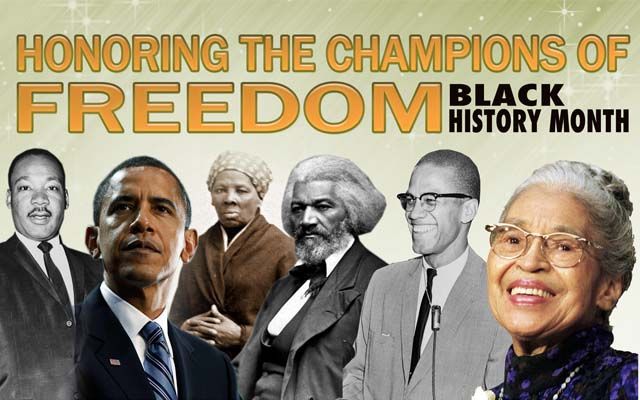
    Honoring the Champions of Freedom

    Black History Month should symbolize for all of us the universal and timeless struggle for social justice. God Almighty has sanctified this struggle, providing humanity with the criterion for its realization. Dr. Martin Luther King, Jr. captured so eloquently the heart of that principle: “Cowardice asks the question: is it safe? Expediency asks the question: is it politic? Vanity asks the question: is it popular? But conscience asks the question: is it right?”

    “When I found I had crossed that line, I looked at my hands to see if I was the same person. There was such a glory over everything; the sun came like gold through the trees, and over the fields, and I felt like I was in Heaven.”

    Standing up for what is right is an ongoing campaign for dignity, equal opportunity, and the civil and human rights that no individual, group, or government can usurp from the people without bringing about an uprising to set things right. The response may be delayed, it might be temporarily crushed, pepper-sprayed, co-opted by opportunistic individuals or groups, imprisoned, or killed. But with time, justice has its say.

    The Voices of Justice Speak

    Harriet Tubman, known mainly for leading slaves to freedom by the Underground Railroad, a vast network of secret routes, spoke her mind for the cause of justice: “Leave no brother or sister behind the enemy line of poverty.” This woman of the 19th century, born into slavery, beaten by those who thought they owned the very breath of  her life, escaped from enslavement with her brothers, Ben and Henry, in 1849. Then began her long endeavor to free the rest of her family. Slavery was the first enemy line that she knew, in her good conscience, none should be left behind. And she began guiding groups of slaves to the free states of the north. Each time she returned, she risked her own recapture, and she did so again and again for eleven years. She didn’t ask herself if the venture was safe or politically expedient or popular. She knew it was right and that was her sole criterion for action. Later in life she spoke of her profound experience when for the first time she crossed into Pennsylvania, a “free” state, “When I found I had crossed that line, I looked at my hands to see if I was the same person. There was such a glory over everything; the sun came like gold through the trees, and over the fields, and I felt like I was in Heaven.”

    Harriet Tubman was resolute in making her way to a “free state.”  With similar dedication, Frederick Douglass worked tirelessly to help bring about the destiny of America as a “land of the free.”  Well-known as having escaped from slavery to become a leader of the abolitionist movement, he recognized that the fight for social justice requires a nation of citizens aiming for moral rightness and the thoughtfulness educed from intellectual depth. He said, “A battle lost or won is easily described, understood, and appreciated, but the moral growth of a great nation requires reflection, as well as observation, to appreciate it.” About his endeavors to facilitate that moral growth of America, he said, “I would unite with anybody to do right and with nobody to do wrong.”  He became in later years a strong advocate for the rights of women and once remarked, “When I ran away from slavery, it was for myself; when I advocated emancipation, it was for my people; but when I stood up for the rights of women, self was out of the question, and I found a little nobility in the act.”

    So many African-Americans have contributed to the moral growth and intellectual maturing of America. Some risked everything to help emancipate this nation from the ignominy of slavery.

    Douglass was self-educated, yet his oratorical skill was fiercely honest and superlative. Those who endorsed slavery were up against a flesh-and-blood refutation of their pitiable, ignoble argument that slaves could not be granted citizenship because they did not have the necessary intellectual capacity. Douglass pointed out that slavery fetters both the slave and the slave-holder,  “No man can put a chain about the ankle of his fellow man without at last finding the other end fastened about his own neck. “ And yet, Douglass also understood that those who enslave and oppress do not willingly give up their power and privilege, declaring, “Power concedes nothing without a demand. It never did and it never will.”

    Rosa Parks also understood this well. She understood this when Recy Taylor, a 24-year-old wife and mother, was raped by a group of white men in 1944. Parks and others who were outraged when no arrest was made, demanded action by the Alabama governor, Chauncey Sparks.  As this incident gained national coverage, the offices of the NAACP received letters from thousands of African-American women who had been raped by white men who were never prosecuted. This incident, and the larger issue of sexual violence against African-American women it uncovered, were the catalyzing events of Parks dedication to civil rights.

    Her well-known refusal in 1955 to give up her bus seat to a white person was much more than the simplistic story told about a seamstress after a long day of work, too tired to get up from her seat. Rosa Parks was, by that time, already a dynamic champion of social justice. In her autobiography she reveals, “People always say that I didn’t give up my seat because I was tired, but that isn’t true. I was not tired physically, or no more tired than I usually was at the end of a working day. I was not old, although some people have an image of me as being old then. I was forty-two. No, the only tired I was, was tired of giving in.” She was tired of giving in to injustice and so she demanded concessions from power. She demanded change. Rosa Parks also had a vision of equality for all. She said “I would like to be known as a person who is concerned about freedom and equality and justice and prosperity for all people.”

    Untold Numbers, Unsung Heroes — A Liberating Vision

    So many African-Americans have contributed to the moral growth and intellectual maturing of America. Some risked everything to help emancipate this nation from the ignominy of slavery. Some demonstrated the courage to engage in civil disobedience, and others expressed,  so we all could appreciate,  the luminosity of freedom once released from the yoke of chattel servitude. All paved the way for America’s first African-American president. We should celebrate their achievements with greatest respect and admiration, and take time to read their stories — Tubman, Douglass, and Parks, as well as Ralph Abernathy, Ella Baker, Julian Bond, Stokely Carmichel, Shirley Chisholm, Eldrige Cleaver, Ellen and William Craft, Medgar Evers, Marcus Garvey, Frances Harper, Benhamin Hooks, Roy Innis, Jesse Jackson, Coretta Scott King, Martin Luther King, Jr., Kweisi Mfume, Gabriel Prosser, A. Philip Randolph, Nat Turner, Sojourner Truth, Andrew Young, Malcolm X, and so many more provide us insight and inspiration.

    The privileges and prosperity of whites in America did not come about because white people were more hard-working and morally upright than minorities.

    Out of their efforts arose the man, Barak Obama, who symbolizes the visionary dream of equality, an ideological vision shared by all workers for social justice.  President  Obama, in early December of 2011, gave a talk in Kansas, quoting from Theodore Roosevelt’s 1910 “New Nationalism” speech.  Roosevelt captured the spirit of egalitarian ideas that are keenly relevant today. He pointed to the challenge of curbing the excesses of those who would claim for themselves an unfair portion of wealth and resources, leaving the vast majority of the world’s population disempowered, in varying degrees of impoverishment and thus in servitude to debt-masters.  Roosevelt spoke of the duty of each individual to improve his own condition in the world while never forgetting to advance the well-being of others.  This is no inciting of class warfare against those with riches and property, as he says, “Let not him who is houseless pull down the house of another, but let him work diligently and build one for himself, thus by example assuring that his own shall be safe from violence when built.”

    Indeed, this was not a speech inciting class warfare from the bottom up, but a grave warning about those who wage a battle against the rights of the majority, from the top down.  He talks about equality of opportunity as providing a base for the advancement of humanity, allowing each to push forward unobstructed toward his or her greatest potential. What stands in the way, says Roosevelt, is selfish interest on the part of those who would amass for themselves undue wealth along with the power to “twist the methods of free government into machinery for defeating the popular will.” These are “special interests” who organize, advocate, and lobby for their own self-interests, seeing these as only gained by trampling on the interests, rights, and needs of others.

    Roosevelt was prescient when he said, “..the great special business interests too often control and corrupt the men and methods of government for their own profit. We must drive the special interests out of politics. That is one of our tasks to-day.”  Obama, we hope and pray, will continue to fulfill the populist and egalitarian vision articulated by Roosevelt. When asked in college about his aims, he talked about ending the back room deals, the breach of trust by those in Congress who are  “…compliant and corrupt. Change in the mood of the country, manic and self-absorbed. Change won’t come from the top… Change will come from a mobilized grass roots.” One journalist who traveled with Roosevelt commented, “I don’t think any sane man could be with him two weeks without getting to like him; but the thing that struck me on that trip was the way he grew; the way an idea grew in his mind day by day as he lived with it until it took its final shape in speech. Then it was like a knock-down blow.” Theodore Roosevelt, the 26th president of the United States, was a Republican. We are waiting for some populist knock-down blows from our 44th American president.

    Retrogressive Visions

    Throwing his own knock-down blow is Newt Gingrich, a proper symbol of the current Republican vision of how things should be. This vision conveys retrogressive sentiments such as ““Really poor children in really poor neighborhoods have no habits of working, and have nobody around them who works. So they literally have no habit of showing up on Monday. They have no habit of staying all day. They have no habit of ‘I do this and you give me cash,’ unless it’s illegal.” Mr. Gingrich made this comment last November at a campaign stop in Iowa, in response to being asked about earlier statements he had made at Harvard University, including, “It is tragic what we do in the poorest neighborhoods, entrapping children in, first of all, child [labor] laws, which are truly stupid.”

    We were a congregation of souls that night, believing in and surrendered to universality, feeling so profoundly connected and joyful that a son of our nation was standing before us with the torchlight of promise held high.

    So what should be done, according to this stalwart conservative? The obvious — provide equal opportunity to the poor children — let the 10-year-old boy work as a janitor at his school. Kathleen Parker, a columnist for the Washington Post, herself a Republican, commented on Gingrich’s idea, throwing light on the absurdity at its core, “Republicans have always been wedded to the idea that Americans, given opportunity, can pull themselves up by the bootstraps. In fact, most people subscribe to this very American narrative to varying degrees. But missing from the vision of the coldest eye is acknowledgment that sometimes people have no boots”… or a roof over their heads, food on the table, courage to make the decision to pay the utility bill and keep the house warm, or go to the doctor to treat the baby’s two-month-old cough.

    How much pulling up by one’s bootstraps can a normal man muster when he faces, day in and day out low wages, sub-par schools for his kids because of an unfair funding system, mental health issues such as depression or anxiety (not difficult to understand given such living conditions), disease-carrying rats and toxic mold, no health insurance, bosses who demean despite his hard work and loyalty.  Mr. Gingrich’s solution?  Let the 10-year-old student in the dilapidated school work as a janitor to learn what it takes to make it in America.  All the while his peers in more affluent schools will spend their extra-curricular time playing sports, participating in student government, the debating team,  the art club. Is this double-crossing standard okay with Gingrich and his Republican colleagues?

    Poverty and Racism: An Historic Double-Cross

    Characterizing poor children as all coming from families with lazy or criminal habits is barely-veiled race-baiting. If Gingrich is pandering to his political base, then he knows that poverty and race are too often synonymous in the public mind. Certainly, if he is an honest historian, he also knows that poverty and racism are absolutely intertwined.  The privileges and prosperity of whites in America did not come about because white people were more hard-working and morally upright than minorities. Their status was the result of deliberate, carefully-crafted policies and institutional structuring that promoted the social and economic advancement of whites and obstructed the advancement of people of color:

    • Social and economic institutions such as slavery which dispossessed blacks of everything but the strength of their souls while at the same time, on their backs, created vast fortunes, embezzled wealth, not just for the slave-owners but for the entire white, slave-centered economy
    • Court decisions such as Plessy v. Ferguson in 1896 which cemented the disparities that attach to segregation and second-class citizenship, creating “separate but equal” schools, which were in fact anything but equal as schools for blacks were severely underfunded (and still are today), creating educational deficits that are hard to overcome in a competitive society
    • Acts of congress such as the The Indian Removal Act of 1830 which forced native Americans off their land and offered the confiscated land to settlers (whites only; no blacks need apply);  or the Wagner Act in 1935 which granted legal protection to labor unions resulting in higher wages for those with union membership, but allowing unions to exclude blacks from union membership. This protected whites from competition by black workers while maintaining the lower paid group of once-again disenfranchised African-Americans
    • Discriminatory practices by government agencies such as the Federal Housing Administration, which in the 1940s and 1950s refused to grant loans to integrated neighborhoods

    … the list goes on and on.

    Then we have to refresh our souls with the hope of a man who helped lead a movement aiming to rectify this part of America’s history. Dr. Martin Luther King, Jr. said, “ I have a dream that one day on the red hills of Georgia, the sons of former slaves and the sons of former slave-owners will be able to sit together at the table of brotherhood.” As we shall see later in this article, Malcolm sat at such a table toward the end of his life, and the liberating sentiments he expressed are poignant and classic. King spoke of the price that one might pay for promoting a genuine fellowship of humankind, “If physical death is the price that I must pay to free my white brothers and sisters from a permanent death of the spirit, then nothing can be more redemptive.” Both King and Malcolm X paid with their lives.

    We might do well to keep in our minds the sacrifices symbolized so well by Black History Month as we move toward the coming election day. Each of us has to decide if we will embrace social justice for all people and its altruistic imperatives of kindness and compassion, or choose a retrogressive march back to days of injustice.  Those who organize that march pretend to offer solutions to problems. But with thoughtfulness and analysis, we see they offer nothing more than euphemistic hoodwink. George Orwell said that politicians often speak in “…defense of the indefensible,” and thus their rhetoric “has to consist largely of euphemism, question begging, and sheer cloudy vagueness.” Or plain and simple misrepresentation.

    Like the talk about teaching poor children a work ethic because they have “nobody around them who works.”  In fact, the adults in many poor families work two or three jobs. Not surprising when one does the simple math. Imagine trying to live on $8 an hour pay, let alone support a family. An eye-opening book is Nickel and Dimed: On (Not) Getting By in America, written by Barbara Ehrenreich, a journalist who holds a PhD in cell biology. She went “undercover,” traveling the country for two years and working as a waitress, hotel maid, Wal-Mart salesperson and other low-paid positions. She met countless numbers of the working-poor.  Disproving the canards that poor people are just “too lazy to work” and that any job “will defeat poverty,” she discovered that even “the ‘lowliest’ occupations require exhausting mental and physical efforts. And one job is not enough; you need at least two if you intend to live indoors.”
    We need to demand a more balanced approach to the distribution of wealth and resource and opportunity in this country. That’s not socialism, it’s common sense and basic decency. It’s a strange thing that the religious right are often the most vocal about rescinding the social contract to provide for the needy. Maybe they would do well to revisit their religious texts — “And the crowds asked [John the Baptist], “What then should we do?” In reply he said to them, “Whoever has two coats must share with anyone who has none; and whoever has food must do likewise.” (Luke 3:10-11).

    Black History Month — Honoring the Champions of Freedom

    They are not the top 1% “job-creators;” not the demagogues; not the rank-and-file conservatives who don’t know or pretend not to know that structural poverty and institutionalized racism exist. The champions of freedom are  those, past and present, who actively engage in the fight for social justice, who feed the hungry and provide shelter for the dispossessed .  An African proverb suggests, “If we stand tall it is because we stand on the shoulders of many ancestors.” All right-minded citizens of this country should consider as prime part of their true American ancestry those who overcame the physical brutality and emotional carnage of enslavement to find their destiny in dedication to social reform; the ones, past and present, who brave the conditions of poverty and oppression, all the while striving to live a decent life, keep a marriage together, raise happy and successful children; all those who tried to keep going but have fallen in the dust, too tired to take another step or face another day; all those who work to realize the rights of minorities, women, workers, children, and any others who have been marginalized and denied their rights. African-Americans have been fighting for social justice in this country for more than 200 years. They have paved the way for all of us. With patience and perseverance, we must build on their efforts and accomplishments. The challenge, in the process, is not to hate the oppressors and their minions, but to provide a new vision to those steeped in ideas which offend by moral cowardice,  political expediency, or vain and selfish motives.

    Many of those sold into slavery and brought to this country were African Muslims whose culture of birth provided them with a character pledged to do right. Maya Angelou, who was chosen by President Clinton to recite her poem “On the Pulse of Morning” at his 1993 inauguration, confirms the hope that enough of us might reach inside ourselves to find a genuine and primordial culture of humaneness. Angelou has written, “It takes more than a horrifying transatlantic voyage chained in the filthy hold of a slave ship to erase someone’s culture.” The Islamic tradition and culture requires Muslims to “return what is better” when they have been wronged. Human beings may not be capable of that in an instant, but over time the nascent impulse to demand social justice, while never deviating from the moral highroad, might take root and thrive. This is, without doubt, a steep path to climb, to embrace the way of universality and be guided by divine wisdom: “O humankind — Lo! We have created you male and female, and have made you nations and tribes that ye may know one another…” (Qur’an 49:13).
    Climbing the Steep Path

    Malcolm X climbed that steep path. His father’s civil rights activism brought death threats from white supremacists. Malcolm recalled, “When my mother was pregnant with me — she told me later — a party of hooded Ku Klux Klan riders galloped up to our home… Brandishing their shotguns and rifles, they shouted for my father to come out.” In 1929  their Lansing, Michigan home was set on fire and burned to the ground, and two years later his father’s lifeless body was found, lying across the trolley tracks in the town. And one of his uncles was lynched. Then when Malcolm was 13, after all these assaults on their lives, with ongoing fears for the safety of her children, his mother had a nervous breakdown, and the children were sent to various foster homes and orphanages. It doesn’t take much reflection to understand Malcolm X’s militancy during his days with the Nation of Islam. Yet, after his split with the organization that, without doubt and despite its flaws, uplifted many, Malcolm, the man who once believed that the white man is the devil, made hajj and wrote in a letter to his colleagues back home,
    “America needs to understand Islam because this is the one religion that erases from its society the race problem. Throughout my travels in the Muslim world, I have met, talked to, and even eaten with people who in America would have been considered white – but the white attitude was removed from their minds by the religion of Islam. I have never before seen sincere and true brotherhood practiced by all colors together, irrespective of their colors. You  may be shocked by these words coming from me. But on this pilgrimage, what I have seen and experienced has forced me to rearrange much of my thought-patterns previously held and to toss aside some of my previous conclusions. This was not too difficult for me. Despite my firm convictions, I have always been a man who tries to face facts, and to accept the reality of life as new experience and new knowledge unfolds it. I have always kept an open mind which is necessary to the flexibility that must go hand in hand with every form of intelligent search for truth.”

    We wish Br. Malcolm could have witnessed the marvel of Barack Obama giving his 2008 victory speech at Grant Park in Chicago, before a crowd of supporters a quarter million strong.  That night we had no interest in colors of skin except for feeling jubilant that this intelligent and self-composed man was recognized by the majority of citizens as the best one to lead. We were a congregation of souls that night, believing in and surrendered to universality, feeling so profoundly connected and joyful that a son of our nation was standing before us with the torchlight of promise held high.  Progeny of the patient and perseverant multitudes who trailblazed the way before our time,  he was ready to lead us another some distance upward on the path of human fellowship, toward peace.

    “And what will explain to you the path that is steep? (It is) freeing the bondman; or the giving of food in a day of privation to the orphan with claims of relationship or to the destitute in the dust. Then will one be of those who believe, and enjoin patience and perseverance, and enjoin deeds of kindness and compassion” (Quran 90:12-17).