
If you are a Muslim youth in America, it’s critical that you not only understand the fundamentals of Islam and its history, but also the history of minority communities in America. We must educate ourselves about the extermination of Native Americans, the chattel slavery and ongoing structural racism against African Americans, the exploitation of Chinese laborers, and the animosity toward Japanese immigrants, Jews, Irish Catholic refugees, and Latinos. We should also study the Red Scare and the McCarthyite persecution of Communists and those accused of being Communists, the Women’s Suffrage Movement and those who tried to impede it, and the contemporary issue, often a controversial topic in our communities, concerning the discrimination against members of the LGBTQ community. Even when we have differences with the beliefs or values of any particular oppressed minority, it is critical that we familiarize ourselves with how the dominant culture has repeatedly and systematically exploited, disenfranchised, and/or sought to decimate the social infrastructure and culture of minority communities. One infamous example is the CIA’s involvement in transporting and distributing crack cocaine in the African American community during the Reagan administration.Once dismissed as conspiracy theory,this chapter in CIA history has been researched and well- documented by various investigative journalists including Gary Webb, author of “Dark Alliances.” We must recognize the vital and unyielding commitment of Islam to justice, and to the rights and well-being of all people. This is one of the primary ways we will be able to recognize and withstand attacks against our own community, secure our future in this nation, and hold on to our values and beliefs.
There are existing Islamic institutions in the United States that fail to differentiate between Islamic culture and the various traditions of Muslim-majority nations. Consequently, Muslim Americans, particularly Muslim youth, are often confused by teachings that unnecessarily disenfranchise and alienate them from aspects of American society that are not contradictory with Islamic beliefs. Rather than insisting that the Islamic worldview as delineated and taught in our traditional centers of learning is irreproachable and infallible, we must contribute to an environment that encourages critical thinking and a willingness to learn about the history and social nuances of the society in which we live. Young adult Muslim Americans should initiate an intensive study of American history, beyond that which is taught in our public schools. Our leaders and teachers must be individuals who are knowledgeable about the history of the 241-year-oldsocial, political, and economicexperiment known as the United States of America, with all its good points and its weaknesses, and its too frequent ignoble conduct toward many, both citizens and immigrants. Additionally, young Muslim Americans need to study classical Islamic works, as well as the literature of the revivalist theorists and movements of the last 150 years, from around the time of the decline and fall of the Ottoman Empire up to the present era. There was a time in our history when great Muslim scholars, thinkers, and visionaries guided the Ummah, even though the Muslim nations were physically and mentally colonized and in disarray. These leaders had firm understanding of Quran and sunnah as well as deep grasp of, and insight into, the social and geo-political conditions that prevailed.
Let’s try stepping away for a moment from our non-productive social media “Statuses,” “Likes,” and the “clicktivism” that we are so passionately immersed in. Much of it is petty, distracting, or divisive. Muslim youth — let’s spend more time learning, thinking, and developing our character. That is a much more productive outlet for our youthful passion and energy.Acquiring sound knowledge and the purifying of our souls can unite us, giving us a common ground for speaking truth and taking action. What Say You?
Tag: American Muslim Youth
-

OPINION – WHAT SAY YOU?
-

Book Review: Losing My Religion
Jeffrey Lang, Losing My Religion: A Call for Help (Beltsville, MD: Amana Publications, 2004). 504 pages. ISBN: 1-59008-027-0.
This article written for Message Int. and printed in the January/February 2005 aditionJeffrey Lang’s latest book, Losing My Religion, is a bold attempt to shake the Muslim leadership in North America out of its deep slumber. As he makes clear throughout this call to action, the Muslim community is losing its grim battle to retain Muslim youth in its fold and is failing to attract new adherents.
When Lang chose Islam, his parents were just as rattled as many Muslim parents are when their children abandon their traditional upbringing by smoking pot, drinking alcohol, being jailed, or suddenly deciding to marry a non-Muslim. When Lang’s 9-year old daughter casually asked him: “Daddy, what would you do if I became a Christian someday?” he felt terribly disappointed about not making Islam a clear choice for everyone. His daughter continued: “I’m not really thinking about becoming Christian, Daddy, but I sometimes think it would be a lot easier not to be a Muslim.””
Why should a person follow Islam, a religion that makes many demands upon one’s life?
Lang’s book is a serious attempt to address this crucial question for both new immigrants as well as Americans who were born and raised as Muslims. Spread over 500 pages, the book has only three chapters and a two-anda-half page “Parting Remarks.” Lang appeals to activist American Muslim youths and converts to play their pivotal role of explaining to the world why Islam is the rational choice for creating God’s kingdom on Earth and for human salvation here and in the Hereafter.
Millions of Americans are seeking spiritual growth and fulfillment, for they are not satisfied with their birth religion. But they are afraid of Islam, for in their minds it is associated not with inner and outer peace, as the name implies, but with images of burning Twin Towers, suicide bombers, and irrational bloodthirsty killers who slaughter innocent captives.
Crucial to the survival of any religion is its members ability to retain its community’s children and attract new adherents. On both counts, Lang’ asserts that “the Muslim community in not doing at all well.” Muslim immigrants, as well as new reverts to Islam, face an uphill task in keeping their family members attached to Islam. The trickle of new converts has almost dried up, especially after 9/11. [NOTE: THIS CONTRADICTS YAHIYA EMERICK’S ASSERTION IN HIS ARTICLE THAT THERE ARE MORE NEW MUSLIMS AFTER 9/11 THAN BEFORE]
Lang’s major theme is “the disillusion of American Muslim youth.” Almost every Muslim family in North America can relate to Sohail’s tale of parental disillusionment. Most Muslim parents try to raise their children in the traditional manner: making sure that they can read the Qur’an;’ pray regularly; attend the week-end Islamic schools, camps, and conferences; and participate in the community’s social functions. However, this often creates a false sense of security, which causes them to be quite rattled when their glass menagerie shatters and their ideal Muslim children graduate into the real world, beyond parental oversight and supervision.
Large numbers of Muslims reverts, and spiritual seekers are forsaking the American Islamic community, a fact that causes Lang to warn: “Many of these will inevitably abandon the religion.”
The usual explanation offered by the community’s elders is peer pressure or the devastating effects of the American melting pot. However, they have little else to offer as a remedial antidote and are only remotely aware of what Lang calls “intellectual confrontation.” On the one hand, Islam is subtly and overtly demeaned by the media and anti-Islam websites, and, on the other, an extreme, virulent, and irrational interpretation of Islam has assumed center stage.
Lang finds that most North American mosques impose, in the name of Islam, traditions and beliefs of questionable necessity that obfuscate the fundamental message of God’s revelation to humanity. The overriding negative impression of Islam, flowing from within and without, is driving individuals away from the faith in droves. Instead of seeing Islam as a path to spiritual growth, enlightenment, and fulfillment, many disengaged Muslims see a stagnant, retrogressive, and patriarchal remnant of “a lagging culture, mired in meaningless controversies and hollow, lifeless formalism.”
He wants young American Muslims to respond rationally to Islam’s detractors and also to reassess the vast tradition that has come down to us in the name of Islam. They can do this, for they have been taught how to search, question, critique, and analyze, and, moreover, are willing to separate religion from culture. Thus, they can distinguish between Islam’s essentials and its time- and place-bound interpretations. His advice to them is:
“Always pursue the truth, for God is Truth, and always pray for and trust in His guidance … never forgetting that to Him, and Him alone you have surrendered –not to a tradition, or a school of thought, or a local community, or culture, or a scholarly legacy – and that your living, striving sacrifice and dying, all is for Allah.”
The book is a must-read for every Muslim who cares about Islam and Muslims, and for all those who wish to take God’s guidance to every corner of the globe. His language flows with life and vibrancy. This very fascinating and insightful book comes from a person who chose God over tradition, and rational behavior over blind faith.
-
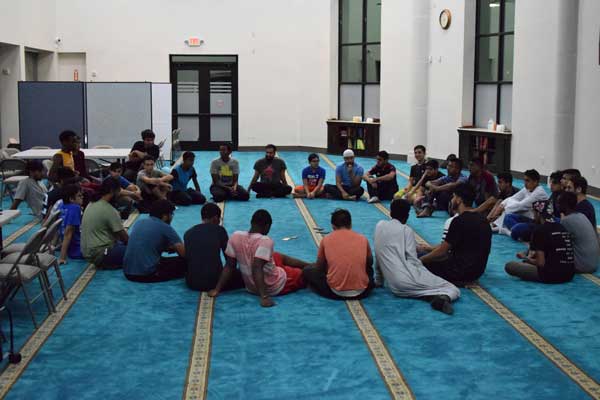
Claiming the ’90s for Muslim Youth
As a new decade begins and the passing one becomes history, I want to learn from past mistakes and look for an even better future for Muslims in general and Muslim youth in particular. Most of all, I want to spread Allah’s message to whomever I can. Allah says in the Qur’an, “Invite to the way of your Lord with wisdom and beautiful preaching; and debate with them in ways that are best” (16:125).
Da’wah is a responsibility of all Muslims. But it requires patience, a sound knowledge of Islam, and the ability to deal with people in ways that are best and most beautiful. As a Muslim youth living in a society which is not friendly to Islam, I want to be knowledgeable about my religion in the best possible manner and be able to practice what I know. I think that non-Muslim youths in this country are confused and with out direction. Through my own convictions and dedication, I can, with help from Allah, show them the path to salvation. The more we successfully invite Americans to Islam, the better our lives will be in this country. As far as Muslim youths are concerned, I want to tell them that there are organizations and groups where they can learn about Islam, socialize, and engage in games and sports. Local mosques and Islamic centers should be helpful in providing relevant and accurate information about the deen and in providing programs for youth.
By joining hands, Muslim youth and non-Muslim youth can have an opportunity to participate in positive sports and extracurricular activities. Who says we can’t have fun?! It is important to note here that all our actions can be ibadah (worship) if they conform to the commands of Allah. As Muslims, it is necessary that we tell our non-Muslim friends about tawheed and Islam, about jannah and jahannam, about prophets and the guidance from Allah SWT that they brought to mankind, and about the accountability for our deeds. Since da’wah needs close interaction, we should make friends with non-Muslims, even invite them to dinner at our homes, and at the proper time and within the context of discussion, explain to them why they should consider Islam. We must tell them why we abstain from alcohol and drugs, etc. We should also encourage them to bring their parents so that our parents can get to know them and can do their part of da’wah.
When we succeed in our efforts and anon-Muslim friend converts to Islam, we should always help him get through his initial difficulties in making wudu, performing prayer, reading Qur’an, and so on. We should remember that when a person becomes Muslim, in many ways he leaves a world behind: he oftentimes leaves his non-Muslim friends and abstains from doing things that contradict Islam that he did before, and, in many cases, he faces a negative reaction from his parents, friends, and neighbors. To help him overcome the difficult transition, we should offer warmth, love, and Islamic brotherhood so that he does not feel that there is avoid in his life.
In the ’90s, we have a great opportunity to improve ourselves and spread Allah’s message. If we try hard with sincerity, there is no reason why we won’t succeed. Allah has already promised His help to those who make efforts on His path. “O you who believe! If you help[the cause of]Allah, He will help you and make firm your steps” (Qur’an 47:7).