بسم الله الرحمن الرحيم

Author: Zaineb Sharif

  • Frontlines of Empathy: Unveiling Grief and Resilience in Palestine

    Frontlines of Empathy: Unveiling Grief and Resilience in Palestine

    Politics and journalism have been, for a long time, two of my greatest passions in life; and Palestine has always been the driving force, the soul of my unwavering commitment to truth and justice. The first thing we are taught in journalism is that it’s a form of storytelling, sharing narratives and perspectives, the pursuit of understanding the complex terrain of reality. As a journalist you are given the duty of upholding truth and an obligation to present facts. The principle of positing information objectively is drilled into our brains. Journalism serves as a watchdog, taking on the responsibility of truth-telling, of shedding light on injustices and abuses of power. This is in stark contrast to politics, which is so often a realpolitik that covets power, not ideals, and thus falls short of a moral commitment to humanity and an empathy that is willing to look at suffering and seek its relief.

    For years, I’ve dedicated myself to raising awareness, my own first and then others’, through publishing articles, researching hours upon hours, writing academic papers, and doing projects on Palestine. While, simultaneously, I have attended events, protests, and seminars to dig deep into the core of that intransigent issue. I have read works of Edward Said and Mahmoud Darwish, two souls who shared the struggle to free Palestinians, their advocacy through action, writing, and storytelling. But in the end, mine has been a small attempt to use logic and reason in trying to make sense of the decades of illegal occupation and the politics encumbering the region.

    I was willing to fall into the rabbit hole where politics, geopolitical agendas and exploitation, propaganda, deceit, and human failing all swirl in a disorderly, life-defying maelstrom. But upon reflection, the series of events that unfolded in October forever changed my trajectory in life and my understanding of humanity, mortality, and journalism.

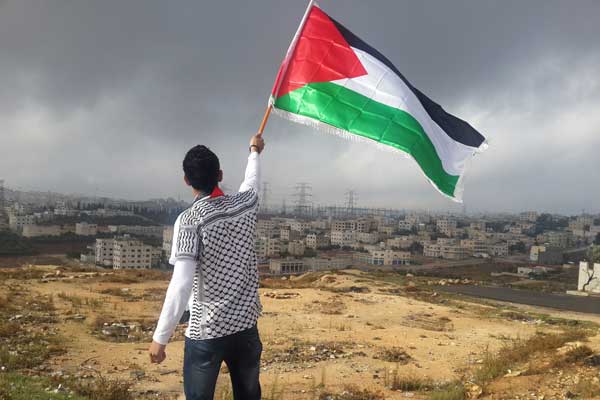
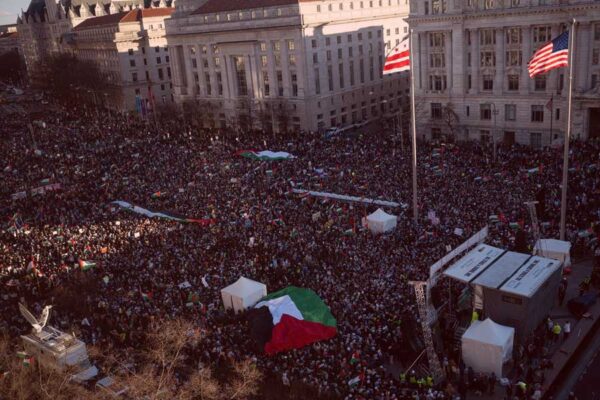
    One October evening, I marched on the streets of Cambridge for hours, demanding first a ceasefire and then justice for Israel’s brutal attacks on Gaza. Marching on the same streets years ago, I was among those demanding justice for the attacks on Sheikh Jarrah. My keffiyeh, wrapped around my neck, was adorned with a picture of Al-Aqsa and “Free Palestine” written across the bottom in Arabic. I joined hundreds upon hundreds of protesters, all flushed with anger and adrenaline. As always, I believed it was my duty to stand up, to be a voice for those made mute by censoring or censure or oppression.

    The trajectory of my life changed when, twenty-four hours later, I received news that my grandfather had suddenly passed away. Everything I took for granted shattered. Everything around me blurred as I was forced to grapple with a reality that I had no choice but to face. The funeral home was where I said my final goodbye. He looked at peace, asleep, the room becoming a sanctuary, for moments transcending the boundaries of life and death. The person who raised me to be strong and resilient laid motionless in front of me. And then, moments later, the world outside felt distant, and for the first time in my life I felt powerless.

    I stood and watched him being buried. I helped pat the fresh dirt on his grave, gently placing his favorite roses down. I sat and played with the soil, and as my phone buzzed with messages of condolence, I was also receiving notifications of breaking news in Gaza. The parallels of watching reports on my phone of entire families being obliterated while living my own personal encounter with death drew me into a spiral of mind-boggle and desolation. I wanted to block all of it out, I wanted to look away as if that might fix things. These two experiences, though quite distinct and incomparable, melded into immense grief for me. In the weeks following my grandfather’s passing, I struggled.

    I returned to the city to find people that I had known as friends being targeted and doxed. Campuses all around were sending nearly-identical emails, dismissing claims of the genocide taking place in Gaza. The same politics and journalism classes in which I had been taught ethics, brushed all the obvious evidence of injustice under the rug. For the first time, everything that I had been accustomed to according to a political framework of social justice and advocacy for those who are marginalized, discriminated against or oppressed — all of that came crumbling down. Every protest I attended, I heard the same stories of entire families being wiped out, of children being brutally murdered, and hospitals being attacked. I thought of my grandfather often, and of thousands like him. The juxtaposition of dealing with intimate personal sorrow while witnessing the large-scale horror of genocide became a driving force in my deepening commitment to advocacy for positive social and political change. Over the course of two months, I began collecting videos of protests and rallies, creating video packages, researching public opinion, analyzing and writing about the psychopathy of ethnic cleansing and genocide, and speaking at multiple protests.

    Seeing what Palestinians are going through, right there on the screens in front of our eyes, makes commitment to social justice, which can be for many people an intellectual exercise, become the reality it is — life’s challenge to feel the suffering of others, to empathize in ways that mobilize us intellectually, spiritually, emotionally, and morally. My voice is just a mere fraction of the megaphonic call to action to stop the destruction and death in Gaza.

    To grasp Palestinian resistance, that it will not die, one must understand grief. This was the first time in my life I felt concomitant resistance in the form of refusing to surrender to despair, in a willingness to face death and defy its pull to hopelessness and the dissolution of personal autonomy and power. This is nothing less than a total commitment to keep going, to find a solution in undying resistance to oppression.

    The struggles of the Palestinians have been obscured for decades by carefully curated narratives in the media. Headlines often reduce the suffering and deaths to numbers and statistics, stripping away their identities. Reducing individuals to these statistics perpetuates a cycle of indifference. Now, however, we see journalists on the ground in Gaza who are dismantling these decade-old narratives. At its core, we have all been forced to bear witness to the atrocities taking place. What we see is a compelling display of Palestinian strength and resilience. No class, no academic project, no intellectual analysis or reflection has shown me, as the Palestinians have, the depth of the human soul and its refusal to capitulate to death and destruction.

    Now, during every protest I think of my grandfather. I don’t think of statistics or politics or propaganda. I think of people like him. And so, I speak of him often, in hopes that as long as I speak my truth, the memory of his life’s principles and virtues will never die. Political leaders and governments too easily create “us vs them” as a cover for their destructive policies, a way of abolishing the meaning and value of individual lives. But in journalism, truth can prevail, it must be the guardian of veracity. Storytelling is our lifeblood, and it unfailingly points towards justice and resilience in the face of oppression. The Palestinian story is a living testament to this truth. In solidarity always.

  • Supporting Mental Health in Youth

    Supporting Mental Health in Youth

    Adolescence is a time of great change. Coming of age involves phases of physical, emotional, mental, and behavioral transitions and adjustments. As the individual grows into adulthood, there are various struggles and challenges, and attention to one’s mental health during this time is just as important as attention to physical health. In the past few years, particularly with the pandemic and lockdowns, there has been a tremendous increase in mental health issues in youth of all ages. According to the World Health Organization “globally, one in seven 10 to 19-year-olds experiences a mental health disorder, accounting for 13 percent of the global burden of disease in this age group.” Anxiety disorders and depression are the most prevalent in that age group, with an estimated 3.6 percent of 10 to 14-year-olds and 4.6 percent of 15 to 19-year-olds dealing with some form of anxiety. And 1.1 percent of 10 to 14-year-olds and 2.8 percent of 15 to 19-year-olds suffer from depression. One can assume that there are those who go undiagnosed and untreated.

    Risk Factors

    Many risk factors contribute to mental health issues including an unsupportive environment or even negligence or abuse. Trauma, substance abuse in the family, social stresses, fear, or anxiety — all of these can significantly affect a young person who does not know how to adequately cope.

    Adding to the usual factors that affect the mental health of youth is the pandemic. Numerous studies report on the negative psychological effects of the pandemic and the burden placed on children and youth who dealt with school closures resulting in remote learning, as well as being cut off from in-person friendships and social interactions. This disruption left many children lagging behind in cognitive and emotional development. In addition, the very limited social interactions with others left youth feeling lonely and parents, teachers, and experts have worried about the loss of this crucial aspect of development for children and teenagers alike.

    Combatting Stigma

    Adding to the dilemma is that stigma surrounding mental health challenges continues to plague many communities and/or families, and in some cultures this stigma is very strong and acts as impediment to seeking help or getting treatment. In some racial and ethnic communities, reaching out for help may be seen as a sign of weakness, lack of faith, or mental disease.

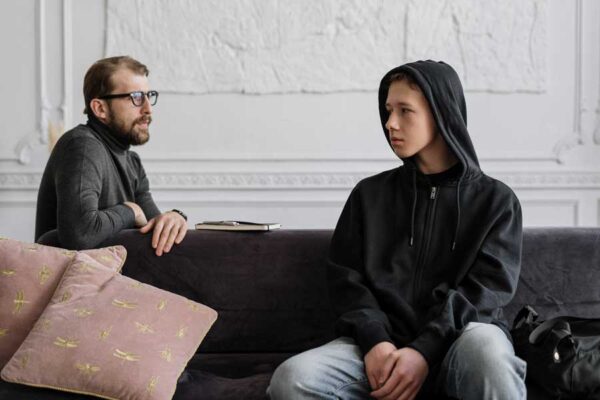
    Parents and communities can support children and teens who are struggling with mental health. The first step is to watch for warning signs and take note of emotional and behavioral changes. A child might openly express feeling stressed or depressed or he or she might signal that through acting out or withdrawing emotionally. Parents should make sure to openly communicate with their child about their emotions and feelings. If your child continues to have issues, it is important to seek help and support from a professional counselor.

    The Importance of Mental Health in Islam

    Islamically, mental health is just as important as your physical health and well-being. And is it critical to take care of one’s mental health in order to live a well-balanced lifestyle. In the past, Muslim scholars and physicians such as Al-Razi and Abu Zayd Al-Balkhi understood and acknowledged how important mental well-being is and highlighted the importance of balancing all aspects of the self, including the mental and physical aspects.

    In the Qur’an and ahadith there are many references to the importance of self-care and well-being. One verse describes the importance of knowing that Allah SWT is always with us and will not put any person through hardship beyond their capacity to bear (2:286). Dhikr, d’ua, and salat are prime ways to get closer to Allah SWT; and remembering Him helps to bring peace to minds and hearts.

    Help the Youth Develop Healthy Coping Skills

    Tailored to the age and maturity of your child/youth, the following can help your child maintain good mental health:

    • Model good behaviors and traits including patience, perseverance, resilience, and tolerance. These traits are especially important to demonstrate when the parent herself or himself feels stressed. Children learn from and imitate their parents so being a good role model is essential.


    • Help your child learn to look at the problem or cause of stress in a wider perspective. Their first impulse may be to catastrophize the situation. Lead them to view the situation as a problem to be solved and an opportunity to learn. Guide your child to consider factors or aspects of the situation they may not have recognized on their own.


    • Let them know that there are some issues that are outside our control and others that we can do something about. When the issue is minor or fleeting, teach them ways to “let things go” like deep breathing and positive self-talk.


    • Guide your child to activities such as reading, art, or sports/exercise that can provide great outlets for stress and contribute to coping in a healthy way with challenges and difficulties.


    • Make sure your child has a good support system including both family and friends. Let them know they can always come to you to share whatever they are going through, whether positive or negative. Practice listening in an active, nonjudgmental way when your child does share.


    • Teach your child to practice gratitude for the good things in their life. This is best done by example so be willing to express your own gratitude out loud, at appropriate times.


    • Invest time with your child in volunteer activities. Helping others has many benefits to the one who is helping, including realizing a sense of responsibility to those less fortunate as well as helping to put one’s own challenges in a wider perspective.

    Most importantly, teach your child that remembering Allah SWT, making dhikr, du’a, and salat are essential means to cope in a healthy way with life’s ups and downs; and calling on Him, for young and old alike, is a valuable and powerful way to find peace of mind and heart.

  • Covering War in Ukraine, Media Bias Revealed

    Covering War in Ukraine, Media Bias Revealed

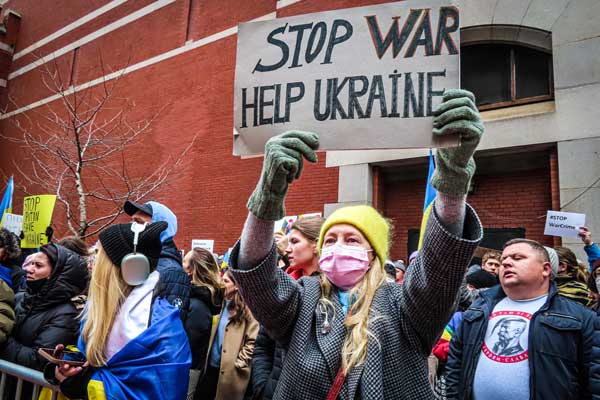
    After President Vladimir Putin of Russia began what he called a “special military operation” on February 24 to “demilitarize and denazify Ukraine,” nonstop media coverage of the conflict immediately began. A huge outcry from the international community was heard about the atrocities taking place in Ukraine. Pictures and videos of Ukrainians flooding out of the country were being broadcast on all mainstream media outlets. Reports coming out of Ukraine revealed a humanitarian crisis unfolding in front of our eyes. According to the U.N. High Commissioner for Human Rights, by March 20, roughly 900 civilians had been killed and 1,459 wounded. And, according to the U.N. High Commissioner for Refugees, 10 million Ukrainians have fled their homes.

    A number of journalists covering the war in Ukraine compared it to other conflicts that have taken place in recent years. One example is Charlie D’Agata, a CBS News correspondent, who stated, “But this isn’t a place, will all due respect, like Iraq or Afghanistan, that has seen conflict raging for decades. You know this is a relatively civilized, relatively European — I have to choose those words carefully too — a city where you wouldn’t expect that or hope that it’s going to happen.” His statement went viral, and he was widely condemned. A day later he apologized for his words. Comparing the crisis occurring in Ukraine to the conflicts and wars in the Middle East in this way effectively dehumanizes the lives lost in the Middle East and normalizes stereotypes of a “civilized” European people versus a backward and conflict-ridden Middle Eastern people.

    Another statement came from Daniel Hannan, a former member of the European Parliament. In an article in the British newspaper, The Telegraph, he wrote about the Ukrainian refugees: “They seem so like us. That is what makes it so shocking. War is no longer something visited upon impoverished and remote populations. It can happen to anyone.” As a result, he faced backlash including a statement from Mahdis Keshavarz, a board member with the Arab and Middle Eastern Journalists Association. Keshavarz stated, “… Have journalists become so desensitized to the suffering of different people of color, specifically people that are in war zones, that we’re no longer seeing on the same level playing field?”

    Media Coverage Using Racist Depictions and Language

    Statements about the Ukrainian refugees have revealed tribal, and even racist, sentiments.
    In an interview with BFM TV, Eric Zemmour, a presidential candidate in France said that “Everyone knows that Arab or Muslim immigration is too distant from us and it’s more difficult to acculturate and assimilate them. So effectively we are closer to European Christians.” His statement perpetuates intolerance towards people of different origins. In another article published on the European Commission, an official website of the European Union, Bulgaria’s prime minister, Kiril Petkov, said, “These are not the refugees we are used to. These are Europeans, intelligent, educated people, some of them are programmers… This is not the usual refugee wave of people with an unclear past. None of the European countries are worried about them.” His statement directly highlights the different perception of the Ukrainian refugees as opposed to refugees from the Middle East and Africa.

    The role the media plays in perpetuating racism and bigotry is complex, but the bottom line is that the media has significant influence in constructing narratives and influencing how people think about these issues, especially in politics. Media, in many nations, act as mouthpieces for government policy and political positioning. But by influencing public opinion, the media also influences politicians who too often act according to public opinion polls rather than according to principle and ethical considerations.

    A Double Standard Toward Refugees Continues

    In 2018, leaders of Hungary, Slovakia, Poland, and the Czech Republic decided not to attend the EU summit on migration. These nations also later rejected proposals to allow refugees into their countries. Now with the Ukrainian conflict, many Central European countries are taking in thousands of refugees, showing their “selective empathy” for European refugees. This is in very stark contrast to the position taken toward those fleeing Syria in the past decade. A 2013 article posted on the UNHCR (U.N. Refugee Agency) website states that Bulgaria turned down Syrian refugees at the border and deployed police officers to guard the border, as well as “introducing barriers, like fences or other deterrents.” Another article published by the European Commission in 2017, shows how a Shadow Report from 2015-2016 by the European Network Against Racism (ENAR) showcases the racism many Africans faced. According to the report they were framed as “economic” or “illegal” migrants. As a result, many policies advocating or enforcing anti-migrant viewpoints and political positions were very widespread.

    Being raised in a world where information is at the tip of our fingers, and a multitude of viewpoints is available online, it’s sometimes hard to distinguish between accurate information, misinformation, or propaganda. Implicit biases do exist, and we should all become more aware of these biases, in others as well as in ourselves. Journalists should hold themselves to the highest standards of truth-telling and accountability for their words, especially when they are reporting about human tragedy and loss in geopolitical conflicts and war.

  • Apartheid: Let Us Not ‘Turn a Blind Eye to Injustice’

    Apartheid: Let Us Not ‘Turn a Blind Eye to Injustice’

    The Spanish philosopher George Santayana famously said, “Those who cannot remember the past are condemned to repeat it.” If there are lessons to be found in remembering and studying history, the greatest lessons of all are derived from analyzing and understanding the mistakes of the past. Throughout the world’s history we have seen empires rise and fall, whose leaders ran nations into ruins, unable or unwilling to look at the mistakes of the past. Ironically, the leaders typically acted as if they were visionaries, destined to lead, yet their actions showed them to be blind to common sense, let alone wisdom or sound leadership. What usually ensues is great suffering and loss for the people.

    One of the greatest tragedies of the 20th century was apartheid in South Africa. Apartheid, the Afrikaans word meaning “apartness,” was first used to describe the racial discrimination in that nation which began in the early 1900s and became legalized in 1948. The National Party of South Africa, an all-White government, introduced legislation in 1950 to formalize racial segregation. Although segregation had long existed before the party came into power, the government officially enacted laws and policies that institutionalized racial discrimination and dominance of Whites.

    One such law, the Lands Act, required non-Whites to carry identification that authorized their presences in areas that were restricted to them. The Group Areas Act of 1950 enforced residential zones for Whites and non-Whites, reserving the best land for Whites and restricting non-Whites from entering that area. The Bantu Authorities Act of 1951 grouped Blacks into “homelands” based on their ethnic and tribal identities. The tribal leaders of these homelands were designated as territorial authorities, and the Blacks in each homeland were granted political rights only within that territory. Establishing Blacks as citizens of their individual homelands resulted in the stripping of their South African citizenship. Article 7 of the Rome Statute of the International Criminal Court defines apartheid as, “inhumane acts… committed in the context of an institutionalized regime of systematic oppression and domination by one racial group over any other racial group or groups and committed with the intention of maintaining that regime.”

    What We Can Learn from Desmond Tutu

    Archbishop Desmond Tutu, a well-known South African anti-apartheid activist and Nobel Peace Prize laureate recently passed away at the age of 90 in Cape Town, South Africa. He was known for his fight against inequality and discrimination and worked tirelessly on the campaign to end the apartheid regime that oppressed the nation’s Black majority. He became the liaison between Whites and non-Whites when apartheid finally collapsed in the 1990s. He served as the chairman for the Truth and Reconciliation Commission, bringing forth a full disclosure of the truth with a plethora of evidence of the atrocities committed under apartheid, to ensure justice to victims and to promote healing for the nation.

    Tutu was also well known for his criticism of Israel, and often viewed the Israeli-Palestinian Conflict through the lens of apartheid in South Africa. He once remarked that he found Israel’s treatment of Palestinians very similar to “what happened to us Black people in South Africa.” He was a witness of the tragedies that unfolded in South Africa during that time and raised a very powerful point of refusing to be a bystander and letting it happen again in Palestine. He openly called for a boycott of Israel to end the oppression and wanted nothing but peace for both the Israelis and the Palestinians. But most importantly he wanted the Israeli government to understand and acknowledge their violations of human and civil rights.

    He wrote in support of the Palestinian Boycott, Divestment, and Sanctions (BDS) movement the following:
    “In South Africa, we could not have achieved our democracy without the help of people around the world, who through the use of non-violent means, such as boycotts and divestment, encouraged their governments and other corporate actors to reverse decades-long support for the apartheid regime. My conscience compels me to stand with the Palestinians as they seek to use the same tactics of non-violence to further their efforts to end the oppression associated with the Israeli Occupation. The same issues of inequality and injustice today motivate the divestment movement trying to end Israel’s decades-long occupation of Palestinian territory and the unfair and prejudicial treatment of the Palestinian people by the Israeli government ruling over them.”

    Israel: ‘A Threshold Crossed’

    Concerning the definition of apartheid, there is great evidence that Israel’s laws and policies regarding the Palestinian people fit in this category. According to a 2021 report published by Humans Right Watch, the Israeli government has committed crimes against humanity in the form of persecution and apartheid. HRW states, “Laws, policies, and statements by leading Israeli officials make plain that the objective of maintaining Jewish Israeli control over demographics, political power, and land has long guided government policy. In pursuit of this goal, authorities have dispossessed, confined, forcibly separated, and subjugated Palestinians by virtue of their identity to varying degrees of intensity. In certain areas, as described in this report, these deprivations are so severe that they amount to the crimes against humanity of apartheid and persecution.”

    Israel, since 1948, has engaged in policies and projects aimed at removing Palestinians from their homeland. Even at this late date, in 2021, in the neighborhood of Sheik Jarrah located in East Jerusalem, more than 150 Palestinian residents were given eviction notices, many of them living in those homes for decades. Once they were forced out of their residences, Jewish settlers moved in. According to a staggering report from the United Nations Office for the Coordination of Humanitarian Affairs (OCHA), in 2021 a total of 833 Palestinian homes and structures were demolished. In 2020, the UN accused the Israeli government of carrying out “the biggest demolition of Palestinian homes in the occupied West Bank for a decade.” Those demolitions left 73 people, including 41 children, displaced, making them homeless.

    According to a 2020 report by Amnesty International, in addition to the demolitions and evictions, Israel continues to expand illegal settlements in the occupied territories, to refuse to lift the blockade of the Gaza Strip, to engage in unlawful killings and excessive use of force, to place restrictions on movement with at least 593 Israeli checkpoints and roadblocks in the West Bank. The report also condemns arbitrary detentions and the use of torture and ill treatment of prisoners, as well as the 157 Palestinian children in prison in 2021.

    The Holy Land is a sacred place for Jews, Christians, and Muslims. It has, however, become a country greatly afflicted by division, hatred, conflict, and war. The ongoing occupation results in a never-ending devastating humanitarian crisis. Let apartheid in South Africa be a lesson — holding the occupying regime accountable is the only way to bring justice for the oppressed. As Desmond Tutu once famously stated, “Those who turn a blind eye to injustice actually perpetuate injustice. If you are neutral in situations of injustice, you have chosen the side of the oppressor.”