بسم الله الرحمن الرحيم

Author: Uthman Guadalupe

  • Islam and the Romans: Early Muslim-Byzantine Interaction

    Islam and the Romans: Early Muslim-Byzantine Interaction

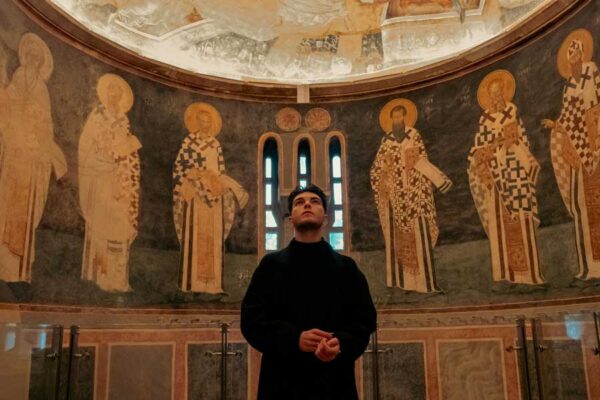
    The Islamic world and the Roman Empire share a millennium of history, beginning with reported interactions between the Prophet Muhammad (peace be upon him) and Byzantine Emperor Heraclius and ending with the Fall of Constantinople. The Islamic Empire’s territorial expansion led it to numerous battles with the Byzantines in the Levant and, later on, Northern Africa and Constantinople. The early relationship between Islam and the Romans was marked by religious conflict, but it evolved into a political and territorial rivalry characterized by mutual respect and cultural exchange, revealing the extensive influence both powers exerted in the Middle Ages. Here, we will largely focus on early conflicts between the Rashidun Caliphate and the Byzantine Empire, which laid the foundation for the long and complex history these powers share.

    Background Information on the Roman Empire

    The Roman Empire is traditionally dated to 27 B.C.E., but, as a result of internal conflicts, in 395 C.E. was split into two – the Eastern Empire and the Western Empire. Because the Western Empire collapsed in 476 C. E., about a century before Prophet Muhammad’s birth, it never interacted with the Islamic world. The Eastern Empire, commonly referred to as the Byzantine Empire or the Byzantines, lasted far longer than its western counterpart, falling in 1453 to the Ottomans. Throughout its centuries of existence, various Islamic empires often stood as its rivals.

    Muslim-Roman Interactions During the Life of Prophet Muhammad

    Before the Rashidun Caliphate was established, the Byzantines controlled Syria, Lebanon, and Palestine, giving them a deep hold on the Middle East. Although the history between the Byzantines and the Muslims consists of many military engagements, it did not begin as such. The first interactions, according to Muslim sources, were between the Prophet (peace be upon him) and Emperor Heraclius.[1] The Prophet sent a letter to Heraclius and to the Ghassanid Arab ruler and Byzantine vassal, Al-Harith ibn Abu Shammar Al-Ghassani, inviting them to Islam.[2] Al-Harith, after receiving the letter, threatened to invade Medina, but Hercalius stopped him.[3] The larger conflict began when Byzantine allies killed a Muslim envoy. In response, the Prophet sent an army to the Levant to avenge him, but they faced a much larger Byzantine-allied force and suffered heavy losses in what is known as the Battle of Mu’tah (629 C.E.).[4] They were able to organize a strategic withdrawal with the help of Khalid ibn al-Waleed.[5] Although this battle ended in a draw, many Muslim sources view the battle as a successful demonstration of the Islamic military’s ability to confront Byzantine forces.

    The Byzantines’ early impression of Islam was negative. Because the religion was quite small and had only been organized for a short time, some Byzantines viewed it as a heretic deviation of Christianity rather than a separate religion. They often referred to Muslims as ‘Saracens,’ a term commonly used in Byzantine and European sources, and sometimes portrayed them as outsiders or religious deviants.

    In 630 C.E., the Prophet Muhammad (peace be upon him) set out on an expedition with an army to Tabuk in current-day northwest Saudi Arabia.[6] This campaign, later known as the Expedition of Tabuk, did not involve any battles with the Byzantines, but helped Muslims establish themselves right on the border of the Byzantine Empire. Through this expedition, they were able to secure their power in the region and gain alliances with neighboring tribes.[7] It was clear to the Byzantines that Islamic presence was not to be ignored.

    The Rashidun Caliphate’s Expansion

    When the Rashidun Caliphate was established under Abu Bakr, he initiated campaigns into the Levant, continuing the expansion of the early Muslim state.[8] Over the course of Abu Bakr’s two-year rule, Islamic territory grew northward into the Levant. By 634 C.E., the Rashidun Caliphate controlled parts of Palestine and Syria. For a time, both sides stood firm. The Byzantines constructed forts to maintain control, but Muslim forces persisted.[9] This conflict eventually led to the Battle of Yarmuk in 636 C.E., which took place near the Yarmuk River along the borders of Syria, Jordan, and Palestine. Shortly before the battle began, Abu Bakr passed away, and Umar ibn al-Khattab took over as caliph.[10] News of Abu Bakr’s death reached Khalid ibn al-Waleed, but, in order to preserve morale, he chose not to share the information with the Muslim troops until after the battle was over.[11] This conflict turned out to be one of the biggest victories for the Muslims, and it also demonstrated the incredible capabilities of Khalid ibn al-Waleed as a commander and tactician. The Battle of Yarmuk was the turning point of the war, leading the Muslims to further victories against the Byzantines in the Levant.

    After the Rashidun Caliphate spread its territory into the Levant, it continued into other Byzantine territories such as Egypt. By now, the Byzantine Empire knew Islamic forces would be a rival for years to come, and they were. The Rashidun Caliphate’s expansion into Byzantine territory was just the beginning. The Byzantines would clash with the Umayyads, who attempted and failed to conquer Constantinople twice. When the Umayyads were replaced by the Abbasids, major Islamic expansion paused, but the Byzantines and Muslims still clashed often. This period of time saw a lot of cultural relations instead of war, where both cultures influenced the other through trade. In the 14th and 15th centuries, the Byzantine Empire faced the rising Ottoman Empire, a new and powerful Muslim state, which ended Byzantine control in 1453 after the fall of Constantinople. Overall, the history between the Islamic world and the Romans was extensive, consisting of a rivalry that lasted a thousand years.

    Bibliography

    As-Sallaabee, ‘Ali Muhammad M. 2010. The Biography of ‘Umar ibn Al-Khattaab. Vol. 2. Darussalam.

    As-Sallaabee, ‘Ali Muhammad M. 2007. The Biography of Abu Bakr As-Siddeeq. Translated by Faisal Shafiq. Darussalam.

    [1] ‘Ali Muhammad M. As-Sallaabee, The Biography of Abu Bakr As-Siddeeq, trans. Faisal Shafiq (Darussalam, 2007).

    [2] As-Sallaabee, Biography of Abu Bakr As-Siddeeq, p.617.

    [3] As-Sallaabee, Biography of Abu Bakr As-Siddeeq, p.617.

    [4] As-Sallaabee, Biography of Abu Bakr As-Siddeeq, p.618.

    [5] As-Sallaabee, Biography of Abu Bakr As-Siddeeq, p.618.

    [6] As-Sallaabee, Biography of Abu Bakr As-Siddeeq, p.618.

    [7] As-Sallaabee, Biography of Abu Bakr As-Siddeeq, p.618.

    [8] As-Sallaabee, Biography of Abu Bakr As-Siddeeq, p.618.

    [9] As-Sallaabee, Biography of Abu Bakr As-Siddeeq.

    [10] As-Sallaabee, Biography of ‘Umar ibn Al-Khattaab, 2: p.417.

    [11] As-Sallaabee, Biography of Abu Bakr As-Siddeeq, p.684.

  • Making Malcolm X: How His Sister Ella Little-Collins Shaped His Life

    Making Malcolm X: How His Sister Ella Little-Collins Shaped His Life

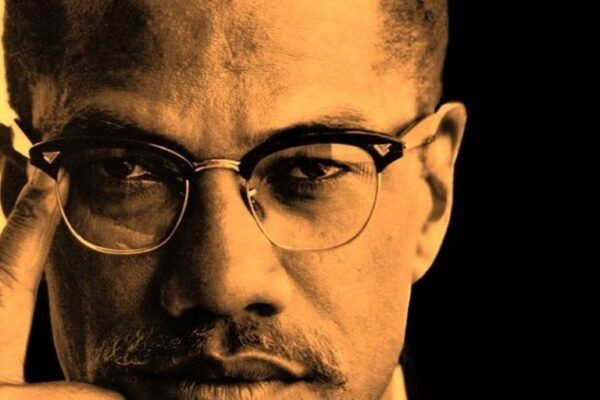
    Many regard Malcolm X as one of the most influential activists in American history. Throughout his life, he was a voice for Black empowerment; even after death, he loomed large as a symbol of resistance for civil rights activists. However, despite her role as a significant inspiration to him and a major factor in his success, his sister, Ella Little-Collins, is often overlooked. But her story matters and should be told and held up as a lesson in remembering and appreciating the women in our lives.

    Born in Butler, Georgia, in 1914, Little-Collins was the daughter of Earl Little and his first wife, Daisy Mason. During Earl Little’s second marriage to Louise Langdon Norton, he welcomed seven children, including Malcolm Little, Little-Collins’ half-brother.

    For most of Malcolm’s childhood, his sister lived in Boston. In 1931, when Malcolm was six years old, his father was killed by a streetcar. The coroner ruled this incident accidental, but many believed it was perpetrated by the Black Legion, a white supremacist hate group. In 1939, Little’s second wife suffered a mental breakdown and was admitted to Kalamazoo State Hospital, resulting in Malcolm and his siblings being split apart and sent to different foster homes. Despite being separated from his family, Malcolm was able to visit with his sister in The meeting was significant, prompting him to write in his autobiography, The Autobiography of Malcolm X: As Told to Alex Haley, “I had never been so impressed with anybody,” regarding his first meeting with Little-Collins. In fact, after Malcolm finished eighth grade, he went to live with her in Boston.

    Despite his sister’s guidance, Malcolm hit some rough patches as he grew older. He dropped out of school and engaged in gang activity, of which Little-Collins heavily disapproved. His problems continued, and he was eventually arrested and sentenced to 8-10 years in prison for larceny and breaking and entering. During Malcolm’s time behind bars, Little-Collins made an effort to stay in touch with him, visiting him and writing letters. In 1952, Malcolm was released on parole and, soon after, joined the Nation of Islam. Little-Collins followed in his footsteps, becoming a member in the mid-1950s. During her time with the Nation of Islam, she helped establish a mosque in Boston and a daycare center.

    However, she was only a member for a short time, soon growing to disapprove of the group and of its leader, Elijah Muhammad. After studying with Sunni Muslim teachers in Massachusetts, Little-Collings converted to Sunni Islam, left the Nation of Islam, and founded the Sarah A. Little School of Preparatory Arts in Boston. Students there learned Arabic, Swahili, French, Spanish, and even how to read the Quran. Malcolm was impressed by his sister’s accomplishment and wrote, “Ella had started studying under Boston orthodox Muslims, then she founded a school where Arabic was taught! She couldn’t speak it, (but) she hired teachers who did.”

    During this time, Malcolm was having his own doubts about the Nation of Islam. He was troubled that then-leader Muhammad had fathered so many children out of wedlock and was worried about his limited knowledge of traditional Islam. Malcolm even mentioned in his autobiography that Muhammad never taught him how to pray.

    His own worries, coupled with his sister’s influence, led Malcolm to eventually leave the Nation of Islam in 1964 and convert to Sunni Islam. After his spiritual awakening, Little-Collins recognized he needed a change and offered her hajj savings to fund his pilgrimage to Mecca, a selfless and sacrificial act.

    Before Malcolm went to Mecca, he traveled to many other Muslim countries, learning more and more about Sunni Islam. After completing hajj, his worldview changed drastically. Before becoming a Sunni Muslim, Malcolm believed white people were the “devil” for their historical mistreatment of Black people, leading him to advocate for Black separation. However, his experiences in Mecca and in the Muslim world made him realize people of all races could coexist. He abandoned his previous belief and shifted towards one that connected the struggle for Black equality to the fight for global human rights. Upon returning to the U.S., he created the Muslim Mosque Inc. (MMI) and the Organization of Afro-American Unity (OAAU) to continue his fight for civil rights. Malcolm’s pilgrimage to Mecca was a major turning point in his life, and it was thanks to Little-Collins for her guidance and for funding his travels.

    After Malcolm was tragically assassinated in 1965, his sister paid his funeral expenses and took over as head of the OAAU. She continued her activism work and Malcolm’s, including his scholarship project, which gave money to Americans interested in studying overseas.

    In 1996, Little-Collins passed away, leaving behind a life and legacy of incredible accomplishments. Without her, the trajectory of Malcolm X’s life would have been very different. She supported him and uplifted him without seeking credit. From adopting him and caring for him in his teen years to funding his holy pilgrimage later in his life, she was always there supporting him. In his autobiography, Malcolm does not fail to praise and express appreciation for his sister, ensuring her impact on his life is not overlooked and will never be forgotten.


    Sources:

    https://www.islam21c.com/history/ella-collins-the-woman-who-led-malcolm-x/

    Ella Little-Collins, Malcolm X’s resourceful half-sister

    https://www.thoughtco.com/malcom-x-in-mecca-2353496#:~:text=On%20April%2013%2C%201964%2C%20Malcolm,journey%20in%20a%20b rief%20life

  • The Impact of Muslim Interaction with the Viking World

    The Impact of Muslim Interaction with the Viking World

    The Muslim and Viking worlds interacted in surprising and significant ways during the early medieval period, leaving a rich and sometimes shared history and forging an interconnectedness that can be studied today.


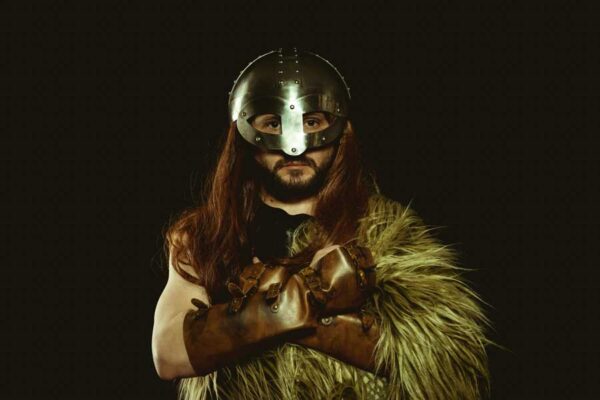
    From the west, Norse raiders attacked the Muslim-ruled territory of the Iberian Peninsula, launching offensives that tested the region’s military defenses. Meanwhile, in the east, Muslim traveler Ahmad ibn Fadlan provided one of the earliest and most detailed outsider accounts of the Rus’ people, Swedish Norse traders and settlers operating along the river routes of Eastern Europe. These encounters reveal a broader observation between two cultures that were vastly different in their traditions, values, and religious practices. Examining these interactions provides a more nuanced understanding of the medieval world, demonstrating that two societies with significant differences can still have profound influences on each other.


    Islam has had a great influence in the Middle East and much of Europe. The spread of the Islamic empire began with the Rashidun Caliphate, the first Islamic government after the Prophet Muhammad’s (peace be upon him) passing. The Rashidun Caliphate’s main goal was to govern the expanding Islamic community and to spread the religion to neighboring places. They demonstrated military strength with victories over the Byzantine and Persian empires, proving the Islamic empire’s leaders would not be afraid to spread its power far and wide.


    The Umayyad Dynasty was the first Islamic empire, having directly followed the Rashidun Caliphate. It was established in the year 661 by Mu’awiya ibn Abi Sufyan, and, while controversial, it spread further than the Rashidun Caliphate, conquering a large portion of northwest Africa and the Iberian Peninsula, which includes modern-day Spain and Portugal. Although the Abbasid Caliphate overthrew the Umayyad Dynasty in 750, Abdarrahman I, a prince of the Umayyad family, declared himself ruler of the formerly Umayyad portion of the Iberian Peninsula in 756 and established the Umayyad Emirate of Cordoba in modern-day Spain. Muslim control of the Iberian Peninsula led to interaction with Viking people through trade and Viking raids between the 9th and the 11th centuries.


    The earliest documented Viking attack on Spain was in 844. Ibn al-Khutiya and Ibn Hayyan, both Muslim historians, provide detailed accounts of the Viking raid on Seville in that same year. In Ibn al-Khutiya’s account, he mentions a story about Emir Abdarrahman II, the great-grandson of Abdarrahman I, in which he has a dream about the great mosque of Seville shortly after its construction. In his dream, he enters the mosque and finds the Prophet Muhammad (peace be upon him), in shrouds, dead. He told his dream to soothsayers, who told him that the divine service would cease in the mosque for some time. This came to be when the Vikings attacked and took over Seville in September of 844. They attempted to burn down the mosque but failed. Abdarrahman II prepared forces for a counterattack and was able to retake control of Seville and drive Viking attackers out of Spain in November. Following this clash, the Umayyad Emirate increased coastal defenses, which deterred a Viking attack in 854. (Steffansón 1908)


    In Ibn Hayyan’s account, he writes that the attack began when a fleet of 108 Viking ships – according to a letter from the governor of Lisbon, Wahb Allah Ibn Hazm – arrived in Lisbon on Wednesday, August 20, 844. (Ibn Hayyan n.d.) The Vikings remained in Lisbon for two weeks, during which they battled the Muslims three times. They then went to Cadiz and then on to Medina-Sidonia and fought the Muslims again. A month after arriving at Lisbon, the Vikings made it to Seville, which at the time was unattended. They were able to take control of the city and spent a week looting and taking prisoners. When Muslim forces got there, they were able to defeat the Vikings in November of 844. (Ibn Hayyan n.d.) Over the next few hundred years, Vikings continued to attack the Muslim-ruled Iberian Peninsula in the mid-800s and late 900s, with one particular attack led by Bjorn Ironside mentioned by Ibn al-Khutiya. (Steffansón 1908)


    In 921, Muslim diplomat and writer Ahmad Ibn Fadlan set off on a diplomatic mission from Baghdad to Volga Bulgaria, in modern-day Russia, to teach the Bulgars Islamic law and to help construct a mosque upon the Bulgars’ request. (Ibn Faḍlān 2012) From 921-922, he travelled through Persia, Central Asia, and Volga Bulgaria documenting his observations. Among his works is a description of the Rus’, who were Norsemen – primarily from Sweden – who explored

    and settled in Eastern Europe from the 9th to 11th centuries. The Rus’ established trade routes

    and Kievan Rus, a medieval state that laid the foundations of modern-day Russia and Ukraine. Ibn Fadlan provides a largely unbiased and detailed record of their traditions, ranging from hygienic practices to religious rituals. Ibn Fadlan also authored the only eyewitness record of a Viking burial, making his travels an interesting source when learning about Viking customs.


    The Viking connection with the Islamic world led to exchanges of cultural artifacts. In a Viking grave, archaeologists discovered a silver ring buried with a woman. On the ring, there is a glass stone with the Arabic words “for Allah” engraved into it. This etching suggests this ring is of Middle Eastern origin, likely acquired either through trade or from the pillaging of a Muslim-populated area.


    In short, Muslim interaction with the Vikings took many forms, from intense battles to diplomatic missions and even trade. Despite vast distances and cultural differences, their encounters left important impressions and reveal how interconnected the medieval world truly was.


    References

    Ibn Faḍlān, Aḥmad. 2012. Ibn Fadlan and the Land of Darkness: Arab Travellers in the Far North. Edited by Aḥmad Ibn Faḍlān. Translated by Paul Lunde and Caroline Stone. N.p.: Penguin Publishing Group.

    Ibn Hayyan. n.d. In Al-Muqtabis fi Tarikh al-Andalus.

    Ibn Katheer. 2012. The Caliphate of Banu Umayyah: The First Phase: Taken from Al-Bidayah Wan-nihayah. N.p.: Darussalam.

    Ibn Katheer. n.d. Al-Bidayah wan-Nihayah. 20 vols.

    Steffansón, Jón. 1908. In THE VIKINGS IN SPAIN: FROM ARABIC (MOORISH) AND SPANISH SOURCES, 31-46. Vol. 6. https://www.jstor.org/stable/48611867.