بسم الله الرحمن الرحيم

Author: Sana Khan

  • Educational Challenges of Syrian Refugees

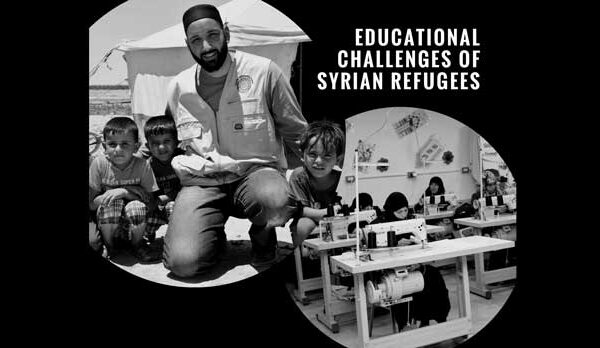
    Educational Challenges of Syrian Refugees

    The crisis in Syria has entered its 6th year, resulting in an estimated 4.8 million refugees, 6 million internally displaced people, and over 13.5 million seeking humanitarian aid. It’s difficult to imagine the country of Syria as a center of knowledge and advancement, as present day images paint a picture of rubble and destruction. Yet, the capital city of Damascus thrived as a major cultural and religious center during the Umayyad Caliphate. And both the 19th and 20th centuries saw this capital and other major cities flourish in culture and education. Unfortunately, the struggles of the past five years have spawned widespread destruction and death.
    The day-to-day challenges faced by the Syrian people, both those still in the country and those fleeing it, are unimaginable. Helping Hand for Relief and Development (HHRD) is working from its HHRD Middle East North Africa (MENA) office in Jordan to provide humanitarian relief to the refugees who have fled to Jordan. One of the main services besides proper shelter and medical assistance is education. With over 5,000 schools across Syria destroyed or damaged, and the deadly trek children are required to make to reach still-operating schools, an overwhelming majority of children remain home. There has been a drastic decline from a 93 percent enrollment and attendance rate to a ranking of second worst in the world. It is reported that an estimated 2.8 million Syrian children are not enrolled in school. There are numerous factors that play a role in preventing these children from securing a proper education: destroyed or military occupied school buildings, the necessity of fleeing their homes, psychological distress or trauma, child labor, and unfamiliar curricula and languages.
    Through the efforts of our HHRD MENA office, our Jordan team has been actively engaged with operating eight of our programs in Jordan, Lebanon, and Tunisia, all of which help Syrian refugee families. The programs which help the children receive the best possible education include Education Support, Shelter Relief (Caravans of Hope), Orphan Support, and In-Kind Gifts. Of the over 4,810,216 registered Syrian refugees, 635,324 are residing in Jordan where 86 percent are living below the local poverty line. HHRD’s Education Support Program provides Family and Higher Education support systems which helped 2,227 students receive a proper education this past year. Monthly stipends for educational costs, along with home visits, ensured sponsored children are on their way towards a more promising tomorrow. Those pursuing a college degree are also sponsored to attend local universities.
    Through our Shelter Relief “Caravans of Hope” program, HHRD was able to secure 160 proper shelters for families. Each micro-home includes two rooms, a small kitchen area, running water, and a functional toilet. With a proper roof over their heads and protection from environmental elements, families are able to enjoy a modicum of normal day-to-day routine. Safety and security help ensure the well-being of these children who have witnessed unimaginable hardship. More recently, two centers have been established to address immediate needs of refugee families — one serves as an orphanage for widows and their children, while the other has been set up as a school for families residing in the refugee camp. HHRD’s Orphan Support Program provides financial support, education, life skills, medical assistance, social upliftment through camps and field trips, and psychological support for 1, 550 children. Donations for sponsoring or supporting an orphan allow HHRD to provide free medical screenings, financial support for necessary purchases, access to local schools, school supplies, and social activities.
    “Smiles across the miles” is the motto of HHRD’s In-Kind Gifts Program. In-Kind Gifts are donated goods and services rather than monetary donations. This program has sent 57 forty-foot containers with winter relief items, nonperishable foods, and medical and school supplies to 295,240 refugees in Lebanon and Jordan. The refugee families have received warm clothing and blankets during the winter months, as well as school bags and supplies for the academic year.
    Even with the humanitarian and relief aid being provided, the reality of life in refugee camps is still fraught with hardship, sorrow, and insecurity. So many families continue to struggle to survive without access to essentials such as food, shelter, and water. HHRD is committed to providing our brothers and sisters across the globe, and specifically in and around Syria, with humanitarian relief. It is unfortunate that the children bear the brunt of this struggle, many of whom are born into this conflict and are growing up with this new norm of living in conditions of fear, insecurity, and little hope for a normal future. Those who are older are struggling to understand why this is happening to them and why so many in the world seem indifferent to their suffering.
    Through these programs and many more, HHRD is working towards providing necessary relief, as well as helping these refugee children acquire a solid education. These programs play a major role in ensuring these children are prepared for school, receive a basic education, and find enjoyment in learning. The little hands draw pictures of big dreams to one day be more than just a statistic.

  • A New Translation of the Holy Qur’an in the Spanish Language

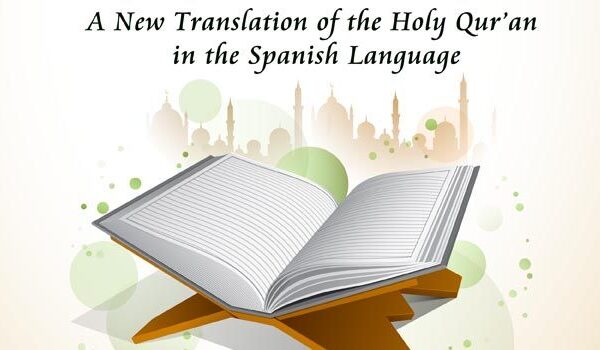
    A New Translation of the Holy Qur’an in the Spanish Language

    There was an interest in me that was awakened in translating the Holy Qur’an that was not so much devoted to imitating the style of the original in Arabic or in copying the literary style of the original, but rather in transmitting in the correct and most direct way all of the meanings, both profound and spiritual, as well as describing the whole approach of it all, that I had understood when reading and studying it in its original language. –Isa García.

    A Little History

    When I embraced Islam and accepted it as my way of life, I was thirsty for knowledge. I wanted to learn as much as possible about the primary source of knowledge, the divine revelation: the Holy Qur’an. I knew from the beginning that the Qur’an was revealed in Arabic, and that this text was the original; that it had been preserved and safeguarded intact for more than 14 centuries. But since I did not know Arabic, I had to refer to the various Spanish translations that were available.

    What I found disappointed me, because many times the text was confusing and incoherent. I understood that the reason for this was due to two factors. The first was that many of these translations were done by people who did not have the necessary knowledge about Islam, its message, and its history. Because of this, certain concepts were misinterpreted and erroneous. In some cases, there were premeditated attempts to discredit Islam and its holy book by altering the meanings.

    Furthermore, most of the translations are too literal, imitating the Arabic style not only in the expressions used but also in the word order. The result was that the normal grammar and syntax used in the Spanish language were not utilized, resulting in confusing translations. Add to this the fact that the language used is archaic and almost foreign, in a style that is seldom used in Latin America. Also, most of these translations do not have clarifying notes regarding historical and legal contexts.

    Later on, when I had the opportunity to study the Arabic language and I began accessing the meanings of the Holy Qur’an in its original language, I understood that I had lost much of the meanings and contexts through the translations I had read. It is a fact, however, that there are no translations that can approximate the beautiful narrative and the poetic rhetoric of the Qur’an, nor can any translation reproduce its eloquence or the multiple ways in which it can be recited. It is also true that the translations, some more than others, fail to convey to the reader the real essence of the Quranic message.

    This awoke in me an interest in translating the Holy Qur’an that was not so much devoted to imitating the style of the original in Arabic or in copying the literary style of the original, but rather in transmitting in the correct and most direct way all of the meanings, both profound and spiritual, as well as describing the whole approach of it all, that I had understood when reading and studying it in its original language.

    Alhamdulillah, I could finally embark on making a translation of the Holy Qur’an for the benefit of the Spanish-speaking world, but mostly for the benefit of Latin America. Along with a team of experts, I have tried to provide Muslims and non-Muslims with the message of Islam in the closest possible form to the original revelation in Arabic, but at the same time using language that is simple and plain, and also using explanatory notes for certain terms so that the content of the text is easy to understand.

    Current Trends

    While Islam still is not one of the major religions with a large number of followers in Latin America, it is growing rapidly throughout the continent. There are now mosques in all of the major cities in Latin America and conversion to Islam is also a growing phenomenon among the Hispanic populations of the United States.

    The fact that the media projects a bad image of Islam and Muslims, having a translation of the Qur’an in the Spanish language that transmits its message in a direct and simple way has become urgent and of the utmost importance for two reasons:

    Firstly, for those Muslims who do not know the Arabic language, they need to read the meanings of the Qur’an in their language to understand and better practice their religion. In this way, they can be good examples of what it is to be a Muslim.

    Secondly, for those non-Muslims who desire to learn about Islam, they need a reliable source of information. This will let them form their own opinions based on what the Qur’an actually teaches and not on stereotypes and erroneous ideas that have lasted for centuries in many of the works by Orientalists and in some of the translations of the Qur’an.

    From there, the objective of this translation is to present to Spanish-speakers the real message of the Qur’an, how it was known, understood, and practiced by the scholars of Islam and by the devout Muslims for more than 1,400 years. The translation is based on clear and simple language with a direct and contemporary message with the Latin American public in mind.

    Distribution of Printed and Digital Versions

    The goal of this translation is free distribution so that in this way it can be available to the maximum number of people possible.

    To achieve this goal, it has been distributed in a digital version in PDF. It has been added to various programs on multiple platforms. It will soon come out in its own unique reading and audio format.

    Also, many were printed for the free distribution to the public. The first edition included 50,000 pocket-sized books for free distribution during the 2014 World Cup in Brazil.

    Also, 100,000 copies were printed in Qatar to be distributed throughout the world. In Latin America, in particular, many small printings have been made in Bolivia, Colombia, Guatemala, and Mexico. In Spain, the distribution has begun for a project that has already printed 10,000 copies.

  • Haiti: Our Compassion can Make a Difference

    Haiti: Our Compassion can Make a Difference

    Once Upon a Time: Haiti’s Past

    Haiti has a long history of tragedy and destruction centuries prior to the devastating earthquake that struck earlier this year. From the Spanish invasion of Hispaniola to the French cessation of what is present day Haiti, this tropical oasis has struggled for a different type of survival. Its natural resources made it the wealthiest land in the Caribbean with its sugar and forestry related industries, but this also came with a heavy price. African slaves were imported by the French in the late 17th century as field labor, and their degrading conditions led to a slave revolt. Eventually, Haiti became the first black republic to gain independence and unfortunately, began to spiral downward soon after. For most of its independent reign, Haiti has suffered at the hands of internal strife due to political violence and, as a result, is now one of the poorest countries in the Western Hemisphere. With the forced resignation and exile, after an armed rebellion, of Haiti’s president Aristide in 2004 and the interim government set up by the United Nations, Haiti saw a glimmer of hope with a democratically elected president in 2008. But once again, violence erupted in the land in the form of a 7.0 magnitude earthquake that wreaked havoc on the citizens of the country unlike any violence of the past.

    Just west of the Dominican Republic, Haiti lies between the Caribbean Sea and North Atlantic Ocean. Somewhat smaller than the size of Maryland, this country holds a slightly rough and mountainous terrain. However, despite its majestic surroundings, Haiti lies in the middle of the hurricane belt with weather conditions that result in floods, earthquakes, and occasional droughts making potable water an environmental crisis. With a population slightly tipping over the nine million mark, the citizens of Haiti face a lower chance of life expectancy due to diseases and infections, especially AIDS and others that follow its natural disasters such as Hepatitis A and E, Malaria, Typhoid and Dengue fever. Haitians speak either French of Creole and, though close to eighty percent practice Roman Catholicism, nearly half of the population practices voodoo. In an ever changing world, Haiti sits at the forefront of those in need of aid both in the aftermath of the earthquake and in the many years to come.

    Dozens of mosques are scattered throughout Haiti with an estimated 5,000 Muslims as the numbers rapidly grow. The foundation of Islam began with the African slave laborers who were initially forced to give up their practice of the religion; however, their heritage soon became imbedded in the native Haitian culture. The 20th century saw a large number of Arab immigrants settling in Haiti while a significant amount traveled to the Americas. It has been noted that the first Arab settlers were from Morocco.


    Rising Action: Earthquake Aftermath

    The earthquakes in Pakistan and Indonesia were known for the mark they left not only in terms of their magnitude, but also the destruction they left behind. With hundreds of people dead or unaccounted for, thousands of homes destroyed, and even more people left without food and work, relief agencies scurried to pool together the basic necessities for survival. There was an overwhelming response from the global community with regard to these two natural disasters, but like the forgotten faces of these troubled people, the media and world at large returned to their daily routines. The earthquake that rung in the New Year seemed to be no different than those that preceded it. January 12th marked the day a 7.0 magnitude earthquake rocked Haiti’s capital of Porte au Prince leaving in its path complete and utter devastation. Within days, media outlets were buzzing about the strength of the quake and its effect on this forgotten country. Similarly, relief agencies from across the globe were preparing their supplies as they took ships, planes, cars, and buses to this inaccessible city. Organizations such as UNICEF, Red Cross, and the International Rescue Committee began running drives across the world to raise funds for these victims. Similarly, Muslim relief orgs and Islamic countries pooled together their resources and manpower to deliver whatever they could.


    Climax: Haiti Receives a Helping Hand

    Human beings regardless of race, religion, ethnicity, age, and gender all require food, shelter, water, and companionship to survive. Once stripped of any of these basic necessities, the human being falls into a bout of irritability, depression, and instability. The key to any given response in emergency relief work is to keep the end in mind—in other words, relief work should address the current situation by gauging what is needed to facilitate survival and follow this with the necessary skills and training of the victims in order for them to ensure a secure future for themselves. A majority of the aid work that took place in Haiti targeted the medical needs of the Haitians, which was immediately required; this was followed with the importing of tents and sleeping bags to temporarily house the thousands of people who slept on the streets out of fear of the aftershocks that continued to rock the epicenter. However, as the weeks went by, the focus on what Haitians needed to regain their sense of normalcy was removed. Fortunately, the few organizations that remained behind continued to make progress and attempted, with the Haitian people, to remain hopeful that there would be a positive future in store for the country.

    “True heroism is very undramatic. This is because true heroism is not the desire to surpass all others by any means, as we unfortunately see all too often. Instead, true heroism is the desire to serve all others by any means. By this definition, heroes are in no short supply in Haiti. I’ve seen them here every day for the past week. I’ve seen them come from all nationalities working for all types of organizations with a common goal in mind: to aid a country in its darkest hours,” shares Umair Javed, a volunteer in the Youth for Haiti program organized by Helping Hand for Relief and Development (HHRD). This program invited college students from all over the country to participate in volunteer relief work in Haiti during their respective spring break. After a rigorous selection process, nearly 30 college students were chosen to spend four week-long rotations in batches of 10 to volunteer in medical assistance and building shelter villages alongside supervised professionals.

    Falling Action: Building Haiti

    HHRD set out to rebuild Haiti by constructing hundreds of permanent shelters. The cost of $900 per shelter would give thousands of victims who have turned homeless after the earthquake a place to live with their families. These shelters were constructed into a village where they also built a mosque and school. With over 200 children playing amidst the rubble, parents welcomed this move to provide their children with an education that also helped to keep them occupied and safe. With Ramadan slowly making its way, the mosque was a breathe of fresh air for the new converts to Islam and Muslims who struggled to make inner peace after seeing such large scales of devastation and death. Millions are living in unsanitary conditions, cultivating more infections by the day.

    Moreover, doctors from Pakistan, Indonesia, the United States, and local Haitians worked round the clock to tend to the wounded. Six rotational clinics were being operated in the most remote areas with little or no medical help. These Medical Clinics treated more than 2,000 people per week, and vaccinations were provided to over 300 men, women, and children. Originally, a team of volunteer doctors of HHRD from Florida and New York took large supplies of medications bought for them by HHRD to Port-au-Prince. Over $160,000 worth of medication was administered to over 11,000 patients. These doctors helped to establish the mechanism for field and mobile clinics where they have volunteered roughly 1,000 hours of services along with an estimated 900 hours by nurses. Due to urgent need, a full-time local Haitian Doctor was hired, accompanied by a female doctor who especially tended to women’s health issues.

    With over 2,000 hours of volunteer work conducted by those at HHRD in Haiti, many respected community leaders have traveled abroad to witness and monitor the relief efforts. Naeem Baig, Vice President of the Islamic Circle of North America (ICNA) and Executive Director of ICNA Council for Social Justice, along with Imam Abdool Rahman Khan, Scholar of Islamic Foundation in Illinois and Member of ICNA Executive Council were two of the most prominent members to have gone. The work HHRD is doing abroad is essential and ongoing. They visited the Medical Camps and met with the Muslim community leaders to assess the situation and lend their support. “A lot still has to be done here,” said Imam Abdool Rahman. He also had a chance to meet some of the college students that are there for the Youth for Haiti program. “It’s a very humbling experience to come here; life here is tough, and they (the volunteers) say they enjoy it and are willing to come back.”

    Resolution: Let Us Not Forget

    “I have to admit that I am absolutely amazed and inspired by the people of Haiti. Despite their poor living conditions, they were so full of life and optimism. I’m amazed by their spirit, their perseverance, and their rare ability to find happiness in even the smallest of things. They were the most hospitable people I have ever come across. I personally feel a bit guilty because I feel that I benefited more from them than they have from me,” shares Raihan Dakhil a volunteer in the Youth for Haiti program.

    Despite centuries of strife, the people of Haiti hold in their hearts an appreciation for what they have today: their lives, their families, and their country. Though each day brings with it another struggle, these victims have been given the essential tools to help rebuild their lives and hopefully to ensure a better future. The work there is far from over—the country requires long term developmental projects such as sanitary water, educational institutions, properly utilizing natural resources, and much more. Hundreds of children are now orphans, while hundreds of women are now widows, but within each, there lies a vow to never forget how things were and to always remember that at least now life is better than before. As human beings and more importantly as Muslims, we cannot turn a blind eye to the evil in this world and the tragedy that millions are facing. Let us be those who lend a helping hand and dust off the fallen for today’s calamity can be tomorrow’s reality for many of us. Haitians are putting back together the pieces of their shattered lives, but instead of forcing them into place, they are stepping back to make sure each piece fits properly in order to ensure the best picture. We, too, must continue to do the same.