بسم الله الرحمن الرحيم

Author: Dr. Yasir Qadhi

  • Why Some Muslims Get Lost in the Endless Loop of Doubt

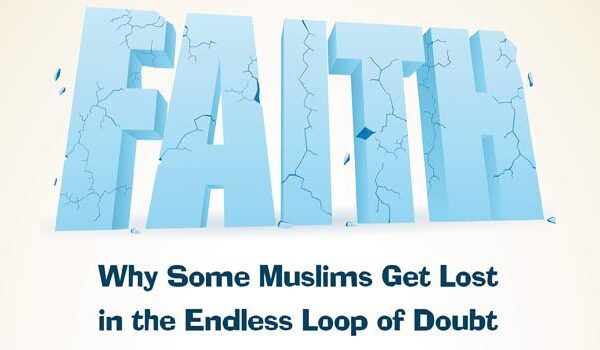
    Why Some Muslims Get Lost in the Endless Loop of Doubt

    Many of us know someone who is going through or has gone through a crisis of faith. Perhaps we have had the painful realization one day – “Oh my God, so and so, did he actually do that or say that?” Or “Did he actually renounce the faith?” We are seeing more and more people question and doubt their faith and become either agnostic or atheist and the fact of the matter is that very few of us are really qualified to deal with this when it happens to someone we know. When you go and study Islam, you are not trained to deal with the types of problems that our youth are experiencing today. Just recently I was discussing with somebody who openly become “murtad,” an apostate. He was a very active person in this community, he was a youth counselor, and he was regular in his attendance at the Masjid. And then all of a sudden he just dropped out for a year and then he announced that he’s no longer a Muslim. Somebody connected me with this brother and we had a very long back and forth discussion about many issues – why Islam allows such-and-such, and how could the Qur’an say that, or why did the Prophet salallahu alayhi wasalam do that. All of these questions were issues that, for him, were ethically problematic.

    Instead of being so quick to question Islam, take a step back and examine where your question is emanating from

    We have to realize that Allah subhanahu wa ta’ala created us with three primary needs – physical, intellectual, and spiritual needs. Physically, of course, we need to eat, we need to drink, and we need oxygen to breathe. Without these basic things we will die. Then there are intellectual needs as well. That includes opportunities to use the faculties of logic and reason, and to be able to explore ideas and learn, to acquire knowledge so that one’s curiosity and yearning to understand life, the world, the self, and other people are satisfied. Also we have spiritual needs and these spiritual needs must also be fulfilled. These needs include knowing the origin and destiny of man and the purpose of life. Without our spiritual needs being fulfilled, we are vulnerable to depression and to a feeling that life is meaningless. There is an innate spiritual need to have a higher goal in life than just to survive and focus on worldly goals. And a person can dedicate his or her life to a lofty goal such as social justice, environmental sustainability, animal rights, and so on. But without God in that equation, as a foundation for those goals, there is still a feeling of emptiness.
    So we have the physical, the intellectual, and the spiritual needs and Islam provides us with what we need to fulfill all of these. And so importantly, it answers the questions about meaning and purpose: Why am I here? What is the purpose of life? Why did Allah subhanahu wa ta’ala create me? Now the problem arises when we approach the religion without a proper balancing of intellectual logic and spiritual faith. There may be a verse that a person doesn’t understand logically and if he is impulsive, he might end up rejecting the entire religion of Islam. I am not suggesting that there are things in Islam that are irrational. But there are some things that are supra-rational. That means that some things are beyond the limits of logic or rationality, outside the scope of the intellect. This means that the intellect might not necessarily understand some things. It is possible your mind will not fully comprehend something, but no Islamic teaching goes against the true fitra or nature of the human being.
    When you look at the questions that young Muslim men and women have, usually between the ages of 17 and 20, they inevitably revolve around a set of issues that result from living in a particular cultural paradigm. In other words the questions that people of our generation are asking never even occurred to the last generation or the generation before them, going all the way back to the Prophet salallahu alayhi wasalam. These are questions that modern society is positing about the existence of God, issues of sexuality and sexual orientation, what the proper gender roles are, and so on. A hundred years from now, the questions that that generation of Muslims will be asking will be different from the questions that concern the generation of our time.
    So, instead of being so quick to question Islam, take a step back and examine where your question is emanating from. The fact is, we are products of a particular era and cultural context. There are questions that naturally arise out of the context that we live in, and we should be brave enough to challenge those questions, even as we’re brave enough to challenge the Qur’an. The questions we have will not threaten or change the Qur’an, but the human understanding of the intellect, of reason, of consciousness, is always growing and changing. In fact, my Ph.D. from Yale was about the role of reason and intellect in Islam, and how reason and revelation are reconciled in the Islamic tradition.
    The great theologian, Ibn Taymiya, actually critiques the notion that reason alone can always arrive at the truth, and he provides us with such relevant examples. For example, as just mentioned, what might appear rational to the human intellect in one historical era and cultural setting might not appear rational in another time and place. Even within our own daily lives, think about how many times you have undertaken a course of action, thinking it was so logical, that it was a reasonable and correct decision. And the next day or the next week or the next year you look back and say, “What a bad decision I made…what in the world was I thinking?!” So how can we take human reason to be a criterion above and beyond anything else, as if we can derive ultimate truth from it?
    Now this does not mean, as I mentioned previously, that Islam has nothing to do with reason. In fact, Allah subhanahu wat’ala enjoins us to think, to ponder. He tells us in the Qur’an to make “tafakkur,” “tadabbur,” “tadzakkur” of His signs. By reflecting upon His signs, human beings are challenged to consider whether Islam is true or not, whether the Prophet salallahu alayhi wasalam was genuinely a messenger or not, and whether the Qur’an is from Allah or not. However, once you come to the conclusion that the Qur’an is the book from Allah, that the Prophet Muhammad salallahu alayhi wasalam is a true Prophet, then you are not supposed to question each and every minutiae, the precise details of every single thing. We can never fully comprehend the wisdom of why we pray five times a day and not four or six times, and there is no clear answer we can give to this question. We will never understand precisely why we perform “wudu” in a certain manner, why we have to do one “ruku’u” and two “sajdas” in every “rak’a.” It might not be something that is fully understood rationally, but neither is it irrational. It does not contradict reason. It’s there and you simply submit. Then somebody will say, “I don’t understand the wisdom in five prayers.” Well, you’ve accepted the truth of the Qur’an, of Islam, so you must accept it as a package deal.
    If you look at the questions these young men and women ask, they’re always about fiqh issues of relatively minor nature – Why does Islam allow this? Why does Qur’an say that? And they’re all things to do of a legal nature, they are not about the basics or the essence of theology. We do not judge the validity of a religion based upon the minutiae. We judge Islam based on the theology, on the fact that the Qur’an is a book from Allah. Once we’ve established these things are true, we then accept the message as it is. We don’t have the luxury of tinkering with the message itself and therefore if we rely too much on these questions and think that the mind itself will be able to answer these questions, then we are doomed to fail. I will never be able to explain to you every single detail of Islam.
    Islamophobes, for example, slander the Prophet, sallallahu alaihi wasallam, because the age of Ayesha was nine when she married the Prophet, according to hadith of al Bukhari. I’ve had young men and women come to me, Muslims, and they wonder how we can accept this. They say this is something that is vulgar and unethical. But we have to realize that cultures vary, practices vary, and it’s not just Islamic or Arab culture. The reality is five hundred or a thousand years ago, the world over, people were marrying at younger ages. The lifespan was shorter and young people matured faster. A nine year-old of 1400 years ago is like a 16 or 17-year-old young person of our time, biologically and mentally. We can’t back-project our nine-year-old of 2014 into Madina. This mode of thinking is flawed. We cannot take present-day ideas and perspectives and anachronistically superimpose them on the past. This creates a distorted understanding of that past historical period. This is cultural bias. We have to look at the times of the Prophet sallallahu alayhi wasallam within the cultural milieu of that time. In fact, there are parallels to the young marriage age of Ayesha even in 17th century England and America. According to the Encyclopedia of Children and Childhood in History and Society, “The American colonies followed the English tradition but the law could at best be called a guide. For example in Virginia in 1689, Mary Hathaway was only nine when she was married to William Williams.” Further, “The most influential legal text of the seventeenth century in England, that of Sir Edward Coke, made it clear that the marriage of girls under twelve was normal, and the age at which a girl who was a wife was eligible for a dower from her husband’s estate was nine…”
    My own grandmother was born in British India and got married at the age of 14. I remember asking her about that when I was about 17 or 18. I couldn’t imagine getting married at 14. She told me that everyone got married at that age, all her friends got married at that age. And this was 1920s in British India, roughly 100 years ago, not 1400 years ago. But there are many Muslims who buckle under the pressure of the cultural context of our day. Instead, they should put things in perspective. And they should know that Ayesha was the happiest wife in the world. She loved the Prophet sallallahu alayhi wasallam. This was the marriage age tradition in a 1400-year-old culture. We are not looking to resurrect that in our times and as a faqih, as a theologian, as an Imam, it is proper to say in our culture and era that a nine-year-old does not qualify to get married. And many of the ulama’a are saying that.
    Let us remember that Allah created us with an innate nature called the fitra, and as our Prophet sallallahu alayhi wasallam said, “Every child is born upon the fitra.“ The fitra is a source of intuitive knowledge. It is not knowledge that is taught to you or gained through experience. You are born knowing right from wrong, and knowing that lying, cheating, and stealing, for example, are wrong. And you know it because that intuitive sense is in the fitra. Being kind and generous to the poor is something ingrained in us. And the fitra also inclines us to the belief in God and tawheed, and that He alone is worthy of being worshipped. So the Muslim does not need to intellectually analyze each and every law in the Qur’an and Sunna. His inner conscience is at ease that Islam is true, that this is the correct religion, a way of life that is clearly in harmony with his fitra. I want to be very clear – I am not saying that Islam doesn’t tell us to think. I am saying that we don’t base the validity of Islam on the age of Ayesha, or why a woman has to cover her hair, or why inheritance is this or that. There are laws that you might not understand, or the answer provided to you might not satisfy you at a certain point in your life or at that stage in your spiritual journey. But rather than going into this infinite maze and endless loop, take a step back and challenge your own paradigm before you challenge the Qur’an and the Sunna.
    Finally, if you meet a person who is having some doubts, tell this person to sincerely call upon the One Who created us, call upon Him for guidance – “Ihdina sirat al mustaqim.” The power of dua’a should never be underestimated. Tell this brother or this sister that if they really are in doubt, then they should continue to make sincere prayer. We have a very clear belief in our religion and that is that whoever yearns for guidance will be guided. Allah does not play games. Allah does not put traps for the one who sincerely wants to find the sirat al mustaqim, the straight path. And going back to the brother who I spoke about earlier who, for now, has left Islam, I still consider him a brother in humanity and I pray that Allah guide him. I told this brother after long discussions back and forth, “I am confident that if you are sincere, you will come back to the deen and, insha’Allahu ta’ala, me and you will be praying together and giving lectures together. And if you are not sincere, then every single answer that I give you, you will find loopholes because for every ‘why’ there is a ‘why not’ and for every ‘if’ there is a ‘but’ – there is an infinite loop of doubting.” But there comes a point in time where you have simply to say I know this man, the Prophet, sallalahu alayhi wasallam, to be a Prophet based on his lifestyle, his message, his teachings. I know the Qur’an and I hear the Qur’an and I know it’s from Allah subhanahu wa ta’ala. The Qur’an moves me with its resonant sound and the wisdom of its words. This book cannot be from a human being. That’s all I need to know and I submit upon that deep, heartfelt knowing. May Allah subhanahu wa ta’ala guide me and you and all of us to that which benefits us, uplifts us, and earns us His pleasure.

  • Global Peace and Unity

    Global Peace and Unity

    I am from America but I do like to keep in touch with British politics and issues from a far. And the Prime Minister, Mr. David Cameron, made a very famous speech in which he happened to remark that multiculturalism has failed in Britain. Now these kinds of remarks irritate me because everybody knows that when politicians talk about multiculturalism having failed, they’re not talking about the different cultures across the globe. They’re not talking about the fact that perhaps a large percentage of Scots actually want to secede from the United Kingdom. No, rather when they talk about the failure of multiculturalism, “multiculturalism” is a code, a politically correct manner to reference us Muslims and Asians, because we are Muslims and because we practice Islam that we are somehow a problem and perhaps even a threat to the British way of life. Now if Mr. Cameron did not have the courage to explicitly mention Islam and Muslims, another British chap who recently was in the news did not mince his words. And I refer here to Mr. Tommy Robinson, the former leader of the EDL (English Defense League). In the eyes of Mr. Robinson and his hooligan followers simply being a Muslim is an insult to the British way of life. Whatever that means. To me, as an American, it is the EDL that is an insult to the rest of the British population and even an insult to the rest of human beings.

    If you wish us to accept the freedom of speech when it comes to insulting religious symbols, then when it comes to preaching immorality, why aren’t we allowed the same freedom of speech when it comes to preaching morality and virtue

    Now Tommy Robinson was in the news recently because apparently he has quit the EDL and joined a group called the Quilliam Foundation and apparently quite a lot of media attention is being given to this event and people are overjoyed, saying that he has somehow changed his mind and left his racist views. Personally, looking from over the pond and from my perspective, I really don’t see what all the commotion is about. Tommy left one organization that claimed that every single practicing Muslim is a threat to world peace and he joined another organization that claims that every single practicing Muslim is a threat to world peace. It’s the same agenda, different label.

    Well, there is a difference. Let’s be fair here. In fact there’s a big difference. Quilliam, unlike the EDL, is government funded with your tax money, and those who work for Quilliam are rewarded handsomely for barking as loud as they can against the Muslim community which probably explains Tommy Robinson’s career shift. But I digress. Let me return to Mr. Cameron’s assessment of multiculturalism being a failure. The way that I see it and then again, I am an American, it’s not quite your fault that multiculturalism has failed in England. I mean, Mr. Cameron, instead of getting all worked up about the issue, you need to ask the British population why they’ve left their own traditional food and made butter chicken curry the most popular takeout dish in the country. Don’t get irritated at us if your food isn’t spicy enough and you have to go multicultural. Perhaps you might want to add some spices instead of getting angry at us. And again, it’s not our fault that most of your “successful citizens” can’t seem to run fast enough so you have to bring in Mo Farah to represent your country and win medals in the Olympics. And here you are talking about the failures of multiculturalism when the model school that won top accolades in all of the UK was voted by an independent panel to be Tauheedul Islam School in Blackburn. Added to all of this, recent studies have shown that the most generous and charitable groups in all of England were its Muslim communities. And while we’re happy at the survey results, we, ourselves, could have told you we’re the most generous people. Conversely, you talk about the failures of multiculturalism, when the infamous London riots took place a year or two ago, I don’t think it was the Muslims who initiated it. I didn’t see any Muslim breaking down windows, I didn’t see any Muslims looting the stores. So really Mr. Cameron, by which standards do you claim that multiculturalism has been a failure?

    Now, if we are expected to be a part of this society which is a fair and realistic expectation, then we must ask that we be treated with the same rights and privileges as every other segment of this society. We are told that we need to respect the freedom of other people to do as they please, speak as they please…as long as they don’t physically harm anyone. Fair enough. But recently, there has been a targeted harassment of many Muslim speakers and attempts have been made to ban them from speaking, merely because their views on morality happen to be different from that of mainstream England. It does seem to many of us that there is a double standard. If you wish us to accept the freedom of speech when it comes to insulting religious symbols, then when it comes to preaching immorality, why aren’t we allowed the same freedom of speech when it comes to preaching morality and virtue. In the face of all of this propaganda, unfortunately some of our brothers and sisters buckle under the pressure and they are too embarrassed to proclaim their heritage, to reclaim their true ideological rights.

    But my dear brothers and sisters, if we truly believe in our faith, if we truly are believers in Allah SWT, if we are proud to be of the ummah of the Prophet Muhammad (saw), did we expect our lives to be so easy? This world is meant as a test and a struggle for all of us and Allah tests every Muslim community in different ways. There are people in the world whose struggle is physical. They don’t have enough to eat, they don’t have clean water to drink. There are Muslims whose struggle is political. They’re being bombed and tortured like our brothers in Syria, or being deprived of their basic rights like our brothers and sisters in Palestine, and there are also prisoners around the world who are unjustly locked up, never charged with a crime, such as our brothers in Guantanamo. And speaking of Guantanamo, by the way, for how long will this travesty of justice be allowed to remain? For how long will this stain remain on this earth? Every single person in Guantanamo has been and remains a Muslim, and one of them, Shaker Aaamer, is a British resident. We all know that if there were a Caucasian Christian in Guantanamo, he would not have been allowed to remain there for so long. Mr. Cameron, you complain about multiculturalism being a failure. What if we complain about freedom and justice having failed. Enough is enough Mr. Cameron. We demand that you bring Shaker Aamer home.

    We are Muslims, and if injustice is done to us, we do not respond with injustice. We do not fight terror with terror.

    As I said, Allah has tested different people in different ways. And our test is not the test of Guantanamo. It is not the test of Syria, it’s not the test of Palestine. Our test here in England and America and Canada is a very different one. Our test is the test of ease and luxury. Our test is being faithful when you don’t have to be faithful. Our test is being sincere to Allah when there’s lots of opportunities to be insincere. Our test is to show our true colors and live as Muslims in a society where it is getting increasingly difficult to do so. And even as we blame others and criticize them for violations and injustices, we have to be fair and criticize our own when they too fall into injustice like the recent brutal killing of the serviceman in Woolwich that was perpetrated by fanatics and I swear by Allah SWT they are fanatics and it needs to be condemned in the strongest of terms, even as we condemn British soldiers being sent to fight unjust wars in faraway lands, we must and will also condemn with even more passionate anger these barbaric killings that do not represent us, nor do they represent the teachings of our Lord and His prophet (saw). We are Muslims, and if injustice is done to us, we do not respond with injustice. We do not fight terror with terror. No matter how much we disagree with American foreign policy or British foreign policy, at the end of the day I am a part of my country and you are a part of your country. And the changes that we seek to bring must be done within the confines of the law. Utilizing legal mechanisms just like the sahaba, the companions of the Prophet Muhammad (saw) did in the lands of Abyssinia under the leadership of Ja’far ibn Abi Talib when Ja’far went to the court of the Negus and he brought his case using the legal mechanisms of the laws of the land. We too must use the legal mechanisms of the laws of our land.

    Brothers and sisters, the one message that I want you to take away from this is be brave, be courageous, have the courage to practice Islam. Be proud of who you are, be proud of your religious heritage and remember that the truth will always prevail in the end. The truth will always win over falsehood. Justice and freedom, that which Allah SWT loves, will always win in the end, even if the rejecters want to reject it. We must signal to whole world that we love Allah SWT and nothing is more precious to us than Allah. And Allah is greater than anything else, and we are servants of Allah and we will not be cowed and humiliated in front of any other being. No one will make us ashamed to be Muslim— yes, we are proud to be Muslim. Ameen.