بسم الله الرحمن الرحيم

Author: Laila ElHaddad

  • Ongoing Crisis in Gaza and COVID-19

    Ongoing Crisis in Gaza and COVID-19

    Life in the besieged Gaza Strip has always been a struggle, to put it mildly. Closed off from the outside world, by Egypt on one end and by Israel on the other, and blockaded by air, land, and sea. Its people have no control over their coastal waters, airspace, borders, commerce, population registry, or taxation system. And until recently, as an unintended consequence of the blockade, a literal collective quarantine, it had been largely spared the fate of the coronavirus infected globe.
     
    It was only a matter of time, however, until the virus found its way in — most likely by way of the limited people traveling in and out through the Rafah crossing, as well as businessmen and international aid workers traveling through the Beit Hanun crossing to the north. Local authorities, in conjunction with international organizations and local NGOs in the occupied territory, are acting quickly to contain the spread of the virus as it could have a devastating impact in a place like Gaza if left unchecked.

    There are nearly 2  million people residing in the Gaza Strip, the majority of whom are refugees or the descendants of refugees forced from their homes in historic Palestine in 1948 by invading Zionist militias. A ten-year-long blockade of the coastal Palestinian territory has plunged the majority of its residents into deep impoverishment and food insecurity, unemployment, and constant socio-economic uncertainty.

    Efforts to Contain the Virus

    With limited testing capacity, ventilators, and ICU hospital beds, a full-blown outbreak could be catastrophic, and as a result, containment is key to preventing the spread of the coronavirus in Gaza, according to the Ministry of Health officials.  A curfew has been imposed on the territory between the hours of 7 a.m. until 8 p.m. since late August, and special permits are required to travel from one area of the Strip to the other, usually reserved for essential workers. Cafes have been ordered to close, and public weddings, a source of contamination, have been temporarily banned. As of the end of September 2020, there have been 2,613 confirmed cases and 21 fatalities, according to government sources. Though the numbers aren’t high by regional standards, due to Gaza’s unique situation and compounding factors, everyone involved has been on high alert.

    The situation has taken a toll on residents’ mental health which is a major concern given that two-thirds of Gaza’s children already experience alarmingly high rates of psychosocial stressors and symptoms, according to the Gaza Community Mental Health Programme, which has been providing free telephone consultations and counseling. According to a recent report the group published, there has been an uptick in feelings of isolation, anxiety, and aggression, especially amongst the most vulnerable segments of society, women and children. “It’s like a siege on top of an already existing siege,” noted one resident of southern Gaza, Maram Hamdan, in an interview. “Gaza had become accustomed to a siege, but its people got used to living and loving life, releasing some steam by going to the beach, and so on, but then Corona came and shut down people completely.”
     
    The problem is exacerbated by a lack of clean water in the majority of the strip, making even basic hygiene, necessary to prevent the spread of the virus, difficult. Overcrowding is also a challenge, and compliance has been a struggle in many of the areas' densely populated neighborhoods and refugee camps.

    Challenges for the Students

    Ibrahim S., 17-years-old, told me over Facebook, “No one listens, and they don’t genuinely understand the threat of this virus. I started sheltering in place the day it was announced 4 students at my school has the virus.” Students of all ages comprise almost half of the population. Sumayya Al-Kutrywith, a 23-year-old student I spoke with, expressed frustration at having to miss many lectures and exams. “If the internet is available, it’s extremely weak and slow. It often turns off completely in the middle of a lesson. We usually have to hope the instructor has recorded the lectures for us so we can watch them later.” She is a fourth-year student of business administration in one of Gaza’s universities.
     
    What’s being overlooked, Sumayya told me in an online interview from her home, is that virtual education in such circumstances is vital, but the digital divide is real, and the vast majority of the population endure 20-hour power outages, without means to pay for backup generators or data for telephones. “The problem is bigger than all of us,” explained Dr. Mona El-Farra, a physician and director of Gaza projects for the Middle East Children’s Alliance there. “The virus has exasperated an already fragile situation.”

    Shortages of Medical Equipment

    Dr. Ashraf Qidra, spokesman for the Palestinian Ministry of health, emphasized that this point in time was critical to containing the virus and asked that residents comply with sheltering in place orders as well as quarantining for two weeks upon arrival to Gaza from the Rafah Crossing. On September 24, the World Health Organization was able to provide1000 new COVID-19 PCR testing kits, according to the ministry, enough for about 7-12 more days, as well as a one-month’s supply of regular tests. Ventilator machines are available, and more are scheduled to arrive soon, noted Qidra, adding “The real problem is in the shortage of non-invasive ventilation equipment like high flow nasal oxygen canula, BIPAP machines, non-rebreathing oxygen masks, and pulse oximeters.”

    The situation has prompted several young enterprising Gazans to manufacture their own face masks, protective suits, and even homemade ventilators. Faced with many shortages and the lack of predictable access to supply chains in the past, Gazans have often needed to innovate. One individual, Mohammed Abu Matar, design engineer and founder of the 3D printing company Tashkeel3D, has made ventilators locally. They cost about $300 but their durability to sustain a patient’s life is limited. Abu Matar cautioned that they have yet to be tested or approved, that they are a stop-gap measure, not a replacement for proper medical equipment. So many of the complications and aspects of the crisis would be eliminated if Israel ended its decade-long siege of Gaza, and relinquished control over the passage of people and goods (including essential supplies and manufacturing components) in and out of the territory.
      
    Under the Fourth Geneva Convention, Israel, as the occupying power, is legally responsible for the well-being of the population of the areas under its control, including Palestinians of the West Bank and Gaza. However, since their 2005 disengagement from Gaza, they have absolved themselves of this responsibility, according to leading human rights organizations such as Gisha and Btslem. In the meantime, NGOs and international aid organizations have had to fill in the gap. They have developed an interagency COVID-19 response plan to oversee everything from distribution of supplies and providing handwashing stations to monitoring educational needs.

  • The Road to Self-Sufficiency: From Syria to America

    The Road to Self-Sufficiency: From Syria to America

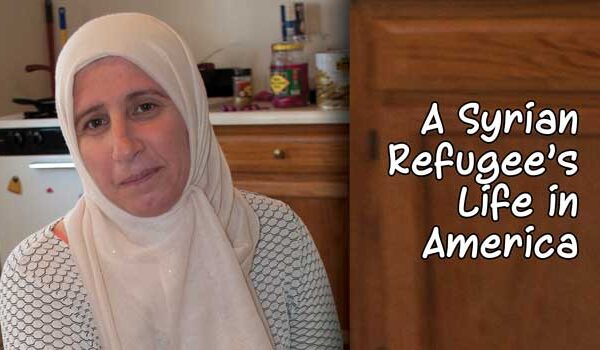
    I pull up to Rajaa Abbas’ house in quiet Dundalk neighborhood north of Baltimore. It is the last in a line of tidily arranged cape cod homes, each in close proximity to the next. The rose bush in the small planter in her front yard is blooming. Around them, she has turned the soil and planted some parsley and cilantro seeds, a little reminder of home she tells me at the door. “They haven’t come out yet, I’m not sure about this soil, we’ll see!” she shrugs.

    Rajaa is eager to talk to me and quickly ushers me into her home. Before I have a chance to take my breath, paper-thin shrak bread is being torn in preparation for tisiqya, a casserole of chickpeas, tahini, and toasted bread. Squashes are being cored for mahshi, while cauliflower is frying for maqlooba, a rice and vegetable “upside-down” casserole (“the Palestinian way,” she tells me, “in your honor”). The kitchen is saturated with the aromas of cumin, safflower, cilantro, and olive oil. It is a non-stop flurry of activity that results in a feast lasting from breakfast through lunch, with a spread that also includes homemade cheeses, pickles, and jams.

    Her mother-in-law situates herself at the kitchen table, helping out where she can. Rajaa moves back and forth seamlessly between her kitchen counter and the table, which has been meticulously arranged with a platter of fruits and sticky, sumptuous homemade baklava. Our conversation runs the gamut from the status of other Syrian neighbors, family members’ ailments or disabilities, children and their challenges in school (“he keeps getting pushed around by the other kids”), and garden pests such as squirrels, a creature with which she was wholly unfamiliar prior to her arrival here. “The rascal has been digging up my green bean seedlings outside!” she laments.

    Rajaa, 43, has adapted to her new home of eight months better than most, but Dundalk is still a far cry from the Damascus neighborhood she called home. “Things were great in Syria, then the war started. Our entire neighborhood was on fire. It was no longer safe” she recalls solemnly. “Otherwise, why would we have left?” Her mother-in-law first spotted her during an Umra trip they were both taking over a decade ago. She saw her cooking at a shared kitchen in the hotel they were staying at. “She was making all sorts of delicious and elaborate food with ingredients she transported from Syria,” all quite a feat for a traveler on the go. She then suggested to her son that she might make a great spouse. “But Rajaa insisted she was here to focus on her spirituality, and that such matters could be discussed back in Syria,” she chuckles.

    War, Migration, and Resettlement

    Two kids and many years later, their lives took a turn for the worst as civil war enveloped the hometown they knew and loved, where she worked as a hairdresser and her husband a shopkeeper. They first sought shelter in her mother’s town, about an hour away from Damascus, before fleeing to Jordan. When the opportunity to migrate to the U.S. presented itself via the International Rescue Committee, they didn’t hesitate. But things weren’t as easy as they’d imagined. After their three-month rent-free grace period ended, reality hit them hard. With minimal assistance, ticket costs to pay back to the sponsoring agency, bills to pay, and minimal language ability or transportation, things weren’t simple as they’d imagined. “In Jordan, our rent was $100 a month! Now its $1400! Little by little, we managed. We met people, by Allah’s will, who were very compassionate and kind.”

    The first few months, she would spend up to four hours a day using Baltimore’s less than ideal public transportation, along with her husband Yousef, to reach English tutoring sites. She is a quick learner and keen on doing what she could to help her husband with the bills, but quickly realized that she “wasn’t in Damascus anymore.” All job offers were more than an hour away and involved long hours and grueling work. “If I wanted my kids to have a solid foundation and upbringing, I realized that I’d need to be around to raise them as much as I could here, it wasn’t like back home.” With that mind, she began to participate in the cooperative of home-based refugee cooks, known as the Aleppo Kitchen. In addition to providing her with a meager income, the cooperative helps her own her time, network with potential clients, as well as obtain some basic knowledge and experience in the catering business. It is also a dignifying and empowering experience, she says.

    The Aleppo Kitchen is an all-volunteer run cooking cooperative that was born out of a desire to address the acute and long-term needs of the Syrian refugee community in Maryland, as they transitioned to their new life. It was also a direct response to the recognition that while many of the families were still unable to drive or speak English, many were excellent home cooks and some had experience as chefs or bakers in their Syrian home towns. In addition to being an incubator of sorts, Aleppo Kitchen helps facilitate food sales opportunities, provide equipment, basic catering training, and positive community interaction and personal growth for the Syrian refugee community of the Baltimore Metro area. Though the project still lacks a space to call its own (eventually, the hope is to purchase a commercial kitchen where the women can work out of), there is still a high demand for catering and personal chefs.

    Some forty women participate in the project. Although the income they receive and the opportunities for everyone to cook as much as they’d like are still minimal, it has given them a chance to get to know one another and provided a safe virtual space in which to communicate and commiserate, via the cooperative’s What’s App sub-groups. “I find catering to be a safeguard of sorts for my children. I can keep an eye on them, and be around to care for my mother-in-law” says Rajaa. She notes that it is also a very emotional experience. “When you cook, you remember certain things. When I make mamoul I remember my mother, I wish I was in front of them; she stayed in Syria.”

    Supplementing Support for the Families

    Rajaa is one of dozens of Syrian refugee families brought over to Maryland over the past two years. They now number around 180, with new families arriving as recently as a few weeks ago. They are brought over by organizations such as the IRC (International Rescue Committee), ECDC (Ethiopian Community Development Council), LSS (Lutheran Social Services), and World Relief. But the agencies’ resources are limited as are the provisions they provide, as Rajaa learned, which is where local communities step in. “Centers and local Muslim communities have been coordinating with resettlement agencies to supplement support for the families,” explains Khaled Albalajm, who works for one such resettlement agency on a policy level, and volunteers with BRIDGE America (Betterment of Refugees through Integration, Development, Guidance & Empowerment in America), a Maryland-based charitable organization that consists of concerned individuals assisting the refugees in their time of need.

    Because most families were placed in metro locations outside of urban areas, finding their way around was one of the biggest and most immediate challenges. Errands as basic as grocery shopping can be difficult. “In the beginning all families had a challenge accessing grocery stores,” explains Khaled. Many lived in “food deserts” where the closest grocery was nearly three miles away, or a 35-minute bus ride.

    Beyond that, jobs were incredibly difficult to come by, and those that did exist involved grueling hours and backbreaking work. “They had trouble making ends meet— those who rely on state funding did not receive enough to cover their rent.” Many months and frustrations later, there is some light at the end of the tunnel. Albalajm says the majority now have vehicles and many have jobs, low paying though they may be. “The good news is, now some 95 percent of the male members of the household have jobs, and 80 percent have cars. Volunteer English tutors visit their homes regularly, and two of the refugees have their own landscaping and mechanic business.” While the road to self-sufficiency, from Syria to America, is a steep one, with many hopes and sorrows, and fears about loved ones left in Syria, those who persevere can find their new home a positive experience. So says Rajaa Abbas. “With our reliance on the Almighty, slowly, but surely, we will find our way. We are blessed to have had such an opportunity.”