بسم الله الرحمن الرحيم

Author: Karonlains-Alarcón Forero

  • CON UN TRAPO EN LA CABEZA

    CON UN TRAPO EN LA CABEZA

    La nueva musulmana, durante el proceso de su conversión, vive una trasformación en sus creencias básicas y su visión del mundo; esto afecta su apariencia física y su manera de ser. Este cambio es natural y en ocasiones llega muy fácil. Sin embargo, es uno de los que tiene más repercusiones personales y sociales: el vestuario, el maquillaje, los accesorios, la forma de comportarse. Todo se trasforma en una actitud de modestia que a veces choca con lo que la gente está acostumbrada, sólo porque un día durante esta transformación la nueva musulmana siente que ya no necesita usar licras ajustadas o lucir escotes amplios para ser mujer.
    Algo dentro de ella cambia, y sus muslos, senos, cintura, y su cuerpo en general dejan de ser una pieza en exhibición para convertirse en partes integrales de lo que es. Deja de creer que “la que no muestra no vende,” para preguntarse: “¿Acaso estoy en venta?”
    En medio de este proceso está la decisión de usar el hiyab, o la vestimenta de la mujer musulmana. Se use todo el tiempo o sólo en algunos momentos, representa una actitud frente a la vida y la exteriorización de un sentimiento interno y profundo en la vida de la creyente. Una mujer puede tener la más completa convicción sobre el uso del hiyab como emblema de su fe, de su dignidad y modestia; o puede estar trabajando a través de los desafíos de ese aspecto importante de rendirse a Dios, mientras que ese proceso aún no ha llegado a su conclusión.
    Cuando viví en Egipto, una de las primeras cosas que noté fue la apariencia femenina: si bien muchas mujeres usan hiyab, alhamdulillah, había otras que llevaban puesto un bonito trapo en sus cabezas. Y he visto trapos de colores, con letricas, con adornos, grandes, pequeños, moñitas y un sinfín de cositas. Ahí conocí la diferencia entre lo que es realmente usar el hiyab y taparse el pelo con tela.
    Al llegar a este nuevo país de mi natal Colombia, me advirtieron que no podía salir a la calle sin hiyab, pero no me dieron una razón islámica, no me hablaron de la sumisión a la voluntad Divina, ni del recato, ni del decoro, que es lo que nos ordena Alá según el siguiente verso:
    “Y diles a las creyentes que recaten sus miradas, se abstengan de cometer obscenidades, no muestren de sus adornos más de lo que está a simple vista…” (El Corán 24:31).
    En su lugar, me explicaron que en Egipto algunos hombres tratan a las mujeres sin velo como si fueran prostitutas, así que para evitar inconvenientes – sobre todo teniendo en cuenta mi apariencia extranjera – sería mejor que me cubra.
    Esta recomendación me llevó a reflexionar acerca de la vestimenta islámica en Egipto, o en otros países donde su uso es más tradicional que espiritual. Algunas mujeres no usan hiyab, pero se tapan el pelo, porque así lo impone su tradición, la costumbre del país, o porque lo exigen sus parientes, o porque deben camuflarse mientras anden en público o de lo contrario atraerían la atención. Pero definitivamente, el hecho de que lleven tela cubriendo el cabello no hace que tengan recato ni modestia. He visto mujeres llevando un trapo en la cabeza, pero luciendo vestidos que no cumplen con los requisitos del hiyab.
    En medio de este panorama, recordé a mis hermanas en Latinoamérica que viven una situación contraria: allá cubrirse es el inconveniente. Muchas mujeres que usan hiyab permanentemente arriesgan perder su empleo, pelear con sus familiares, tener desacuerdos con sus compañeros de estudio, ser rechazadas por sus propios padres, etc., todo porque sienten una verdadera necesidad de adorar a Dios y someterse a Su voluntad.
    Conozco a hermanas que hicieron shajada y al otro día Alá les dio la fortaleza para usar hiyab regularmente, otras que apenas están recorriendo el camino para encontrar esa fortaleza, otras que llevan algún tiempo en el Islam y en su camino encuentran que por diferentes motivos, todavía no pueden usar hiyab de manera permanente y prefieren tomar siempre una actitud de modestia, aun cuando no cubren su cabello. Estas hermanas no sólo enfrentan su propio proceso, sino la crítica de otros musulmanes que las señalan como personas que carecen fe.
    Todas debemos vivir nuestros caminos y tomar decisiones. Cada cual tiene sus dificultades y asuntos, ambos hermanas y hermanos. Esto es algo que todos debemos recordar, porque en ocasiones nos olvidamos que solo Alá es quien juzga las acciones y las intenciones de los corazones. Omar Ibnu Al-Jattab, que Alá este complacido con él, dijo:
    “Durante la vida del Profeta la revelación describía el estado de la gente. Ahora, desde que la revelación ha terminado, nosotros consideraremos a las personas según sus acciones visibles. A quien se muestra bueno lo tomamos como tal, lo aceptamos, no indagamos acerca de sus intenciones ocultas o motivos; Alá juzgará sus intenciones ocultas y lo llamará a declarar. A quien exhibe o muestra algo malo, no lo aceptamos y no le creemos, aunque afirme que su intención es buena” (Al-Bujari).
    El punto es que el hiyab no sólo es una tela sobre el pelo sino muchísimo más. Representa decoro y sumisión, y en el caso de las hermanas revertidas, también es el símbolo de un proceso interior, un camino recorrido. Por eso es importante entender la diferencia entre tener un pañuelo en la cabeza y un hiyab. De nada sirve que nos cubramos con tela si sentimos que eso es tan sólo un disfraz para eventos sociales. El hiyab viene naturalmente cuando primero entran en el corazón la fe, la modestia, la dignidad y el entrego.
    Recordemos que Alá lo ha dicho en el sagrado Corán: “Os hemos proporcionado (dos clases de vestidos). Uno (el convencional) es para el recato de vuestra desnudez y para lucimiento. Pero el otro, el más efectivo, es el de sentir la permanente presencia de Dios con vosotros, es el más útil y trascendental ropaje.” (7:26) La lucha por la rectitud es una dedicación de por vida. Asimismo, el cambio que enfrenta una nueva musulmana durante su transformación en nuestra sociedad es un reto, y la decisión de usar el velo es parte integral de este. El proceso puede ser largo y maratónico o una carrera de velocidad. Sea cual sea, sepamos que el velo es mucho más que tela para tapar el cabello: es actitud, reflexión, moderación, recato y una expresión de nuestra creciente fe que va más allá de la tela pero que definitivamente se refleja en ella.

  • A Piece of Cloth on Your Head

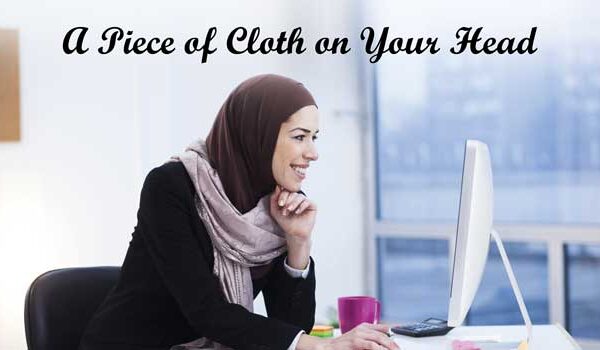
    A Piece of Cloth on Your Head

    The new Muslim woman, during her conversion process, goes through a transformation involving her core beliefs and worldview; this affects both her physical appearance and her mannerisms. This change is natural, and occasionally comes easily. However, it is one that has many personal and social repercussions: a shift in attire, make-up, accessories, and behavior. Everything transforms into an attitude of modesty that oftentimes clashes with what people are accustomed to. There comes a day during this transformation that the new Muslim woman feels that she no longer needs to wear tight-fitting clothing or parade around with plunging necklines to be a woman.

    Something inside her changes, and her thighs, breasts, waist, and body overall are no longer regarded as assets to be exhibited, but rather integral parts of who she is. She stops believing that “sex sells” and begins to ask herself, “What do I value?” Part of this process is the decision about wearing hijab, or the Islamic code of dress. Whether a woman wears it full-time or occasionally, it represents an attitude towards life and the externalization of a deep meaning and purpose in the life of the believer. A woman may have fullest conviction about wearing hijab as an emblem of her faith, of her dignity and modesty; or she may be working through the challenges of that important aspect of surrender to God, while that process has not yet reached its conclusion.

    Wearing Hijab – Tradition or Religious Conviction?

    When I lived in Egypt, one of the first things I noticed was the female appearance. While many women, alhamdulillah, were wearing hijab, some were wearing a pretty piece of cloth on their heads. I saw bows and a myriad of other decorations, and various colors and styles. It was then that I learned the difference between wearing hijab and internalizing its profound meaning, or merely covering your head with fabric.

    When I first arrived in Egypt from my native Colombia, I was advised to not go out in the streets without hijab, but I was not given an Islamic reason. Submission to Divine Will was not mentioned, neither was modesty or decorum, which is what Allah mentions in the following verse: “And say to the believing women that they should lower their gaze and guard their modesty, and not to display their beauty and ornaments except what [ordinarily] appears thereof; and they should draw their veils over their bosoms and not display their beauty…” (Quran, 24:31). Instead, I was told that in Egypt, some men treat women without hijab as prostitutes, so to avoid any harassment – especially considering my foreign appearance – it would be better for me to cover myself.

    This advice led me to reflect about dressing Islamically in Egypt, or any other country where doing so might be more traditional than spiritual. Some women cover their hair because this is imposed by their tradition, the customs of their country, because it is demanded by family members, or because they must camouflage themselves while in public or else attract attention. But the fact that they wear a cloth covering their hair does not make them modest or reserved. I saw women covering their tresses, but their garments did not meet the requirements of hijab.

    In the midst of this scenario, I remembered my sisters in Latin America who live in an opposite situation: there, to wear hijab on an everyday basis can result in loss of job, tension with, or rejection by, family, confrontation with peers — all because they feel a devotion to worshipping Allah and submitting to His Will. I know sisters who took their shahadah, testimony of faith, and the very next day, Allah gave them the strength to begin wearing hijab regularly. Others are just barely able to walk the path to finding that resolve, while there are still others who have been Muslim for some time, but they find that for varying reasons, they still cannot come to the conviction to wear hijab as a habit of daily living. They prefer to simply live and dress modestly, although they do not cover their hair. These sisters not only have to deal with their own spiritual development, but also the finger-pointing from Muslims who accuse them of lacking faith.

    Respecting Each Woman’s Journey of Submission

    Everyone must follow their path in life and make decisions per their situation. Every individual has his or her challenges and issues, both sisters and brothers. That is something we should all keep in mind because from time to time we forget that only Allah can judge intentions, and only He knows what is in the heart. Umar ibn Al Khattab (R) once said: “People were judged by the revealing of a Divine inspiration during the lifetime of Allah’s Apostle but now there is no longer any more [new revelation]. Now we judge you by the deeds you do publicly, so we will trust and favor the one who does good deeds in front of us, and we will not call him to account about what he is doing in secret, for Allah will judge him for that; but we will not trust or believe the one who presents to us with an evil deed even if he claims that his intentions were good” (Bukhari).

    The point is that hijab is not only a piece of cloth placed neatly over the hair, but much more than that. It represents submission, and in the case of converts, it is also a symbol of an internal process, an ongoing journey. We should never make assumptions about why a Muslim woman chooses to wear or not wear hijab. Intellectually, we can reflect on the impulse to cover the hair because of tradition, family or peer pressure, or duty, as distinct from observing the greater parameters of true hijab which emerges from eman and striving to surrender fully. As faith, modesty, dignity, and surrender manifest in the heart and in the mind, it is natural that the desire to cover the hair and dress modestly follows.

    Remember that Allah says in the Quran, “O children of Adam, We have bestowed upon you clothing to conceal your private parts and as adornment. But the clothing of righteousness — that is best. That is from the signs of Allah that perhaps they will remember” (7:26). The striving for righteousness is a lifelong dedication. And the transformation that a new Muslim woman experiences, in the beginning of that dedication, is profound and challenging, especially in our society, and the decision to wear hijab is an integral part of that. That process can be long and rigorous like a marathon, or it can be a sprint. Whatever it is, we must recognize that hijab is much more than a cloth on our head to cover the hair; it is an expression of one’s deepening faith, of modesty, dignity, and spiritual grace.