بسم الله الرحمن الرحيم

Author: Jamaal Diwan

  • Stamp out Hunger

    Stamp out Hunger

    Amongst the most basic needs of human existence is sustenance. God talks about this in different places in the Qur’an, emphasizing that all people must eat and drink and that even the Messengers, who were sent by Him to mankind, ate and drank (Qur’an 5:75). God also mentions in various places in the Qur’an that He has provided for mankind sustenance from various sources and that His generosity is abundant (Qur’an 11:6). Nonetheless, we still see much hunger, and even starvation, around the world. In fact, roughly a quarter of children worldwide are stunted mentally and physically because of malnutrition. In some countries such as Burundi, Somalia, and Niger this rate is over 30 percent; and in Bangladesh it is an appalling 41 percent while in India this rate reaches as high as 48 percent of all children in that country. When we consider these statistics in light of the Qur’anic verses, we know that we are not talking about a material crisis; rather we are talking about a moral crisis.

    Sometimes Muslims living in the U.S. think that poverty and hunger are problems that only affect other areas of the world but are not local issues. This is an incorrect understanding

    In many different places and in many different ways in the Qur’an, God addresses the urgency of feeding the poor. It says multiple times that feeding the poor is an evidence of true belief (Qur’an 90:14, 89:18, 107:3). It talks about feeding the poor as expiation for certain misdeeds (Qur’an 58:4, 2:184). These verses put extra emphasis on the importance of this issue and show that it is foundational in the development and realization of faith, a part of which is to acknowledge the needs of our brothers and sisters. These verses also apply to all of mankind and not to needy Muslims only.

    When Prophet Muhammad (peace be upon him) first received the revelation, he was in a state of bewilderment. He ran home to his wife and told her to cover him up and explained what had happened to him. Her response was quick and measured, “Allah will never disgrace you. You unite family relations, you bear the burden of the weak, you help the poor and the needy, you entertain the guests and endure hardships in the path of truthfulness.” This was the way that she described her blessed husband, and one of these descriptions was that he helped the poor and the needy.

    When some of the Muslims fled to Abyssinia to escape the discrimination they were facing, they sought refuge under a just king who asked them what their message was about. In explaining the message of Islam, one of the things mentioned was the rights of the poor and the obligation to provide for the needy by giving in charity.

    Sometimes Muslims living in the U.S. think that poverty and hunger are problems that only affect other areas of the world but are not local issues. This is an incorrect understanding. If we take California as an example, especially considering that it is generally considered a wealthier state, we see some interesting figures. Almost 23 percent of children in California are living in poverty. Roughly 16 percent of households are suffering food insecurity, meaning they have difficulty procuring enough to eat. Almost 47 million Americans (nearly 15 percent of the population) rely on government support through the Supplemental Nutrition Assistance Program (SNAP, commonly known as food stamps) in order to fulfill their basic nutritional needs. Almost 60 percent of students in schools across America receive free lunches in order to supplement the limited food available at home. All of these figures show that hunger is a serious issue not only worldwide, but here in the United States. So what can we do?

    In response to that crucial question, we are starting a local campaign in the near future which we hope will be picked up by communities nationwide. Basically, we are calling on people to realize the plight of those who go hungry every day. In this campaign to Stamp Out Hunger, we are asking people to take a “food stamp challenge.” During this challenge, participants will limit their daily spending on food to what they would be able to purchase if they were on food stamps. This means no fast food, no prepared food, and no more than four dollars per day for the 12 days of the challenge. We hope that communities all over the country will hold locally organized and hosted town halls on hunger and poverty at the end of the 12-day “food stamp challenge.” Throughout the campaign, we ask our brothers and sisters to share their experiences and stories on Facebook and Twitter (@stamphunger). We hope that this brief, voluntary deprivation will help us build empathy for those that are suffering from hunger. We also hope that it will help initiate discussions about our role as people of faith in dealing with these issues, and how our choices impact the world around us.

  • The Complete Islamic Personality

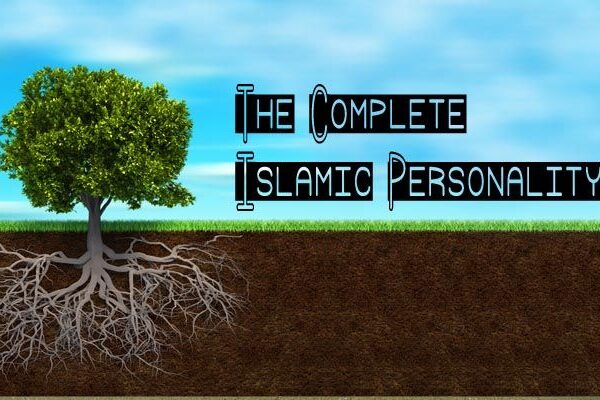
    The Complete Islamic Personality

    It is well known and understood that Islam is a holistic system that impacts all areas of a person’s life. We hear this often but do we really know what this means and how it plays out in our lives? On this topic, Imam Hasan Al-Banna has a beautiful and instructive statement about being intent on reforming ourselves. He says, “A Muslim should strive to attain a strong body, good character, cultured thought. He should be able to earn a living, have pure belief, and correct worship. He should be able to control his desires, be careful about his time, organized in his affairs, and beneficial to those around him. These comprise the duties of every Muslim as an individual.” These ten points provide a well-rounded approach to personal development according to the teachings of Islam.

    Everything that we do is in the service of Allah (SWT), and what He requires from us is the intention and striving to bring about benefit to ourselves and all of humankind

    According to the above quote, the first strength necessary for a complete Islamic personality is physical strength. Our health is a blessing and responsibility from Allah subhanahu wa ta`ala (exalted is He) and the quality with which we take care of it affects all areas of our lives. If we are healthy, we have greater clarity of thinking, more energy, and enhanced emotional stability. Conversely, when we neglect our health, we fall victim to physical maladies like fatigue or lethargy, psychological issues like anxiety or depression, and spiritual struggles. For these reasons, good health is foundational in the development of the well-rounded Muslim personality.

    From good health comes the second strength which is an outward manifestation of a quality relationship with one’s Creator — good character. The Arabic word mat?n means good but also firm. We can infer from this dual meaning that strong character must demonstrate itself not only in times of ease but also when things are difficult. When things are easy, it is no great challenge to maintain good conduct and treat people in the best way possible; but in the face of hardship, fatigue, frustration, disappointment, anger, and an array of other emotions, the fortitude of one’s character is put to the test. The person who has firm character can withstand these tests, but the one who is only putting on a show will eventually be exposed for who he really is.

    Time is life itself and the person who squanders time is squandering opportunities to develop the self and purify the heart

    The third strength necessary to build a strong Muslim personality is intellectual and educational rigor as the basis for attaining enlightened and refined thought. This is of utmost importance as many times this strength is neglected by people who are perceived to be “religious.” Islam is a system of life, informed by the teachings of the Divine, and embodied in the real-life example of Prophet Muhammad (peace be upon him). Yet, to understand and apply Islamic teachings in a manner that goes beyond blind faith or superficial understanding, one must develop the intellect. Then one learns to think critically, cultivates powers of discernment so as to properly perceive what has value and what has priority, and comprehends the best ways to apply Islamic wisdom and practical solutions to problems facing humanity.

    The fourth type of strength necessary to build a strong Muslim personality capable of serving Allah and serving Islam is financial strength — being able to earn a living. It is very difficult to contribute to the well-being of society when one’s financial situation is so dire that he is primarily occupied with essential issues like food, clothing, shelter, and health care. A Muslim must always seek financial stability and sufficiency so that he can be independent and able to devote time and other resources in his service to Islam. Whether poor or affluent, all should seek some sort of financial stability.

    After mentioning physical, intellectual, and character strength, as well as financial stability, Imam Al-Banna then moves on to point out the importance of pure belief and correct worship. These are the basis and backbone of the first four strengths. Eman and ibabah are the sources by which the Muslim finds his or her direction in daily living and the kind of relationship with the Divine that is required to face the difficulties that come with service to the Truth. They constitute the well which quenches the spiritual thirst of the heart in its search for its natural inclination.

    Hasan al-Basr? said, “O Son of Adam! You are nothing but a compilation of breaths and with each breath that passes, a piece of you is gone.”

    The mission — to be of service to the Truth — requires much from the individual so dedicated, and herein lies the appropriateness and necessity of the last four characteristics. Firstly, the Muslim is constant in fighting his or her base desires. In the struggle to worship Allah (SWT) and live a righteous life there are endless difficulties and tests. These tests are sometimes very clear and open, but sometimes very subtle. They can be tests of our sincerity, whether our ego seeks excessive praise and aggrandizement, whether we are given to conciliation or argumentation, and countless other provocations by the lower self. These tests cannot be overcome except through a never-ending process of learning to control — to moderate, elevate, and channel —one’s desires.

    The next two of these characteristics are to be strict with one’s time and organized in one’s affairs. Time is life itself and the person who squanders time is squandering opportunities to develop the self and purify the heart. In this regard, Hasan al-Basr? said, “O Son of Adam! You are nothing but a compilation of breaths and with each breath that passes, a piece of you is gone.” The well-rounded Muslim will also find that his or her responsibilities always outweigh the amount of time available. For this reason, the Muslim is always strict with his time and organized in her affairs so that they can reap the most benefit from this life before meeting their Lord in the next life.

    The last characteristic is to be beneficial to others. We do well to reflect deeply on this. Everything that came before is lost if we are harmful to those around us. The scholars of Islam have said that the core objective of Islam is to produce benefit. Everything that we do is in the service of Allah (SWT), and what He requires from us is the intention and striving to bring about benefit to ourselves and all of humankind.

    May Allah (SWT) help us to embody these characteristics and bless us with the capacity to manifest Islam in all of its wonderful beauty.