بسم الله الرحمن الرحيم

Author: Hena Zuberi

  • Takeaways from ICNA-MAS Convention 2017

    Takeaways from ICNA-MAS Convention 2017

    ICNA Convention Brings Unified Message of Prophets to Baltimore

    Hena Zuberi
    A major change in dates did not deter ICNA-MAS convention attendees as more than 21,000 converged at the Baltimore Convention Center on Easter weekend, April 14-16. The theme of this year’s convention was “Quest for True Success: Divine Message of Moses, Jesus and Muhammad (peace be upon them).” At the inner harbor, WHYISLAM, an ICNA initiative, conducted street dawah on a perfect spring day. Sadaqah was also a big part of the weekend. 750 Blessing Bags were distributed on Friday after Jummah and a thousand hot meals distributed after Zuhr on Saturday at four locations in Baltimore City by MSSA (Muslim Social Services Agency) and ICNA Relief volunteers.

    All booths at the bazaar were completely sold out, with 450 vendors. Over 125 sessions, including spiritual, parenting, marriage, and activism tracks, took place throughout the three days. For the first time ever, the main sessions were live streamed using Virtual Reality 360 degree cameras. Breakout sessions in Malay and Turkish were added to existing ethnic sessions in Arabic, Bangla, Urdu, and Spanish languages. Several organizations collaborated to host mini-events like Muslimmatters, IIIT, Noor Kids, Council on Islamic American Relations, Muslim Legal Fund of America, Muslim Social Services Agency, and others. A new programming track for ages 10-14 was introduced and was well-attended. The Youth Conference was packed and their sessions were a huge draw. The annual Quran competition was held, as well as the first ever ICNA Master Chef competition.

    Jummah was led by the new ICNA President, Javaid Siddiqi, of Kentucky. His khutbah was about renewing the intentions — every speaker, attendee, volunteer, and vendor at the convention — his or her intention should be solely to please Allah. “It is a true mercy of Allah that He has made you and I Muslims,” concluded Javaid Siddiqi at the last session.

    It’s Time to Get Uncomfortable

    Wajid Khan
    I have always heard of people going to ICNA and returning with all of these cool stories about how they got to see all of their favorite scholars. The talk that I attended was named Islam: Deconstructing Myths and Clarifying Truths. The speaker who stood out to me the most was Dr. Dalia F. Fahmi, a professor of political science. I had known of her beforehand, but I had never heard her speak. When she got on stage and began to speak, you could feel the emotion, the passion, and the care in her voice. She began talking about issues such as starvation in Africa, or politicians belittling Muslims and misrepresenting “Shari’a Law.” She gave uncomfortably mind-boggling statistics about people dying around the world. She spoke so fiercely but compassionately at the same time, with language intended, as she herself stated, not to comfort you but, in fact, to make you uncomfortable. It forced me to reflect with sadness on how little I am doing for the people in need. I have working arms, legs, and mind, and yet I use none of them to help. How am I able to live day-to-day without thinking once about others? Do I not have a responsibility to people who cannot fend for themselves?

    I greatly enjoyed this talk and it forced me into a position from which lot of people insulate themselves. A position of discomfort. Too often are we too comfortable, and we find it difficult to leave behind the luxury. It’s time to get uncomfortable, and start facing these issues head on together, as a united ummah.

    The Wisdom of Converts and the Value of Seeking Knowledge

    Arshiya Shaikh

    There was one session at the recent ICNA Convention in Baltimore that had the greatest influence on me. The Youth Conference, entitled “The Storm Within,” honestly changed my life. The topic of the session was “Seeking Knowledge.” Former basketball player, Br. Mahmoud Abdul-Rauf, spoke about seeking knowledge and related it to his own life. His mother had only received an 8th-grade education. He also pointed out how he was very socially awkward as a kid, and how he had had trouble giving voice to his own thoughts and opinions. The fact that he could go from being that person to speaking in front of hundreds of people was a great eye opener. I personally have always had trouble, for example, with raising my hand in class. The comparison of his childhood to his life now really gave me a confidence boost. He mentioned that ever since his conversion to Islam he has taken any chance he could get to enhance his level of knowledge.

    Another speaker who was at this same session was Sheikh Saad Tasleem. He said that people nowadays don’t take the concept of seeking knowledge seriously for one reason — the Internet. We all think that the knowledge is at our fingertips, so what’s the point in making an effort to learn. I was very fortunate to hear this because, in truth, I am that person. I am guilty of neglecting to put in the extra effort to open up a book and try to obtain something new. I am very thankful that I had the chance to hear these wonderful words from these people and that I am now able to apply it to my own life. I will, insha’Allah, try to put these words into actions and improve my life for the better and, insha’Allah, ensure my path to Jannah.
    Boys II Men
    Moazam Afzal

    As attendees of Islamic conferences, we come in with the intention to seek knowledge but we often end up confusing knowledge with inspiration. Sheikh Abdul Nasir Jangda articulated this point in the Boys II Men session at the ICNA 2017 conference. In conferences such as ICNA you can, and are meant to, gain knowledge, but it is primarily for inspiration. Inspiration isn’t a bad thing, in fact, it is essential because it embeds in us the desire to want to continue to learn and grow. Nonetheless, it is important that we make a clear distinction between the two. If people weren’t inspired to learn, nobody would become a scholar, hafiz, or an imam.

    As Muslims, we must seek knowledge so we can better ourselves. Sheikh Jangda mentioned that if you just replace the ten minutes you are on your phone before you go to sleep you could learn so much. This message applies to me first. I can say that personally after attending the conference, alhamdulillah, I’m on an iman high, but it slowly fades as we get busy in our day-to-day lives. We have to make the intention that we will continue to seek knowledge outside of conferences like ICNA by using the inspiration and advice that we received during that weekend. Inshallah, we can use knowledge to better ourselves, our communities, and to please Allah (SWT).

  • ICNA-MAS Convention 2017

    ICNA-MAS Convention 2017

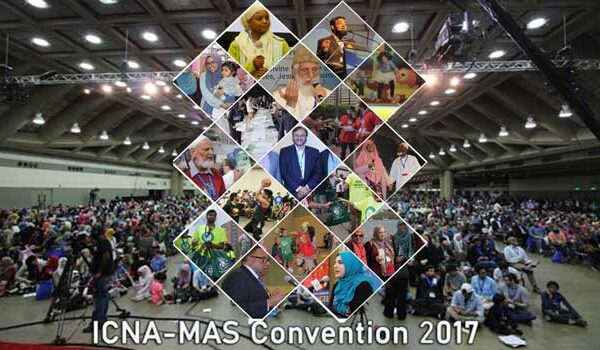
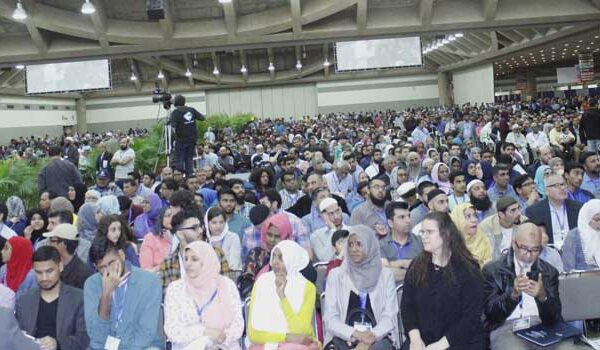
    A major change in dates did not deter ICNA-MAS convention attendees as more than 21,000 converged at the Baltimore Convention Center on Easter weekend, April 14-16, 2017, making a bold statement to the current administration in the nation’s capitol: we are Americans, we are here, and we belong.
    Every inch of the convention center was taken over, as buses brought attendees in from New York to North Carolina. Muslims from the DMV area also attended in large numbers. Catherine Pugh, mayor of Baltimore City gave the welcome address at the 42nd annual convention. Mayor Pugh and Baltimore County Executive Kevin Kamenetz received community service awards from Islamic Circle of North America leadership.
    The theme of this year’s convention was “Quest for True Success: Divine Message of Moses, Jesus and Muhammad (peace be upon them).” The dates were changed from the traditional Memorial day weekend to Easter weekend because of Ramadan. For 2018, the convention will run from the end of March, 30th-31st to April 1st.
    Dr Arif Mannan, of Columbia, Md. was an integral part of the planning team. “We thank all attendees who participated. We appreciate our sponsors who supported the convention. We owe our scholars and teachers who gave their time and energy to educate our young and old and we are in debt to our volunteers who worked tirelessly for months and at the event to make it comfortable and easy for the attendees and above all we are thankful to Allah for his mercy and blessings and pray that he accepts it all from us,” he related.
    Over 400 volunteers prepped and worked the event: from marketing to registration to hotel management. Maryam, 18, of Silver Spring, Md. was hanging out with friends in the bazaar after volunteering for two days. “I thoroughly enjoyed my time volunteering and reconnecting with old friends while benefiting from the lectures,” she said, expressing what several other attendees felt about their experience.
    With the assistance of Rashidun DC, Islamic Society of Potomac sponsored tickets and transportation for Muslim youth and elders from underserved areas of Washington D.C., giving them the chance to experience everything that a convention like ICNA-MAS has to offer.
    With the help of Bridge America, local Syrian refugee families were registered free of cost and ICNA arranged two buses to transport them. Many were driven to the center by Bridge America and John Hopkins MSA volunteers. On Saturday, after Quran recitations and nasheeds by children, Syrian refugee spoke for their ordeals after coming to the United States. Food for the meet and greet was catered by Aleppo’s Kitchen, a home cooked food business by Syrian women.
    Basboussa, a semolina dessert, and deliciously sticky, tender Syrian Stuffed Grape Leaves with a lemony and garlicky rice filling were on sale by Aleppo’s Kitchen at the halal food court in the parking lot of the Sheraton Hotel next to the convention center.
    The halal food court was set up with ten food vendors (nine were local) for both days and sold out of food by the end of the evening. Vendors needed a food license, insurance, and a two day permit to sell food at that location. “The food trucks were fantastic,” said Wisam, 17, who was attending with her family. Inside the convention center, Centerplate had exclusive rights and outside vendors were not allowed to sell food inside.
    Fuad Ndibalema aka SamosaMan set up his African natural food stall in the halal food court. Originally from Congo, settled in Vermont, he sells a variety of GMO-free samosas stuffed with everything from gooey steak and cheese to sweet and tangy Vermont apples.
    At the inner harbor, WHYISLAM, an ICNA initiative, conducted street dawah on a perfect spring day. 60 volunteers, led by Ustadh Fahad Tasleem, answered questions about Islam. Earlier in the day, they had taken a 90 minute dawah workshop.
    Sadaqah was big part of the weekend. 750 Blessing bags were distributed on Friday after Jummah and a thousand hot meals distributed after Zuhr on Saturday at 4 locations in Baltimore City by MSSA and ICNA Relief volunteers.
    Seniors like Nilofer Z. had her cholesterol and blood sugar levels checked at the ICNA Relief Health Table. A well attended Continued Medical Education course was arranged by IMANA.
    A career fair, immigration forum, and a blood drive by Red Cross were also held during the event. ”There was a waiting list and many were turned away,” noted Dr. Atif Nazir who led logistics for the blood drive.
    This year Muslim Nannies, a Muslimah owned business was hired to run the babysitting services for over 600 children. “[Most] parents were happy with Muslim Nannies’ structured play and games for kids. They were professional,” said Sr. Sumera Afzal, lead for Young Muslims Junior programming.
    All booths at the bazaar was completely sold out, with 450 vendors.
    Over 125 sessions, including spiritual, parenting, marriage, and activism tracks took place through the three days. For the first time ever, the main sessions were live streamed using Virtual Reality 360 degree cameras.
    Over 150 speakers, including for the first time young scholars, Shaykh Suleiman Hani, Imam Mikaeel Smith, and Imam Abu Taleb, formerly of the Muslim Family Center in Howard County, gave speeches, workshops and presentations over the course of the event. Breakout sessions in Malay and Turkish were added to existing ethnic sessions in Arabic, Bangla, Urdu, Spanish languages. “Next year, we are planning to add a Somali session,” said Waqar Haider, lead for ethinic programming. This year the sessions in Spanish were titled La Voz Latina (The Latino Voice). Attorney Wilfredo Amr Ruiz from CAIR Florida, Rahim Ocasio from Alianza Islamica, Jose Acevedo, from Al-Rahmah School, Jamal Abdul-Karim, Al Huda School and Nahela Morales were the voices who spoke on Latino Muslim issues.
    Elders from the Guyanese community in New Jersey came in a bus arranged by the ICNA masjid in their city. “Keeping in touch with our Muslim roots is very important,” said Fareeda, who sat with her friends drinking coffee next to the bustling bazaar. She pointed to her friend whose grandson was a hafiz, “We could have never imagined that a decade ago.”
    19 year olds, Imran and Abdullah, from Northern Virginia, said the convention was very beneficial. They liked the increase in social justice awareness in large part due to the influence of the ICNA Council of Social Justice. “It was empowering to see so many Muslims together in Baltimore after what been happening to the Muslim communities this past year,” said Imran.
    Abdullah wanted to see more African American women speaking. Convention featured over 17 speakers from the African American community. ICNA leadership states that it with continue to enhance the diversity of speakers next year.
    Several organizations collaborated to host their mini-events like Muslimmatters, IIIT, Noor Kids, Council on Islamic American Relations, Muslim Legal Fund of America, Muslim Social Services Agency and others. Programming was also hosted by ICNA entities like ICNA Relief, Helping Hands, WhyIslam, ICNA Sisters Wing, and Young Muslims.
    A new programming track for ages 10-14 was introduced and was well-attended. The Youth conference was packed and their sessions were a huge draw. Youth, such as Zaynub Siddiqui (ICNA Council of Social Justice) and Daniel Farrukh (Young Muslims), did moderate sessions and Heraa Hashmi, the young woman who compiled a list of more than 5000 condemnations against terrorism by Muslim leaders, spoke on the main stage. Wisam, a local 17 year old of Sudanese descent, had a lot of fun. “I loved seeing Ibtihaj Muhammad. I had a fangirl moment. I really liked how the lectures were very relevant to what’s happening right now in our society and how the speakers talked about how we should deal with these current events as Muslims.”
    Alongside the annual Quran competition, the first ever ICNA Master Chef competition was held. A super popular event, moderated by comedian Jeremy Mclellan. This was won by Sh. Abdool Rahman Khan and Samia Ebrahim. Former NBA star, Mahmoud Abdul-Rauf, was the special guest at a New Muslim panel.
    Jummah was led by the new ICNA President, Javaid Siddiqi, of Kentucky. His khutbah was about renewing the intentions of every speaker, attendee, volunteer, and vendor at the convention, solely to please Allah. ICMA programming made a conscious effort not to schedule speeches during salah times. Banners clearly marked the carpeted salah areas. Fajr was arranged at 10 different hotels and accommodated 1000 people in some hotels. Enhancing the salah experience at the convention was by design. “We spent thousands of dollars to make it comfortable for people to pray. The extra sound system, volunteers placing shoes in the plastic bags, all of it [brought] a lot of barakah,” remarked Junaid Qureshi, incharge for floor management.
    “Seeing Muslims from all walks of life and all ethnicity and seeing them eager to learn and rushing from one session to another or enjoying the company of each other in a comfortable environment was all worth the hard work of months,” shared Dr. Mannan with the Muslim Link. He gave homage to the volunteers, relaying many moments when unsung heroes worked late into the night.
    “It is a true mercy of Allah that he has made you and I, a Muslim,” concluded Javaid Siddiqi at the last session.
    “To me the goal of the event was to give all attendees the confidence in their Muslim Identity and to provide the tools so they can be beneficial to the community at large without any distinction of race, nationality or religion,” said Javaid Siddiqi.

    This article is an edited version reprinted from the Muslim Link newspaper, April 2017 issue.

    My ICNA-MAS Experience as a Biracial African Woman

    My name is Bilqis Adebayo-Olympio, I am a media professional and the co-founder of the Official Hijabi, a muslimah lifestyle media platform.
    All praise is due to Allah The Almighty, and great thanks to the organizers of this year’s ICNA-MAS convention for creating a platform that gathers together thousands of people from different parts of the world, for promoting unity, hope, and solidarity.
    For the first time ever, I attended the 42nd ICNA-MAS Convention at the Convention Center in the great city of baltimore DC alongside my husband and our toddler, and it was a really great personal and professional development opportunity and experience. According to the stats, over 22,000 people attended this event over two-days from different parts of the world. I see the ICNA Convention as a platform that really brings people together to learn, to grow, and to network with like minded individuals within our own industry – which is Islam.
    One of my favorite aspects of the convention was the level of organization, dedication and hard work that took place during the event. The flexibility of the programs and just the diversity of topics that were being treated by distinguished scholars, inspiring speakers, and community leaders was amazing. There is something for everyone. For every skill-set, every age-range, and every gender.
    The theme of this year’s convention was ‘Quest for True Success’. This is reminding us as muslims to go back to the basics. What it takes to live a life of principle, a life of ethics, a life of morality, a life of value, a life that one will be proud to live and meet with Allah SWT on the day of judgement.
    When you’re around so many muslims, it inspires you to be a better person. I felt this boost in my Iman and it was absolutely needed especially with the blessed month of ramadan coming up, it was the perfect time to rejuvenate and reflect about my purpose in this world.
    I was also surprised at the beauty of the bazaar, never have I seen so many muslim vendors come together in one place to create more awareness about their brands. There was so much to see, buy, and contribute to. From hand painted ceramic wares, amazing quality modest outfits, to uplifting causes, charity, and relief programs. I was also able to meet and interact with some of my favorite personalities I’ve known over the years from social media.

    Invest in the Greatness of One Another

    By Kulsum Shaikh

    I had the opportunity to attend the ICNA-MAS conference that took place in Baltimore Maryland recently. One of the sessions that resonated the most with me was the keynote session. There were many remarkable individuals that spoke during this session, including a Native American convert named Louis Butcher Jr., ICNA President Javed Siddiqi, Imam Siraj Wahhaj, Shaykh Yasir Qadhi, and Shaykh Omar Suleiman. Even though all of these individuals had many gems to share, it was Shaykh Omar Suleiman’s speech which left the greatest impact on me. His speech focused on the idea of investing in one another — or, rather, our lack of investing in one another.
    Sh. Suleiman raised the point that we love to celebrate individuals who have reached various levels of success. However, when it comes to people who are struggling, too often are we quick to dismiss them. As soon as they make it “big”, we want to jump on the bandwagon and celebrate them and their “greatness”.
    We are not involved in the process of making them great. Instead, we wait for the finished product. He even provided a surprising example in Malcom X: Today, we celebrate him. But if he were actually alive, many would choose not to associate with him. I believe that Sh. Suleiman touched on the surface of something much deeper. He touched on our ummah’s tendency to kill dreams. (Abridged version)

    Valuing Their Critical Diversity?

    By Yamil Avivi Garcia

    I attended the Islamic Circle of North America (ICNA) conference in Baltimore, Maryland on the weekend of April 14-16. This is the second time I attended; in 2011, I attended Hartford’s ICNA conference in Connecticut. ICNA organizes a national conference that brings together U.S. Muslims from all walks of life. It draws a diverse pool of Muslims across race, class, and ethnicity. Muslims of different cultures from the Middle East, Africa, South and Southeast Asia, the United States and Latin/o America are present to reflect their lives in the U.S through an abundance of panels. Along with the immense diversity the conference draws from the U.S. Muslim community, organizers use the conference to reflect on ethnicity-specific dynamics. Latino/a Muslim leaders organized a three–panel segment entitled “La Voz Latina” (The Latino Voice), which engaged Latino/a Muslims in Spanish and raised cultural issues concerning Latino/a identity within and outside the Muslim community.
    During my participation at ICNA in Baltimore, I felt a new challenge to close the gap between Latino/a Muslims and Latino/a Christians. It was passionately articulated in a way that was not on the agenda in Hartford, which was refreshing. Years ago, in an earlier moment for recently converted Latino/a Muslims, Hartford represented an astounding accomplishment in which leaders engendered a national awareness of a substantially growing Latino/a Muslim population that subsequently organized conference panels around the distinction and solidarity of this ethnicity. Now, years later, the Latino/a Muslim community has continued growing after the momentous launch of the first Latino and Spanish language centered mosque in Houston, Texas. While several of the topics around identity, pride, and empowerment were comparable in Hartford’s and Baltimore’s conferences, not losing likeness with Christian Latinos/as and preserving and enhancing cultural citizenship and pride as Latinos/as was an important thread throughout the discussions of all the panels. Unlike in Hartford, older and newer Latino/a Muslim leaders came together to stimulate organizing around mutual cultural legacies and the current social and institutional needs of Christian Latinos/as and other black and brown ethnics in this Hispanophobic, Islamophobic, and xenophobic Trump Era moment.
    During the sessions, I felt more connected than ever before as an ally among the Latino/a Muslim leaders and their message to Latino/a Muslims at ICNA to not completely dismiss their Christian Latino/a heritage and origins.
    (Abridged version)