
In today’s social media-saturated world, we mothers are continuously flooded with videos, images, and reels telling us how to feel about motherhood.
One message laments hair loss, sleep deprivation, the disappearance of our freedom and tells us our pre-motherhood spark has withered away! While another assures moms all the loss is worth it, and we should feel nothing but completely happy and fulfilled!
With such an onslaught of content – much of it mixed and contradictory – it’s no surprise the messages and resulting emotions run the gamut!
But is it worth it, and are we happy, or have we lost ourselves? Am I truly content in one moment and frustrated and overwhelmed the next, or is the internet just telling me I am? With so many clashing messages being lobbed at us every day, mothers may find themselves wondering if their sentiments, be they positive or negative, are even reflective of their day-to-day lives. What’s more, for those women who distinctly feel and perhaps even grieve the loss of their pre-baby lives, how are they to cope?
In this piece and for those women, I hope to encourage and assure them this is a normal experience. We can remember the people we once were and the dreams we once had, and we can miss them for a spell. However, just because that person has changed a bit, the one who was perhaps more adventurous and enjoyed more of a zest for life before becoming a mother, doesn’t mean she’s forever gone.
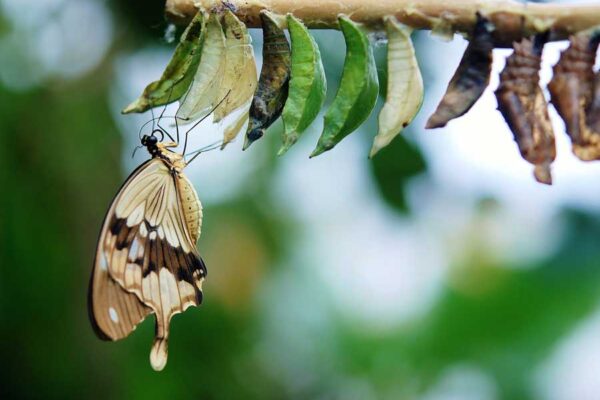
Instead, I would argue we become a new version of ourselves that wouldn’t exist if we hadn’t gone through what we did. We are a better, dare I say, an improved, polished version of ourselves, as we embrace the role of mother.
Scientific View of Motherhood
 In psychology, matresnce is defined as the process of becoming a mother. It includes physical, hormonal, emotional, social, and identity changes that can begin around conception or pregnancy and continue through postpartum and beyond. In their 1998 book “The Birth of a Mother,” authors Daniel N. Stern, Nadia Bruschweiler-Stern, and Alison Freeland explore the profound psychological transformation women undergo when they have children. The writers posit a new identity is born during pregnancy and postpartum, fundamentally altering a woman’s perspectives, relationships, and priorities.
This means becoming a mother is not just a single event, but a major life transition that reshapes a woman’s body, mind, and role in the world. Matrescence is often used to help explain why early motherhood can feel intense, disorienting, or deeply transformative. Understanding this can help women begin to let go of the fantasy that their lives will continue just as they were before motherhood and instead accept they have evolved and will continue to do so. Think of it this way: The old you isn’t gone forever, instead she has become the foundation upon which the mother stands.
This helps us understand that motherhood isn’t a punishment or a withering away, but rather a divine calling and one way Allah teaches us about His own qualities by letting us embody them in how we care for and nurture our children. How amazing and perspective changing, turning our daily motherhood struggles into worship! With that in mind, here are five ways motherhood becomes the very tarbiyah we need to refine ourselves and blossom with grace and mercy.
- Tarbiyah of the Soul Through Giving (Sadaqah)
As mothers, we constantly give our time, energy, bodies, and love to our children. This giving can purify our hearts, cleaning the self of ego and entitlement. This process also helps us to become grateful for blessings we might not normally notice, everyday acts such as hot showers, free time, even an empty sink. With more gratitude comes the promise of more blessings.
Through our giving, Allah teaches us to love without counting the cost, so we begin to understand His love, mercy, and bountiful blessings because we are living in His mercy.
We may be exhausted and overstimulated, but Allah gives us the will to go on, so we do. It is divine tarbiya for our souls, a way to be purified in front of Him, bringing peace and contentment, and when you hold your child despite exhaustion, you feel a glimpse of Ar-Raḥmān’s endless compassion, as if He is whispering, “This is how I hold you, even when you’re helpless.”
- Tarbiyah of Trust (Tawakkul)
Motherhood encompasses so much uncertainty and worries around birth, feeding, tantrums, and the future. Because it’s so fraught, it can be the best starting place to practice tawakkul, forcing us to rely on Allah to carry us through while keeping us sane.
Once we realize we can plan and do our best but, ultimately, we can’t control outcomes, we’re forced to surrender. We realize every sleepless night is a test of faith because we understand this is where Allah has placed us, and, with Him, we can make it through. This is true spiritual maturity, realizing we are not alone but, rather, with Him in our motherhood experience.
- Tarbiyah of Patience (Sabr)
Motherhood can earn us a PhD in patience. After all, how often have we chosen to emotionally regulate ourselves rather than yell at our children?
Nevertheless, every stage demands a new kind of patience. Pregnancy teaches physical endurance, infancy schools us on emotional surrender, toddlerhood trains our restraint, and adolescence shows us how to let go. Through each trial, Allah refines, polishes, and strengthens our hearts. He stretches our capacity to love, forgive, and start again – each day.
The Prophet (peace be upon him) said: “No fatigue, nor disease, nor sorrow, nor sadness, nor hurt, nor distress befalls a Muslim… except that Allah expiates some of his sins for it.” (Bukhari & Muslim). In that context, motherhood becomes a daily form of spiritual detox- a slow, sacred purification through every struggle and sacrifice we face.
- Tarbiyah of Selflessness
In my view, we can’t curate motherhood, we can only surrender to it. Motherhood teaches us how to submit, not to our children, but to Allah, who guides us, provided we keep our hearts facing Him because He is the One who understands us, hears us, knows us, and can help us.
In doing so, we discover a deeper identity, not the old self that was lost, but the truer self being formed through tawakkul and matrescence. This new self recognizes tenderness as strength, tears as prayers, and exhaustion as devotion; the one who has blossomed into the best version of herself with courage, strength and patience
- Tarbiyah Through Mercy
From Allah’s 99 names, He calls Himself Ar-Raḥmān and Ar-Raḥīm, both of which are derived from the root word raḥm, meaning womb. During pregnancy, Allah allows us to experience some of His divine rahma, a mercy that holds, nourishes, and forgives endlessly, despite the myriad of challenges we experience. But those trials we soon forget and instead we hold on to memories of our children that bring us joy, such as first smiles, first steps, and their little jokes. These are precious moments where we gaze upon them with endless mercy. With that in mind, imagine Allah’s mercy for us!
When we love our children, we are reflecting the raḥmah of Allah, and that love, when it is conscious and intentional, becomes dhikr, as well. So, when it feels like motherhood has broken you, remember, maybe it’s breaking open what needed to grow – patience, humility, tenderness, empathy, and true surrender to the Almighty. That is divine tarbiyah by Allah. The old you isn’t gone. She is the foundation upon which the mother stands, with love, tenderness, compassion, patience, and true tawakkul.