بسم الله الرحمن الرحيم

Tag: Education

  • Why Have We Normalized Islamophobia?

    Why Have We Normalized Islamophobia?

    The horrific attacks in Paris and San Bernardino have captured headlines and triggered responses from journalists, politicians, and religious leaders. Some Western heads of government have once again threatened a global war against terrorism, while some political commentators have even invoked World War III.

    A cottage industry of ideological, agenda-driven, anti-Muslim polemicists has sprung up, consisting of pundits, bloggers, authors, lobbyists, elected officials, and their resourceful and wealthy funders.

    In the United States, Republican presidential candidates and some thirty governors have called for a freeze on accepting refugees fleeing the civil war in Syria. Donald Trump, the leading Republican candidate for president of the United States, has pushed the envelope to its extreme, advocating a temporary freeze on all foreign Muslim immigration, as well as the monitoring or even the forced closure of American mosques. The result? Trump soared in the polls, as did fellow presidential candidate Ben Carson, who stated that “for a Muslim to become president of the United States…you have to reject the tenets of Islam.” In Europe, far-right political candidates continue to make political headway. The far-right Front National party of Marine Le Pen won nearly 30% of the vote in the recent French regional elections; although the party did not win any of the regions outright, the strong showing positions Le Pen as a future presidential candidate.

    Fear of Islam and Muslims in general—not just Muslim extremist and terrorist movements specifically—have become normalized in popular culture in both America and Europe. The anti-Islamic and anti-Muslim hate speech, bias, discrimination, and hate crimes—commonly referred to as Islamophobia—are on the rise. Islam Muslims and the vast majority of Muslims have been brush-stroked by and often equated with the kind of militant extremism and terrorism practiced by a mere fraction of Muslims, obscuring the fact that the vast majority of terrorist victims are themselves Muslim. This, in turn, has had a significant impact on the growth of Islamophobia as well as the domestic policies that have threatened Muslim civil liberties. But what are its causes?

    Is Islam the primary cause and catalyst for terrorism?

    Major polls have consistently reported that Islam is a significant component of religious and cultural identity in Muslim countries and communities globally, and thus an attractive tool for violent extremists as an instrument for legitimation and mobilization. However, the primary catalysts for extremism and terrorism are political grievances often intertwined with the use or misuse of religion. Osama Bin Laden and others like him appealed to long-standing political grievances among many in the Muslim world, the mainstream non-violent majority and extremists alike: Western influence, invasion, occupation; Western support for authoritarian regimes that claim to speak for all Muslims; uncritical bias and support for Israel from the American government in the Palestinian-Israeli conflict. Add to this the Iraqi and Syrian (Shiah-dominated) governments’ repression and killing of tens of thousands of civilians and other crimes.

    “Trump is ISIS’s greatest triumph: the perfect Manchurian Candidate who, instead of offering specific and realistic policies, preys on the fears of the public, doing ISIS’s job for them.”

    ISIS has shown a particular talent for coopting and exploiting all of these issues. Their execution videos, released when ISIS called itself the Islamic State of Iraq (October 2006–April 2013, Al-Furqan Media Foundation), underscored the importance of political grievances for legitimation of their actions and as a tool for recruitment.

    In addition to this, public displays of Islamophobia in the West, from political speeches and demonstrations to negative portrayals of Muslims in the media and hate crimes, are also effective tools for recruitment. Major studies have also found that Islamophobia increases significantly not only with incidents of domestic terrorism but also at election time, as seen in the 2008 and 2012 presidential and the 2010 Congressional elections. During those races, Newt Gingrich, Rick Santorum, Herman Cain and others sought to gain attention by making reckless statements about Muslims. In 2010 in particular, the public debate over the so-called “Ground Zero” mosque in New York became fodder for candidates looking for media coverage. Today, that trend continues with candidates such as Trump, Carson, Cruz, and others.

    Most Americans—who live in a country with a relatively small Muslim population—say they know little or nothing about Islam. Thus, it is not surprising that when terrorists commit their acts of violence in the name of Islam in Paris and San Bernardino, they are drawn to demagogues in America like Donald Trump and in Europe who bring Muslims and the Islamic faith to the forefront of the political debate.

    As Kareem Abdul-Jabbar recently wrote in the New York Times: “Trump is ISIS’s greatest triumph: the perfect Manchurian Candidate who, instead of offering specific and realistic policies, preys on the fears of the public, doing ISIS’s job for them.”

    To what extent has media contributed to the problem?

    Media Tenor, in its 2011 report “A New Era for Arab-Western Relations,” found that out of nearly 975,000 news stories from US and European media outlets, networks significantly reduced coverage on events in MENA to actions of Muslim militants. A comparison of media coverage in 2001 versus 2011 demonstrates the shocking disparity of coverage. In 2001, 2% of all news stories in Western media presented images of Muslim militants, while just over 0.5% presented stories of ordinary Muslims. In 2011, 25% of the stories presented militant image, while the images of ordinary Muslims remained stuck at 0.5%.

    The net result is an astonishing imbalance of coverage: an exponential increase in coverage of militants but no increase at all over the 10 year period in the coverage of ordinary Muslims—and that despite census figures confirming a rapidly growing Muslim population. The situation got worse, for example—between 2007 and 2013, 80% of all American news coverage about Muslims/Islam was negative.

    Over the past decade, there has been an explosion of social media websites targeting the Muslim community, with serious international and domestic consequences. A cottage industry of ideological, agenda-driven, anti-Muslim polemicists has sprung up, consisting of pundits, bloggers, authors, lobbyists, elected officials, and their resourceful and wealthy funders.

    An August 2011 Center Report, Fear, Inc., documented, based on IRS information, that $42.6 million flowed from seven foundations over ten years to support Islamophobic authors and websites. A CAIR Report in 2013, “Legislating Fear: Islamophobia and its Impact in the United States,” reported that the inner core of the US-based Islamophobia network enjoyed access to at least $119,662,719 in total revenue between 2008 and 2011.

    Totally lost or obscured in the fear and fog of war are the facts on the ground regarding American Muslims. Data from major polls (Gallup, Pew and others) and studies have reported that the vast majority of Muslims in America, for example, are educationally, economically, socially, and religiously an integral part of our American mosaic: members of Congress, the military, corporate, education and religious leaders, physicians, lawyers, engineers, scientists and small business owners. American Muslims were among the victims and first-responders on 9/11. In contrast, Muslim terrorists are a fraction of a fraction of 1%. No wonder that the US Attorney General, Senior Pentagon and Department of Homeland Security, as well as leaders in the Democratic and Republican parties, have rejected Donald Trump’s outrageous and inflammatory rhetoric and its threat to American principles and values and to the civil liberties of American Muslims.

    House Speaker Paul D. Ryan (R-Wis.) offered the simplest and most direct rebuttal Tuesday, the day after Trump called for a ban on Muslims entering the United States: “Freedom of religion’s a fundamental constitutional principle,” Ryan said.

    “It’s a founding principle of this country….This is not conservatism. What was proposed yesterday is not what this party stands for, and more importantly, it’s not what this country stands for. Not only are there many Muslims serving in our armed forces dying for this country, there are Muslims serving right here in the House, working every day to uphold and to defend the Constitution…. Some of our best and biggest allies in this struggle and fight against radical Islamic terror are Muslims—the vast, vast, vast majority of whom are peaceful, who believe in pluralism, freedom, democracy, individual rights. I told our members this morning to always strive to live up to our highest ideals, those principles in the Constitution on which we swear every two years that we will defend.”

    As President Barack Obama recently observed: “[I]t is the responsibility of all Americans—of every faith—to reject discrimination. It is our job to reject religious tests on who we admit into this country. It is our responsibility to reject proposals that Muslim Americans should somehow be treated differently. Because when we travel down that road, we lose…We were founded upon a belief in human dignity—that no matter who you are, or where you come from, or what you look like, or what religion you practice, you are equal in the eyes of God and equal in the eyes of the law.”

    A lot of things went wrong this past year, but there may be a silver lining. As Islamophobia intensified and gained more media attention, many Americans and the international community took notice. Google searches of the term “Islamophobia” spiked dramatically after Paris and San Bernardino. Prominent journalists, government and religious leaders, politicians, scholars, and members of the general public started calling out Islamophobia with more force, and leaders on both the right and left stood in solidarity with Muslims. Dozens of interfaith efforts also popped up around the country. So, despite the fact that Islamophobia was at its worst in 2015, there are reasons to hope that we are turning a corner.

  • Transcending Dysfunctional and Damaging Thoughts

    Transcending Dysfunctional and Damaging Thoughts

    Consider the amazing hadeeth, “Part and parcel of right and good worship of a person is his good thought” (Al Jame’a Al Sagheer). And the Prophet (pbuh) has also said, “Had they had good thoughts, indeed they would have had good actions.” These two hadeeth demonstrate the foundational importance of good thoughts.

    We become experts at finding the evidence in our experience to support our self-limiting beliefs and ignoring anything to the contrary. And then our negative self-talk seals the deal with things like, “That always happens to me.” “See, I’m no good at that sort of thing. I knew that was going to happen.”

    Isn’t it therefore imperative to become aware of our inner thoughts, the dialogue that courses though our minds all day long? Is it possible that we have negative thoughts that we are only marginally conscious of, that keep us imprisoned in a troubled or weakened self-concept, with habits of behavior that only bring us misery? Negative thoughts are often expressed as self-limiting beliefs that keep us from deeper discovery of who we are and how to embark on paths of growth in maturity and spiritual upliftment in our daily lives.

    To understand how an individual can allow dysfunctional and damaging thoughts to keep him shackled and resigned, consider elephants. These incredibly strong animals can be controlled and used for manual labor if they are conditioned while still young. The elephant’s leg is tied to a stake in the ground with a thick rope so that it can move only a few feet. At first the young elephant will attempt to pull free from the stake and rope, but over time, after numerous attempts, he gives up and accepts his captivity. Even when full-grown, with more than enough strength to break free from the stake and rope, the elephant is conditioned to believe that he cannot escape. The elephant could walk away at any time, but his conditioning, like our self-limiting thoughts, keeps him captive for the rest of his life.

    Human Beings Internalize Self-limiting Beliefs While They Are Young and Vulnerable

    Self-limiting beliefs are often established early in life. Imagine a child in 3rd grade who is a slow learner. It appears to him that he doesn’t learn things as easily as the other children. He repeats countless times to himself, “I am stupid.” And he might reach adulthood actually believing he is stupid, even though that might be far from the reality. Intellectual capacity and individual modes of learning are two different things. But he couldn’t know that as a child. So unless a parent or teacher or counselor intervened, he would internalize that self-concept of being stupid. The sad thing about self-limiting beliefs is that it is like wearing blinders — the pair of leather flaps attached to a horse’s bridle to cut off his side vision. We tend to focus on the things in front of us that conform to and reinforce our self-concept.

    Neuropsychology explains the human tendency to find all the evidence he needs in the world and in his experience to support and perpetuate his self-concept, even if much of that is founded on notions that disparage and limit the self. The Reticular Activating System (RAS) is a cluster of brain cells that serves an alerting or arousal function. The RAS filters the enormous number of bits of data streaming in through the senses each second. Based upon our priorities, including beliefs about the self and its potential or its limitations, the RAS filters out the seemingly irrelevant data and alerts us to that data which is relevant to our worldview and personal perspectives. The data will be consistent with our priorities, even if that includes negative beliefs like:

    • “I can’t change, I am who I am.”
    • “Allah SWT will never forgive my sins, they are unforgivable.”
    • “There is never enough time to do what I want. I have no control over my time.”
    • “If I fail, I’ll be embarrassed to try again.”
    • “If I haven’t been successful yet, I never will be.”
    • “I’ll never learn to focus and concentrate in my prayer.”
    • “I need other people’s approval to feel good about myself.”
    • “If I speak my mind, I will be rejected.”
    • “I always have to struggle, while others have it easier than me.”

    We become experts at finding the evidence in our experience to support our self-limiting beliefs and ignoring anything to the contrary. And then our negative self-talk seals the deal with things like, “That always happens to me.” “See, I’m no good at that sort of thing. I knew that was going to happen.” The RAS and our limiting self-talk form a seeming comfort zone. But it is an illusion. The reality is we are flailing about, without taking charge of our lives, like being adrift at sea, tossed around by powerful waves. For some people the idea of taking an inventory of their thoughts in order to discover negative or disempowering ideations or self-limiting beliefs is just too much of a struggle. Or that the struggle will never bring about a positive outcome. But we now know that this too is just self-limiting belief. Re-framing that perspective on struggle with an empowering frame of reference can be a springboard to transformation of self.

    Struggle Out of the Cocoon Brings Freedom

    A powerful reference about struggle is found in the following parable. A man found a cocoon, the silky enclosure spun by the larvae of many insects, to serve as a covering while they are in the pupal stage. This was the cocoon of a butterfly and the man decided to watch and witness the gradual emergence of the beautiful insect. One day he noticed a small opening had appeared. The man watched for several hours as the butterfly struggled to push itself through the small hole. When it seemed that the butterfly no longer was making any progress, the man decided to help it by carefully making a slit in the cocoon with a scissors. The butterfly emerged easily, but its body was swollen and its wings small and unextended. The man watched, waiting for the body to contract and the wings to expand and strengthen. It never happened! This butterfly would never fly. It spent the rest of its life crawling around with a swollen body and shriveled wings.

    What the man did not realize is that the butterfly’s struggle to emerge out of the tightly-fitting cocoon, through the small opening, was necessary to force fluid from the body into the wings, to achieve the proper proportions with a sleek body and strong expanded wings able to support flight. And that struggle unfolds in a proper order, in a methodical and brilliantly designed sequence of things.

    It is the struggle out of the cocoon that brings about the freedom to fly!

    Our self-imposed limitations are like the cocoon. The Reticular Activating System and negative defeatist self-talk filter out any evidence contrary to one’s self-imposed limitations. We can freely accept the challenge of a struggle to emerge from the cocoon, using that struggle to purify ourselves from all unwholesome or distorted thinking, from attitudes and notions about life, our own selves, and other people that sap our vitality and end up serving destructive habits of behavior. Or we can maintain the cocoon as a self-imposed prison, to insulate ourselves from the reality of our human challenge. If we stay in the cocoon, we think that this is a protected state but it is instead like being squeezed by a vise, leading to nothing but spiritual ruin. If we try to sneak out of the cocoon without the properly ordered and proportioned struggle, it is likewise nothing but spiritual ruin — like the butterfly with swollen body and shriveled wings.

    Examples of short-cutting abound in everyday life. Putting on a wise and good-mannered appearance when in public while behaving in a madly intolerant and controlling way at home is trying to sneak out of the cocoon. Speaking to other people in beautiful language of hope and inspiration while habitually ruminating about one’s own fears and doubts is sidestepping the struggle. Comforting oneself that it’s God’s will that one failed the course when the reality is that study got pushed aside time and again for gaming — that’s skipping out on the struggle. There is order and proportion in a genuine struggle for mastery of self. Expecting responsible and good-mannered behavior from family members is good; indulging in a power trip of bullying and intimidation creates psychological and emotional confusion and disturbance. Wanting to uplift other people is good; not practicing what one recommends to other people disorders one’s personal reality with the falseness of pretense. Relaxation and recreation are perfect counterbalance to hard work; putting them ahead of obligation and commitment disproportions one’s activities.

    Everything must be according to the proper order and proportion in order for us to attain to true health, happiness, and success. “By the soul, and the proportion and order given to it; and its inspiration as to its wrong and its right – truly he succeeds who purifies it, and he fails who corrupts it” (Qur’an 91:7-10).

    Practical Steps to Discipline the Inner Chatter

    In order to discover any self-limiting beliefs, or dysfunctional and damaging thoughts that cycle through our minds, we can practice a simple yet powerful technique. It brings us greater awareness of our thoughts and provides tools to bring refinement and discipline to the inner chatter.

    Step one: become aware of your inner dialogue. For one week, catch yourself 3 or 4 times a day in the midst of this chatter. Observe it neutrally and without judging yourself. See if it is supportive of a positive outlook, of your faith, your goals, and your mental and emotional health; see if it supports your efforts to fulfill your greatest potential. Or is it negative and undermining of that?

    Step two: practice negative-thought stopping. The second week, every time you become aware of negative thoughts which are undermining your determination, STOP that thought with a superior, stronger, healing thought. One can choose anything – an adage, an affirmation, whatever works for you. You can also choose from countless profoundly inspiring and supportive Quranic verses. For example, you can learn in Arabic and /or English “…to Allah we belong and to Him is our return.” This of course comes from the beautiful verses, “O you who believe! Seek help with patient perseverance and prayer. For Allah is with those who patiently persevere……. and give glad tidings to those who patiently persevere – who say when afflicted with calamity ‘to Allah we belong and to Him is our return.’ They are those on whom are blessings from their Lord and mercy. And they are the ones that receive guidance” (2:153-157).

    If those who are faced with calamity are being prompted to say “to Allah we belong and to Him is our return,” and are assured that they will then receive blessings and mercy and guidance from Allah SWT, then certainly the power of these words, the meaning and hope and comfort, is sufficient to stop a negative and undermining thought. One can also choose from many other verses, such as: “Allah places no burden on any soul greater than he can bear” (2:286); “With every difficulty there is relief” (94:5-6); “Not a leaf falls without His knowledge and permission” (6:59).

    This is a powerful tool to stop negative inner dialogue so that those counter-productive thoughts do not develop and grow and control us. There was a woman who sought counseling because she engaged in thoughts of disaster whenever her child got sick, or her husband was late in coming from work, or their finances were tight. She learned this technique of thought stopping, using Quranic verses, and within two months she had mastered the technique and no longer was a victim of her negative thoughts. You cannot imagine the positive energy that was released that she could use in productive ways, once she was master rather than slave to her thoughts. Reflect on the profound reality that inner thoughts can become impulses or desires; and impulses can become actions; and actions can become habits.

    Step three: increase your fluency in positive inner thoughts by keeping a journal. When you become aware of a pattern of habitual negative chatter or framing, take 5-10 minutes to compose a positive dialogue to replace the negative one and write them both in a journal. This is an amazing process when we begin to pull from our minds and hearts the power to articulate a frame of reference for any situation which increases our eman, supports our efforts to achieve a goal, brings Allah SWT to remembrance, and helps us to implement the wisdom of the Islamic teachings. Remember, our inner dialogue can reinforce —

    • discipline or laziness
    • a positive outlook for pessimism
    • being genuine or putting on a pretense
    • patience or impatience
    • tolerance or meanness and bigotry
    • self-restraint or angry outbursts and rage

    That list could go on endlessly and shows the power of thought as well as the potential to choose the mood and tenor of the moment at hand. Every time you make the effort to write down in a journal a positive replacement for a negative thought, you strengthen your capacity and your resolve to do that spontaneously whenever you encounter frustration, annoyance, hardship, etc. Keep in mind that it takes time to become skilled at catching ourselves when we entertain a counter-productive thought; and it takes practice to be able to spontaneously replace it with a thought/statement that serves our faith, character, and goals in a more productive way. Here are some examples:

    Intolerance — a mother who can’t stand her kids’ frequent arguing

    Negative inner dialogue: “Oh my God, we haven’t been awake even one hour and already they are fighting. This is going to be another miserable day. I just can’t stand it anymore. I actually feel at this moment that I hate my kids…astaghfiru Allah.”

    Positive replacement: “Oh my God, we haven’t been awake even one hour and already they are fighting. Okay, let me just remind myself that they are just being kids. This is great opportunity to practice patience and perseverance (sabr) and know that Allah loves me and rewards me for that. The way I choose to respond in this stressful situation is the very test for which I was put in this dunya.”

    Impatience — a man who is stuck in a traffic jam and late for a meeting with a prospective client

    Negative inner dialogue: “Move it, come on get going, what the heck is wrong with all you drivers. This is ridiculous, I’m going to miss the meeting. Oh my God, the boss will be furious with me and probably fire me for messing this up. I’m sure we’re going to lose this new client. Come on you morons, move it!”

    Positive replacement: “Oh no, traffic isn’t moving, what am I going to do. Wait a minute. Let me breathe deeply and put this in perspective. There’s nothing I can do, it’s out of my control. And everything is in the hands of Allah SWT. I’ll just do my best when I get to the meeting. And I’ll apologize for being late and then impress the client with how well prepared I am, insha’Allah.”

    Anger — a man whose son has not done his homework

    Negative inner dialogue: “I can’t believe he is so irresponsible. This makes me really mad. He’s just wasting my time with this nonsense, being sloppy and lazy. What’s wrong with him…? All that TV and playing video games have ruined him. I need to make him wake up…I’m gonna show him what a real father looks like!”

    Positive replacement: “I can’t believe he didn’t do his work. Wait a minute, let me practice ‘the pause’ and not get carried away. I remember when I was his age and how I would just goof off some times. Let me re-examine my approach with him and see if there is a better way that can motivate him and help him to be more consistent in taking care of his responsibilities. This is a good chance to practice sabr.”

    Remember — the practice of writing positive thoughts to replace negative ones strengthens our capacity and our resolve to do that spontaneously whenever we encounter frustration, annoyance, hardship, or any other difficulty in daily living. It is a coping skill that everyone who learns it, comes to love and value tremendously.

    Step four: Make a resolution to go through one hour or part of a day with no negative inner dialogue. This is not as easy as it sounds, but its rewards are endless. Engaging in positive inner thoughts becomes a virtuous habit, just as negative inner thoughts become a harmful habit. Shaykh Ibn Al-Qayyim makes this significance clear with an analogy. He says that Allah SWT has created the human mind like a millstone which does not stop grinding day or night. Those who habitually produce in their minds positive thoughts, are like those who put wholesome grains in their millstone, and thus produce good flour, to nourish themselves and others. But, he says, most people grind nothing but dirt and stones — meaning negative, harmful thoughts — all day long, day in and day out. When the Trumpet is blown signaling the Day of Judgment, it is time to bake our bread; and then every individual will know what he has been grinding in his millstone: wholesome, nourishing grain or dirt and stones!

  • The Universal Ethos of Moderation: Dismantling Extremism

    The Universal Ethos of Moderation: Dismantling Extremism

    Discussion continues among Americans about terrorism, extremism, jihad, and Islam. The discourse has three basic viewpoints. Put in simplistic frames, the anti-Islam perspective sees Islam as the “mother lode of bad ideas” and Muslims as an irredeemable enemy who evokes the specter of extremism and barbarity convulsing out of religious affiliation. The anti-Islam group voice alarm at the danger lurking at unsecured borders and in unsurveilled living rooms. The liberals, representing the second perspective, recoil at blanket condemnations of Islam and Muslims. Appreciators of pluralist society and multi-culturalism, they eagerly call for respect of Islamic and all other cultural traditions. This voice defends Muslims as a vast majority of peace-loving individuals who have had their religion taken hostage by extremists. The liberals are alarmed at the spreading bigotry that resonates with a wide swath of the American population, as fear and aversion cut through minds and hearts, ratcheted up by bellicose ultra-nationalists and ideologues. The third voice in this discourse, the Muslim one, is largely unceasing recitals of Islamic first principles — “Islam is peace” or the like — and dissimilitude to so-called “jihadists.” The response, both by choice and public demand, is an effort to answer for the political radicalization and terroristic behavior of individuals who commit incomprehensible violence and destruction — all in the name of Islam.

    Trying to Change the Narrative

    When Muslims say “Islam is peace” or “terrorism is un-Islamic” or “Muslim Americans are loyal to America” or “the extremists have hijacked the religion,” it makes no dent in the mindset of the antagonist of Islam. He seems determined to ignore any facts or any pronouncements that are contrary to his preconceived notion of who Muslims are and what Islam teaches. Yet, Muslims have been condemning terrorism ever since 9/11, with sincerity, without fail, loudly and clearly, as reflected in the public record. But the pronouncements are never enough to satisfy minds intent on ostracizing. And so demands for Muslim denunciation of terrorism continue unabated, and like a carnivorous plant, the antagonist sets his traps and gobbles up the condemnations like a feast of delectable insects. But his appetite is insatiable.

    When Muslims say “Islam is peace” or “terrorism is un-Islamic” or “Muslim Americans are loyal to America” or “the extremists have hijacked the religion,” it makes no dent in the mindset of the antagonist of Islam.

    With abhorrence deep-seated and habitual, he declares over and over that Islam and the Quran teach hatred and violence. Yet, going directly to the Quran, one is hard-pressed to find a scintilla of evidence of the purported malevolence. That does not stop the maligning of Islam, the faith of nearly one-fourth of the world’s population, even in academic circles. In the past 15 years, the dominant literature on “Islamic terrorism” has characterized the phenomenon as expression of religious fanaticism, intrinsic to Islam. An influential expositor on religious terrorism, Bruce Hoffman, in his book “Inside Terrorism,” writes, “For the religious terrorist, violence is first and foremost a sacramental act or divine duty executed in direct response to some theological demand or imperative. Terrorism thus assumes a transcendental dimension, and its perpetrators are consequently unconstrained by the political, moral or practical constraints that may affect other [secular] terrorists.”

    Liaquat Ali Khan, professor of law at Washburn University School of Law, writing in the Washburn Law Journal in 2005, describes the mindset of Hoffman and his ilk in his article, “The Essentialist Terrorist”: “There is a coordinated effort on part of academics, scholars, think-tankers, journalists and others to create a profile of Muslim militants as essentialist terrorists who commit heartless violence because they are spiritually addicted to violence. These authors argue that no concrete grievances or violations of rights cause Muslim militancy.” Khan notes that these writers obscure, knowingly or ignorantly, the core beliefs of Islam, thus making the case, quite successfully for those not familiar with authentic sources of the religion, that Islam and terrorism pivot from the same violence-prone provenance.

    Modern-Day Universal Civil and Political Rights

    Before taking a look at primary sources of Islamic doctrine appertaining to violence, warfare, taking of life, and related issues, it is useful to note that modern-day international law codifies rules for military action. In brief, these prescribe that wars be fought to achieve stated lawful aims; that military engagement should be brought to an end as quickly as possible; that unnecessary destruction should be avoided; that prisoners of war should be treated humanely and justly; that all civil and political rights must be respected; and that non-combatants should be protected from harm and hardship, among other rights of people and constraints upon warring parties.

    A Muslim cannot control how other people live their lives, can take responsibility only for his or her own words and actions, and regardless of the ignorance of any other person(s), the duty is to spread peace (28:55).

    International law also codifies the right to defend against aggression and to resist colonial and foreign domination and foreign occupation. In accordance with international human rights law, there are real and legitimate grievances — political, social, and economic — suffered by Muslims. Countries in the Middle East are targeted again and again by exploitative external actors, often colluding with internal authoritarians, resulting in egregious and contemptible violations of human rights. A birthright of individuals, the claim to self-determination, is encoded in Article 1 of the International Covenant on Civil and Political Rights (ICCPR). This treaty asserts the right of all peoples to “freely determine their political status and freely pursue their economic, social and cultural development,” among many other stipulated rights. The majority of nations in the world, including the United States, have ratified and signed on to this international treaty. The ICCPR, along with the Universal Declaration of Human Rights, and provisions in the U.N. Charter, comprise the body of international human rights law. Accordingly, human beings and states have the right to resist an aggressor and defend sovereign territory, including the right to use force. These legal forms of violence are also accorded legitimacy in any struggle for “liberation from colonial and foreign domination.”

    A great number of U.N. General Assembly resolutions have affirmed this legal right of resistance. United Nations General Assembly Resolution A/RES/33/24 of 29 November 1978 states, in part, that it “Reaffirms the legitimacy of the struggle of peoples for independence, territorial integrity, national unity and liberation from colonial and foreign domination and foreign occupation by all available means, particularly armed struggle” (emphasis added). Accordingly, the Iraqis who rose up to fight the military invasion in 2003 were not insurgents or terrorists. They were engaged in a lawful armed struggle to resist a foreign invasion.

    Universal Ethical Principles and Rights Codified in Islam

    The ethical principles codified in contemporary international law (albeit, too often ignored by modern states) with regard to warfare, prisoners of war, protection of civilians, and so on, were heralded centuries ago in Islamic law and tradition. Islam makes clear that there are uncompromising political, moral, and practical constraints in place. There are some general principles expressed in Quran and hadeeth that apply to any conflict or response to being wronged. For example, verse 41:34 instructs believers to repel the evil deed with something better; and there are Prophetic sayings such as “There should be neither harming nor reciprocating harm” (Ibn Majah and others); and “Do not be people without minds of your own, saying that if others treat you well, you will treat them well; and that if they do wrong, you will do wrong to them. Instead, accustom yourselves to do good if people do good, and not to do wrong [even] if they do evil” (Al-Tirmidhi). Getting more specific, there are many Quranic verses that speak to the constraints placed upon Muslims who engage in armed conflict. Some of these are as follows:

    Muslims are not to aggress or begin hostilities (see Quran 2:190)

    If the enemy inclines to peace, Muslims must do the same (Quran 8:61); if the enemy desists from fighting, then hostility must cease (see Quran 2:193)

    Those who are wronged or oppressed have every right to defend themselves, but they must guard against requiting that grievance with actions that may, in turn, slide into evil; so that making peace is preferable, if possible, and rewarded by God (Quran 42:40-42). Muhammad Asad writes in his commentary, “Hence, most of the classical commentators (e.g., Baghawi, Zamakhshari, Razi, Baydawi) stress the absolute prohibition of ‘going beyond what is right’ (i’tida’) when defending oneself against tyranny and oppression”

    Islam is, indeed, a religion of moderation, not one of extremism;.. peace is the objective, not conflict or war.

    While humans are given the right to defend themselves against wrongdoing and oppression, they are nonetheless advised to be patient in adversity and ultimately to forgive (Quran 42:43)

    Captives of war are to be set free or ransomed (Quran 47:4) — perhaps with the exception of war criminals, according to Shaykh Yusuf Al-Qaradawi in “Fiqh of Jihad”).

    Consider the Prophetic saying that there should be neither harm nor reciprocating harm, along with this verse: “…take not life, which God has made sacred, except by way of justice and law: thus does He command you, that you may understand” (6:151). These two Islamic teachings — on their own — dismantle the myth that “violence is first and foremost a sacramental act or divine duty” disseminated by the “violence is intrinsic to Islam” propagandists. These two teachings also demolish the justifications made by those who engage in terror in the name of Islam, who target non-combatants and civilians. Add to them the following hadith: “All creation is the family of God, and the person most beloved by God is kind and caring toward His family” (Agreed upon). These are not doctrines that proffer violence as divine duty; these are doctrines, promulgated a millennium and a half ago, that predate and foreshow the loftiest of contemporary humanitarian law.

    As to why fighting is sometimes necessary, the Quran cogently states: “And if God had not enabled people to defend themselves against one another, corruption would surely overwhelm the earth: but God is limitless in His bounty unto all the worlds” (2:251). And another verse: “And how could you refuse to fight in the cause of God and of the utterly helpless men and women and children who are crying, ‘O our Sustainer! Rescue us from this town whose people are oppressors, and raise for us, out of Thy grace, a protector, and raise for us, out of Thy grace, one who will bring us succor!” (4:75).

    In addition, the Prophet (pbuh) put in place many guidelines including the prohibition on killing children, women, the elderly, the sick or wounded, individuals in places of worship, or animals except for food; the forbidding of destruction of towns or villages or any places of human habitation; the prohibition of spoiling cultivated fields and gardens or uprooting or destroying trees. The many Quranic and Prophetic guidelines and instructions provide ethical principles of warfare, clearly and compellingly forwarded by Islam, very similar in detail and substance to modern-day laws of warfare.

    Skewing the Definition of Terrorism

    One important point should be made here. When it comes to Muslims, the following are all lumped together: acts of self-defense against an invading force, acts of resistance against colonialist domination, desperate acts of rage against tyranny and oppression, or deranged acts of murder by the criminally-minded, by one individual or a group. All these acts get labelled as terrorism, even if the targets are military rather than civilian. But the untold millions of men, women, and children killed by bombs, drone attacks, political sanctions, and all the other “counter-terror” or “counter-insurgency” campaigns, are whitewashed as unfortunate collateral damage in the “War on Terror.”

    Section 2656f(d) of Title 22 of the United States Code defines the term “terrorism” as “premeditated, politically motivated violence perpetrated against non-combatant targets by subnational groups or clandestine agents.” It is not unintentional that “subnational” groups only fit the definition. What about “national” groups, i.e., countries, which engage in “politically motivated violence perpetrated against non-combatant targets”? To cut to the chase, we can quote Noam Chomsky as he poses the obvious question: “I don’t know what name you give to the attack that’s killed maybe a million civilians in Iraq and maybe a half a million children, which is the price the Secretary of State [Madeline Albright] says we’re willing to pay. Is there a name for that?”

    Skewing the Meaning of Jihad

    The Arabic word jihad means “struggle,” or exerting oneself to the utmost in any good or beneficial endeavor. Yet, mention of the word causes immediate paroxysms of fear and disdain in the minds of many Americans. Sheikh Rashid Al-Ghannoushi, points out in “What is New about Al-Qaradawi’s Fiqh of Jihad?” (available online) that Shaykh Al-Qaradawi makes clear distinction between jihad and qital (fighting), noting that the Quranic command to undertake jihad is a Makkan verse, at a time when there was no fighting. Jihad in that verse referred to the jihad of dawah. Al-Qaradawi quotes Shaykh Ibn Taymiyya, that jihad “can be with the heart, by calling to Islam, by countering invalid arguments, by advising or facilitating what is beneficial to Muslims, or by one’s body — that is, fighting.” Shaykh Al-Ghannoushi stresses, though, that “The natural state of affairs in relations between Muslim and others is peace and cooperation in goodness. Islam abhors war and only engages in it unwillingly and as a necessity.”

    Professor T.J. Winter (Shaykh Abdal Hakim Murad), the Shaykh Zayed Lecturer of Islamic Studies in the Faculty of Divinity at Cambridge University and Director of Studies in Theology at Wolfson College, has aptly noted, “Terrorism is to jihad what adultery is to marriage.” Al-Ghannoushi, along these lines, observes that irhab, terrorism, as carried out by groups in the name of Islam, is illegitimate, that declaring “war on the whole world is an illegitimate use of jihad in an inappropriate setting, terrorizing innocent people – Muslims and non-Muslims – in order to achieve alleged political ends inside or outside Muslim lands, flagrantly contravening the principles and ethics of jihad in Islam. Hence Al-Qaradawi [in Fiqh of Jihad] condemned violent acts committed by extremist groups in Muslim and non-Muslim countries against innocent people, whether tourists or others. He further stripped the indiscriminate killing and shedding of innocent lives committed by these groups of any legitimacy.”

    Bernard Lewis, Professor Emeritus at Princeton University, is considered in Western circles to be a leading scholar and expert on the Middle East. He is an unapologetic critic of modern Muslim societies and cannot, therefore, be accused of being an apologist for Islam. Yet, he writes quite forthrightly in his book, “Islam: The Religion and the People”: “Muslim fighters are commanded not to kill women, children, or the aged, unless they attack first; not to torture or otherwise ill-treat prisoners; to give fair warning of the opening of hostilities or their resumption after a truce; and to honor agreements… At no time did the classical jurists offer any approval or legitimacy to what we nowadays call terrorism. Nor indeed is there any evidence of the use of terrorism as it is practiced nowadays” (p. 151). Writing in the Wall Street Journal on September 27, 2001, following the 9/11 attacks, Lewis states: “What the classical jurists of Islam never remotely considered is the kind of unprovoked, unannounced mass slaughter of uninvolved civil populations that we saw in New York…For this there is no precedent and no authority in Islam.”

    Dismantling Extremist Ideology

    Shaykh Al-Ghannoushi writes, “Al-Qaradawi is extremely careful to distinguish between extremist groups that declare war on the whole world, killing indiscriminately, tainting the image of Islam and providing its enemies with fatal weapons to use against it, on the one hand, and on the other groups resisting occupation. And as much as he condemns the former and delegitimizes its foundations, he defends the latter, and calls on the Ummah to support them, particularly in Palestine, as long as their operations are against military targets.” Al-Ghannoushi goes on to summarize Shaykh Al-Qaradawi’s dismantling of each and every argument used by those who wage war on the world. The ideology of ISIS is founded on the theory of the entire world being the abode of war if it is not the abode of Islam, with corresponding aberrations including expansion of territory under their control through use of ultraviolent and terroristic means, including suicide bombings against Muslim authority such as in their May 2015 offensive against Ramadi, in Iraq; forcible conversions to Islam; and acts of cruelty, persecution, and murder against local populations, both Muslim and non-Muslim, that shock and appall the staunchest heart.

    In order to achieve their dominationist ambitions, they must disregard the multitude of verses in the Quran, above and beyond the many already cited, that declare that even when fighting becomes inevitable against aggressors, Muslims are not to exceed limits of morality and decency (2:190); that there is no compulsion in religion (2:256); that when an individual rejects Islam, Muslims are to remember that their responsibility is only to deliver the message (3:20).

    This point, that there is no coercion in Islam and that Muslims are only to deliver the Message and leave the decision to embrace or reject as a matter between that individual and God — there are so many verses in the Quran that convey this same principle: the Prophet was not sent as a “keeper over them” (4:80, 6:104, 6:107, 27:92); that nothing is incumbent on the Prophet but to deliver God’s message (5:99); that Muslims must keep in mind that whoever cleaves to the truth does so for his own good and those who stray harm only themselves, and that, again, the Prophet, and by extension, Muslims in general, are not custodians over them (10:108); that Muslims are to exhort others wisely and discuss with them in the best manner, knowing that God sees who is on the right path and who goes astray (16:125); that a Muslim cannot control how other people live their lives, can take responsibility only for his or her own words and actions, and regardless of the ignorance of any other person(s), the duty is to spread peace (28:55).

    Those who founded and direct ISIS, and all those who follow their ideology and participate in their terror campaign, must ignore all the above verses and the many more that are spread throughout the Quran. They have to ignore the divine injunctions, listed above, that warn against aggression, or refusing to accept overtures of peace, about not allowing persecution to ultimately turn the persecuted into a persecutor.

    They spurn the Quranic ordinance that all people have the right to due process, that life may be taken only within the parameters of justice and law, that Islam must not be forced upon any individual in that only by voluntary choice does it have any meaning and value for that person. Extremists also have to ignore all the Prophet’s warnings about not harming non-combatants, restraining from treachery, destruction of vegetation or animals, or places of human habitation. And then there is a clincher: “And if your Lord had pleased, surely all those who are on the earth would have believed — all of them; will you then force men till they become believers?” (10:99).

    Moderation, Not Extremism

    In what universe could the verse just cited conjure up a world in which Muslims are bent on world domination, where non-Muslims are forced to convert, where intolerance rules the day?! Shaykh Al-Qaradawi writes, “[W]e can live, under Islam, in a world that promotes peace and security rather than fear, tolerance rather than fundamentalism, love rather than hatred. We can live with the United Nations, international law, human rights conventions and environmentalist groups.” Al-Ghannoushi underscores that “Al-Qaradawi has developed a principal theory in contemporary Islam, from which all his views and stances emanate, and to which he tirelessly calls, widening its appeal and marginalizing its opponents – that is the principle of Islamic Wasatiyya or moderation. This was inspired by the verse in the second chapter of the Qur’an, ‘And thus we made you into a middle (wasat) nation.’ Thus, he presents Islam as the middle position between opposing and conflicting rigid positions; as the middle ground that brings all together, a middle position between materialism and spiritualism, between individualism and collectivism, between idealism and realism, etc.”

    One cannot read the many verses and hadeeth throughout this article and come away with anything but conviction that Islam is, indeed, a religion of moderation, not one of extremism; that is seeks to bring succor to the world, not terror; that peace is the objective, not conflict or war; that freedom of conscience is to be safeguarded rather than corralled or obliterated. Next time someone asks you about Islam’s position on violence, terrorism, or jihad, have ready on your tongue some of the salient points, some of the eloquent verses, some of the revealing hadith. It may be your coming-of-age child who asks, so learn the points, verses, and hadith by memory, so that you can speak from the heart. Make that a spiritual jihad against terrorism.

    Will the antagonists listen to an authentic reading of Islam? Some yes, some no. “And say: ‘The truth is from your Lord.’ Then whosoever wills, let him believe, and whosoever wills, let him disbelieve” (Quran 18:29).

  • Living and Exemplifying Islam is the Best Remedy for What Ails Us

    Living and Exemplifying Islam is the Best Remedy for What Ails Us

    “Who are the Muslims, really?” “Are they friend or foe — with us or against us?” These are the unsettling questions which have troubled many non-Muslim Americans for the last decade and a half. Unfortunately, Muslims in America are facing major setbacks regarding the perceptions of who we are and what we stand for. History has shown that certain minority groups have had their turn at being despised, such as the American Indians or African Americans, or being labeled “outsiders” like the Italians and then later the Japanese. Regrettably, it seems, Muslims currently hold this dishonorable distinction.

    When we follow our religion, displaying the virtues and generosity of Islamic manners in every setting of our daily lives, thereby letting non-Muslims know us and, in turn, coming to know them.

    Interestingly enough, from about the late 1960s to the end of 2001, some Muslim organizations in the U.S. were either directly or indirectly urging followers to embrace a lifestyle of isolationism. The popular position was that devout Muslims shouldn’t associate with non-Muslims outside of work or school. Nor should they get involved in interfaith activities. And furthermore, the mere idea of getting involved in politics was out of the question, a veritable waste of time and highly undesirable — some even implied that to do so was disloyal or haram (forbidden). My own household was likewise influenced by this isolationist mentality. I remember that my parents disapproved of me attending high school sports events or getting involved in any extracurricular activities. The feeling was that participating and supporting such activities might somehow weaken my faith in Islam.

    Muslim Isolationism — A Failed Approach

    It seems pretty clear that the isolationist strategy promoted by some Muslim American organizations was a complete fallacy. This was blaringly apparent immediately after the horrific World Trade Center tragedy on September 11, 2001, an attack which was categorically condemned as a crime against humanity by Muslims in America and around the world. Prior to this horrific event, Muslims were considered somewhat “exotic” and intriguing to non-Muslim Americans. However, after the World Trade Center atrocity, some believed they knew all they needed or wanted to know about Islam and Muslims, and the proverbial “fingers of suspicion” were vehemently pointed in the face of Islam in America. Everyday life for Muslims in American consequently changed dramatically.

    A New American Muslim Social Strategy

    After the horrific 9/11 tragedy, suspicion toward Muslims became the norm in the United States. Some Muslim organizations then began frantically scrambling to rethink their prior strategies, while simultaneously attempting to reassure fellow Americans that mainstream Muslims were just as outraged and devastated by this disaster as they were. The dilemma was that a few individuals who called themselves Muslims were being blamed—and suddenly the entire religion of Islam was unjustly being tried in the court of public opinion. Yet, the attacks on September 11th violated the very essence of what Islam stands for. In fact, is there any greater tragic irony than to suddenly label Islam, a religion which has promoted peace and justice for over 1400 years, as the faith of violence and terror?

    Muslims know that service to fellow man is a fundamental principal in Islam, and all of us can do our part to be helpful, individually, when called upon.

    Being prompted by the attacks on September 11, and after much crises management and damage control think-tank sessions, most Muslim organizations came to similar conclusions regarding how best to guide members to move forward as Muslims in America. Thus, a new “social” era was born for Muslim American organizations: Instead of the ill-fated strategy of isolationism, they began to promote a policy of “integration or assimilation without compromise.” The new recommendations for Muslim American families was that they take steps to assimilate into the greater society without compromising their Islamic faith and values, or violating any principles of Islamic practice. In so doing, Muslims could become more deeply interwoven into the fabric of American society, would have a voice, and be viewed as contributing, conscientious, fellow Americans.

    Assimilation Without Compromise

    So how should average Muslim families proceed to assimilate into society without compromising their Islamic faith? First, Muslims can think of themselves, not as part of a “melting pot,” but rather as an important ingredient in a “tossed salad.” Muslims can integrate into the larger American community while maintaining their Islamic identity, and through strong faith and exemplary demeanor and conduct, they can navigate the social intricacies of daily life. It’s important to note that this is far from any notion of yielding to demands of “fitting in” in some unprincipled or conformist popular-culture way. Assimilating without compromise means exactly that – weaving into the American fabric without compromising one’s Islamic convictions and values.

    Muslims have been in America arguably from its establishment, and will continue to live in and make contributions toward its betterment.

    Allah (SWT) says: “….We created you nations and tribes that you may know one another” (Quran 49:13). Nowhere in the Quran does it say that Muslims should stay separate and isolate themselves in a protective bubble away from the rest of the world. Allah (SWT) explains why Muslims are a good example for others: “You are the best nation raised up [as an example] for mankind. You enjoin what is right and forbid what is wrong and believe in Allah” (Quran 3:10). When we follow our religion, displaying the virtues and generosity of Islamic manners in every setting of our daily lives, thereby letting non-Muslims know us and, in turn, coming to know them — and when we, further, stand shoulder to shoulder with those committed to social justice — we can begin to disprove the venomous lies being spread about Islam, Muslims, and the Prophet, and thereby dismantle the defamation campaign waged against us.

    In the Work Place

    America is known as the “land of opportunity,” and the fact is that Muslim American families work hard and make positive contributions to society as doctors, engineers, educators, business people, and in countless other professions. The work place is a fertile ground for Muslims to represent themselves as outstanding employees and employers. Muslims should strive for excellence whether as a server at a restaurant or the CEO of a major corporation. Prophet Muhammad (pbuh) has said: “Verily, Allah has prescribed excellence in all things…” (Muslim). As in all walks of life, Muslims must be honest employees, as exemplified by the Prophet Muhammad (pbuh), who was nicknamed Al-Amin, the trustworthy one. The restaurant owner should never worry that a Muslim employee would steal from the cash register, and a Muslim CEO should demonstrate great qualities of leadership and integrity, including treating all employees justly. Muslims should set a good example in the workplace by striving to be on time, meet all work-related commitments, and always give one hundred percent effort in their daily work routines as well as special projects.

    Excellence in Academic Environments

    Schools are a wonderful place for the dissemination of truthful information about Islam and Muslims. Nearly every student will have an opportunity at some point or another to give a presentation about Islam, interact in casual discussions about religion, or correct inaccurate information being taught during a lesson about Islam. All students, whether in high school or college, should take full advantage of these golden opportunities to convey authentic and correct information about Islam. They also should strive to exemplify the characteristics of ideal Muslim character — in actions and words, and should strive for excellence in academics. It’s not about obsessing over straight As, but about doing one’s absolute best and being a good role model. For those inclined toward sports and fitness, it also involves maintaining ones Muslim personality and manners while interacting with fellow athletes. This means being respectful to coaches, teammates, and showing good sportsmanship when losing by congratulating opponents. It also calls for being a moral leader — not a follower, and interacting without diminishing one’s Islamic commitment and resolve.

    School Involvement by Parents is Essential

    In addition to students playing an important role in representing Islamic character at school, parents too can play an important role by showing concern for the greater school community and participating in their PTA (parent teacher association). Parents should visit with teachers and principals and be active in helping with school functions including helping out with fundraisers, contributing snacks for class parties, or accompanying the class for field trips. It is very beneficial for parents to play an active role and show that they are involved and caring parents, community members, and fellow citizens.

    Kindness to Neighbors

    Average Americans should be happy to have Muslims as neighbors. Being a good neighbor is a wonderful opportunity for indirect dawah. Indeed, for a Muslim to be unjust in any way to his neighbor violates the letter and the spirit of Islam. The Prophet (pbuh) said, “One is not a Muslim if his neighbor does not feel safe from his mischief” (Bukhari). There are many ways to show the spirit of Islam to neighbors — helping them when they ask, bringing them gifts from one’s travel, giving them sweets during the holidays, and visiting them when they are sick. There is a beautiful story about one of the Prophet’s neighbors who used to regularly throw trash in his yard. One day the Prophet found no trash so he went to enquire about this neighbor and learned she was sick. The Prophet then visited her and she was so moved by his graciousness and caring that she embraced Islam.

    Muslims and the Political Process

    America is a land “of the people, for the people, by the people,” and as such, it is in Muslims’ best interest to be civically engaged, actively participating in the political process. This is the way to effect positive change in communities around the country, and also to influence how the U.S. deals with other nations around the world. Getting involved is not only about voting during elections or campaigning for candidates, but also, for those so inclined, running for office. Some Muslims including Rep. Keith Ellison of Minnesota and Rep. Andre’ Carson of Indiana have already paved the way for Muslims in politics. Joan Walsh, currently national affairs correspondent for The Nation, wrote in an article for the Minnpost.com, “The fact is, we need more Keith Ellisons in Congress. Not just because he’s a great progressive voice, supporting the president but challenging him strongly on his questionable austerity politics, but also because he’s a patriotic American who’s also a Muslim. He’s crucial right now.” For Muslims to become civically engaged, it’s more than just “talking the talk” about making positive change — it’s about walking the extra miles to change the narrative about Islam and improve American perception of Muslims and the religion.

    Interfaith Programs Help Counter Misinformation

    Through various interfaith programs, Muslims have an opportunity to represent the truth about Islam by not only educating non-Muslims about its rich heritage contributing great mathematical and scientific advancements for civilization, but also its 1400 year legacy of promoting peace and justice. Toward this end, masjids can have annual open houses, and Muslim individuals and groups can take part in programs and panel discussions set up by various religious groups in their places of worship. These programs go a long way in countering the lies and misinformation being disseminated.

    Representation in Media and Professional Sports

    Muslim Americans must have a voice in the media. How can we present the truth about Islam if we’re not part of the conversation? These days, alhamdullilah, we see more Muslims getting involved in producing films, being interviewed as experts on major news networks like CNN, and being visible in professional sports. As Muslims continue to be more prominently featured in the media, and non-Muslims begin to realize Muslims are making positive contributions, perhaps the tides will turn from suspicion to appreciation for Islam and Muslims.

    Muslim Social Service Exemplifying Islam

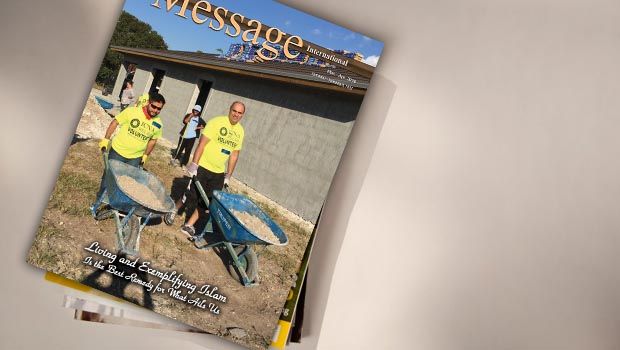
    Muslims know that service to fellow man is a fundamental principal in Islam, and all of us can do our part to be helpful, individually, when called upon. However, on a daily basis, millions of Americans are in need of various social services from shelter, to soup kitchens, even disaster relief. Those who provide such help are a lifeline for the destitute or afflicted. Prophet Muhammad (pbuh) said, “The most beloved of people according to Allah is he who brings most benefit to people.”

    This hadeeth is a “call to action” which all of us can answer in our own way. On a larger scale, however, although Muslim social service organizations have made steady progress in the realm of social services, they are still not known as the “go to” place for non-Muslim Americans in times of need or distress. This is due to a variety of factors including lack of resources. However, in years to come this could change. Insha’Allah once greater numbers of non-Muslims begin seeking and receiving crucial help in times of need from Muslim social service agencies, Islam will gradually be known for what it is — a religion of compassion, peace, and justice.

    Muslims have been in America arguably from its establishment, and will continue to live in and make contributions toward its betterment. Despite the fact that there are segments of the population which have motives to portray Muslims as the “enemy,” we should nonetheless remember that ultimately Allah (SWT) is in charge and has a greater plan for all our affairs. Each of us should work to deepen our faith individually, and also make dua to improve our collective situation.

    Allah (SWT) says in the Quran: “Assuredly you will be tried in your property and in your persons, and you will hear much wrong from those who were given the Scripture before you, and from the idolaters. But if you persevere and ward off [evil], then that will be a determining factor in all affairs” (Quran 3:186).

  • Rising to the Next Level: Institution Building and Civic Engagement

    Rising to the Next Level: Institution Building and Civic Engagement

    Mosques and other Islamic organizations and institutions have never been more active and widespread than they are today. The imperative for greater engagement in society, and increased activities to serve the needs of the growing community, have also never been more pronounced. Muslims have launched initiatives like One America and Canadian Muslim Vote to encourage participation in federal elections. Mosques like the Islamic Society of Central Jersey have opened their doors to those of other faiths in events like “Common Ground Connection,” and others like the Ummah Mosque in Halifax and Worcester Islamic Center have held open houses and “Meet a Muslim” days to welcome non-Muslim neighbors, show them hospitality and friendship, and answer their questions about Islam. Individual Muslims, on their own initiative, have held events like “Meet a Muslim Family” or “Talk to a Muslim” in the wake of growing Islamophobia. Mosques, Islamic centers, and organizations have participated in soup kitchens and meal programs for the homeless and needy, as well as running food banks and free medical clinics for the underserved like the Muslim Welfare Center in Scarborough in Toronto and at the Islamic Association of Collin County in Plano, Texas.

    Often, the biggest obstacle in the way of any institution’s ability to properly serve the needs of its community is a lack of knowledge and understanding of what those needs really are.

    Many mosques and Islamic centers have educational programs including daily or weekly classes on various topics, as well as classes catering especially to the youth, in addition to organizing and coordinating programs for Muslims as well as non-Muslims. Conferences like those held by ICNA, ISNA, Reviving the Islamic Spirit, and ILEAD promote education and awareness. Various Muslim media initiatives like The Muslim Link, Message International, Islamic Horizons, Illume, AltMuslim, and others, provide a voice to communities, aim to correctly represent Muslim concerns and interests, and provide an alternative to mainstream media.

    Yet at the same time, Muslims are facing challenges that need to be addressed more than ever before. While many institutions are active in promoting engagement and serving community needs, others are not doing much. “I think the Muslim community is finally waking up,” says Azra Baig, an elected member of the Board of Education in South Brunswick, New Jersey. “9/11 was definitely a wake-up call, but I think people have just gotten more comfortable after that. But I think with what has happened recently at San Bernardino – the terrorist attacks and the Islamophobia and anti-Muslim remarks by candidates for elections, I think people are finally waking up to the need to get more engaged and more involved. I’ve heard it so many times in the polls – when someone knows a Muslim, they are more comfortable regarding Islam and different aspects, but if their only source of information is the media, then I don’t blame them for being scared, how else are they learning about Islam and Muslims?” While many great efforts are being made by organizations and individuals, a lot more needs to be done. Below are a number of suggestions based upon my discussion with various activists, and community leaders and members, and my research into actions our organizations can take to better meet the challenges of today.

    Create Awareness Among the Leadership

    For any effective changes to take place in our institutions, it is vital that our leadership be well-informed and aware of the needs and problems of the community they serve. Many mosque boards are made up of first generation immigrants, those who have not grown up in Western societies and therefore do not fully understand the problems faced by the youth, are not inclined to promoting political participation, and tend to be somewhat conservative and resistant to change. Also, says Asif Hirani, Program Director at WhyIslam, many of them “do not understand the importance of interfaith activities because they may not be as important in their Muslim majority countries.” He adds, “We need to create awareness in the leadership of the masjids and among board and shura members. In terms of keeping our masjids open, we also need to change the culture of our masjids.” For effective civic engagement and educational and counseling activities to properly meet the needs of the community, it is essential that board members and community leaders be those with an awareness and understanding, based on experience, of present-day Western society and culture.

    Conduct a Survey About Community Needs

    Often, the biggest obstacle in the way of any institution’s ability to properly serve the needs of its community is a lack of knowledge and understanding of what those needs really are. Without adequate information, any available funds are just funneled into activities which may or may not be relevant or adequately serve the needs of the community. Each region and each community has different needs based on its demographics. Masjids with a membership primarily of professionals will have different needs from those of a lower income community. Those with more third generation immigrants have different needs than those with many newly arriving immigrants. It is important to know who makes up the community, what the most pressing needs are, and what issues are important to community members.

    Knowing all of this can help an institution or mosque cater to the specific needs of the community in terms of designing classes or lectures, mobilizing support for social services, acting as advocate at city council meetings, or presenting issues to boards of education. As such, a survey should include questions about marital status, household composition including gender and age of each family member, ethnicity, country of origin, length of residence in the U.S., education, professional or employment status, and income range. The survey can also solicit information about what social, economic, and political issues the respondents consider important, what they expect their institutions to advocate for them, and on what issues and/or topics they want educational opportunities by way of lectures, workshops, or classes.

    Surveys can be in paper form or provided on an Islamic center’s website. Additional methods can be used in tandem, such as assigning individuals or teams to solicit the information from community members; events and meetings can also be held to solicit information, discuss issues, and brainstorm activities and services to meet community needs.

    Designate Teams or Individuals for Specific Tasks

    Once a community’s needs are identified, tasks must be prioritized and funds and resources channeled accordingly. Depending on the size of the community, the amount of work needed for a particular task, and the resources available, the institution must designate either an individual or a team for each task or project. For example, an individual or team should be made responsible for social justice issues, and for representing the mosque or the community at city council meetings or in meetings with regional representatives. Another team could be assigned to deal with media outreach, and so forth. “I go to meetings and sometimes I’m the only Muslim over there,” says Rameez Abid, Communications Director for the ICNA Council for Social Justice. Regarding Muslim advocacy for social justice issues like homelessness, hunger, and civil rights, he says, “I think one person dedicated to this cause can do it as a volunteer. If they can’t find someone to do it, I suggest hiring someone part time to do it. It is very important.”

    It is important that an organization assign specific individuals or teams for the various tasks so that no one person or team is overwhelmed with too many responsibilities. In that way, also, the interests, skills, and expertise of available individuals are utilized in an effective way. “Religious leaders have their own roles to play and they are already overworked,” says Amira Elghawaby, Communications Director at the National Council of Canadian Muslims (NCCM). “The roles within mosques and institutions have to be broadened to bring in more people who are keen in different areas of work and so associations and mosques can foster greater involvement because they often do have some funding available to support this kind of work.”

    Elghawaby says this could include the mosque hiring and training their own people to help represent the community and provide a Muslim perspective at municipal and other local events. They can also hire or train individuals to focus on the local media, foster relationships, and thus represent the community in that way. There can be positions open to interns and volunteers to assist the person(s) assigned to the job. This is a good way to get students to fulfill their volunteer hours and internship requirements by benefiting the community.

    Government and the Media Relationships

    Muslims need to build good relationships with their government representatives at the local and regional level in order to communicate the Muslim perspective and concerns. This requires inviting local and state officials to the mosque or other Islamic events, meeting with them about specific concerns or priorities, and attending important events organized by them. Azra Baig says, “It’s important because they want to hear from us and they do represent us. If they are going to support us, we need to support them on the various issues. We need to be there when they have their press conferences, their petitions, we have to vote and a vote helps – especially this coming election the Muslim vote is going to matter.”

    Baig says building a good relationship with the media is also vital because “the media is also our voice.” This includes issuing press releases and sending out invitations for events. An effective media strategy also means following mainstream media reporting about Muslims and responding when relevant or necessary. Nazim Bakshn, a researcher and journalist, says that engagement with the media includes making spokespersons, analysts, and scholars available to provide commentary and analysis when events involving or relevant to Muslims take place.

    Represent Community in the Mainstream

    Our institutions and mosques must step out of the traditional roles they are used to and be ready to rise to the next level. They of courses need to serve as a place of worship and spiritual guidance for the Muslim community, but also as a platform for activism and advocacy. As part of a society where Muslims are a minority, it is easy for our institutions to stay in their comfort zones, insular and disconnected to the larger community. But it is increasingly important for our institutions to step out of their own circle and be a part of the mainstream. This includes advocating causes that benefit the wider society, transcending boundaries of race, ethnicity, and religion. It also means representing the concerns and interests of the Muslim community at city council meetings or presenting issues to the board of education. Rameez Abid notes, “We cannot be isolationist,” adding, “In order to secure our rights, we have to secure others’ rights as well and that is part of our deen.”

    Build a Stronger Social Media Presence

    In this digital age of pervasive social media, it is important to utilize the tools of the time to spread our message and benefit our communities more widely. “Many a time, many members of the community are not aware of the activities at the masjid,” says Muhammad Ibrahim Ali, an Arabic instructor at Taqwa seminary and Bayyinah. “So for example the event is over and they get to know [too] late – so it’s very important for them [organizations] to improve their social media presence and not only to improve, they have to compete with the other organizations – even utilizing modern methods of media marketing.” Our Prophet (pbuh) also used the technique of his time to get his message across to a wider audience. For instance, he went to Mount Safa to call out to people to deliver his message when he wished to invite the Quraish openly to Islam. The custom was to go to Mount Safa when one had an important message to announce to the people at large.

    Come Together and Unite with Others

    Although each institution works independently, it is vital that links be maintained with other institutions and that the institutions stand united on a variety of causes, cooperating by sharing resources, expertise, information, ideas, and personnel. “Unity is something that strengthens all communities,” says Elghawaby. “I think that we need to come together at the local level for sure to find out what’s going on in our communities and who is doing what… how can we either replicate or complement or contribute to these efforts on a professional national scale and in a way that the work that is done is not lost in someone’s mind, it becomes part of our institutional memories.”

    Professionalism and Concerted Effort

    Organizations today base their operations on goal-setting, efficiency, productivity, and streamlining of systems. “I think the really most important thing is to approach these issues with a very high degree of professionalism,” says Elghawaby. She says one of the challenges is that there will always be well-meaning individuals who work as activists on one cause or another, and that this is valuable work. But the drawback is “when an individual undertakes this work, not with an institution, then there is going to be the loss of the memory of what they have done, so there is no institutional memory to the type of work or relationships they fostered. Once they lose interest or once they don’t have time to continue their work, it sort of disappears so that is one reason why it is so critical to engage institutions.”

    Elghawaby continues, “I think it’s really important that this work is done with professionalism and with real goal-setting in mind. It cannot be done in a way that’s sort of ad hoc. It really has to be a concerted effort.” Her organization has recently launched an initiative called “Stronger Together” which aims to galvanize Canadian Muslims in every major city to be more civically engaged, and to advocate both on local and national issues. The organization has put up a pledge on its website inviting people to commit to greater activism. The organization will then map out all those who took the pledge and cluster them together in teams according to their geographic areas, and then provide support and training on how to get involved in various issues. Their first campaign is about a Canadian anti-terror bill, C-51, and will be encouraging participants to approach their local parliament members and talk to them about the legislation. This is a good example of how institutions can work in an organized and efficient manner to promote more civic engagement. It is important for our institutions to learn from one another and pool resources, ideas, and expertise to better serve the community. Our organizations must rise to the next level, promote civic engagement and meet the various needs of the community.

  • Harmony through Allah’s Divine Guidance

    Harmony through Allah’s Divine Guidance

    All praises are for Allah, The Almighty, and may His peace and blessing be upon His true servant and final messenger, Muhammad, on his companions, and his household. Allah SWT says: “So direct your face toward the religion, inclining to truth, [according to] the natural disposition by which Allah has created people. No change should there be in the creation of Allah. That is the true faith, but most of the people do not know” (Quran 30:30).

    According to the Islamic prescription for a harmonious social life, there is to be no superiority on account of class, color, ancestry, or wealth.

    Allah SWT, the Creator of all that exists, has designed the universe and legislated laws that govern it so that all things function in a harmonious way. We, therefore, realize how the universe moves in perfect harmony by His laws, for if it did not then the entire universe would be in total chaos. There are billions of galaxies in the universe; and in our own Milky Way galaxy, it is estimated that there are 100 billion to ten trillion planets! Each one runs in its own orbit so they do not collide and bring about chaos and destruction; except on the Day of Judgment, then they will all collide. That brings the end of this life and ushers us into the Hereafter. So often Allah SWT, the Creator, draws our attention to the cohesiveness of the universe. In Surah Yaseen, Allah SWT mentions how the sun and the moon each “swim” in their own orbits. These two heavenly bodies, among trillions, are mentioned because we have knowledge about them and because the sun and moon have direct effect upon our lives here on earth.

    Allah SWT informs: “It is not permitted to the sun to catch up to the moon, nor can the night outstrip the day. All of them swim along in their orbits” (Quran 36:40). Allah SWT also tells us how the heavenly bodies move with His command: “Indeed, your Lord is Allah, Who created the heavens and the earth in six days, and then He rose over the Throne. He brings the night as a cover over the day, which is in haste to follow it, and He created the sun, the moon, the stars — subject to His Command. Surely, His is the creation and the command. Blessed be Allah, the Lord of the worlds!” (Quran 7:54). Thus, there is complete obedience to His commands, and when there is complete obedience, there is complete harmony. This is His Divine Wisdom, evident in the creation, and Allah SWT, the Creator, knows best His creation. He says: “Should He not know – He that created? And He is the One that understands the finest mysteries [of His Creation and] is well-acquainted [with them]” (67:14). With His Divine wisdom and knowledge, Allah SWT has created man to be part of this universe. Like the command He has given to the heavens, He has bequeathed to mankind laws and regulations to follow and obey in order to have peace and harmony. He has blessed human beings with the capacity to acquire knowledge, to think and ponder, and with an intellect to distinguish right from wrong. Humanity and jinn are two known creations of Allah SWT that have been given the freedom of will and action.

    Among the good qualities that we ought to inculcate in our lives and invite others to include humbleness, modesty, decency, truthfulness, honesty, politeness, tolerance, compassion, generosity, forgiveness, optimism, fairness, sincerity, self-restraint, etc.

    Unfortunately, with intellect and freedom of choice, many individuals have turned away from Divine Guidance. So many have chosen the evil way, forsaking a moral and upstanding life. Professor Andrew Delbanco, in his insightful book “The Death of Satan: How Americans Have Lost the Sense of Evil,” writes: “…more and more our society, our nation is turning their backs on God and good morals.” Lionel Tiger writes in “The Manufacture of Evil”: “Once upon a time, evil was personified. Evil was Mephistopheles or the Devil. Almost flavorful, altogether identifiable, a clarified being from another world…” And what has happened now? Evil has faded into a sea of moral ambiguity.

    The handiwork of Satan is manifest everywhere. He has his associates and agents among mankind who support the demise of morality and decency, affecting almost every aspect of human life. He incites them with confused and conflicting ideologies and notions of every sort, opening the door to criminal, depraved, and unjust behaviors. Voltaire once said: “Certainly anyone who has the power to make you believe absurdities has the power to make you commit injustices.” He goes on to say: “If you do not use the intelligence with which God endowed your mind to resist believing impossibilities, you will not be able to use the sense of injustice which God planted in your heart to resist a command to do evil.” Thus, Satan has sown the seeds of conflict throughout human affairs, and God’s laws have been violated, with nations at war with each other, corrupt government officials, families plagued by divorce and parent-child problems, high rates of murder and other crimes, gangs terrorizing communities, media promoting and sensationalizing violence, alarming rates of substance abuse, widespread lewdness and promiscuity, and never ending displays of ego gratification through celebrity worship and lust for power and wealth. And the list goes on…

    By and large we have allowed these things to happen. We have not joined together as we should have, to stop our society from losing its moral high ground. There is so much hatred, bigotry, and more recently, Islamophobia, that adds fuel to fire. But with all this burning hatred and intolerance, it is a unique opportunity for Muslims to call people back to the core values of morality and decency. Like the prophets throughout history, and particularly the five Messengers renowned for their strong will and determination – Prophet Nuh, Prophet Ibrahim, Prophet Musa, Prophet ‘Eesa, and Prophet Muhammad (peace and blessings of Allah be upon all of them). They have all gone through that inferno of hatred and intolerance from their own people. But they never gave up. In fact, they took every opportunity to bring about good in their respective societies. When the Quraish discouraged people from entering Islam, Rasoolullah (pbuh) would use the opportunity to explain to them the beliefs and principles of Islam and how it brings about human salvation. Allah SWT has indeed guided mankind in every aspect of life. By way of example let us examine a few.

    Spiritual Life

    Allah SWT has informed us of the true purpose of life. It is to be His true servant through worship and obedience to Him alone. The Quran says: “And I [Allah] created not the jinns and humans except that they should worship Me [alone]” (Quran 51:56). In order to genuinely worship God, one must have unshakable belief in His existence. Coupled with strong beliefs, acts of worship bring about decent moral behavior. Take prayer for example. If done with sincerity, it protects us from committing sins or engaging in wrongful deeds. ”…And perform the prayer. Verily, the prayer prevents immorality and wrongdoing…” (Quran 29:45). As to other aspects of worship, fasting helps a person develop self-restraint and the capacity to delay gratification; charity or zakaah inculcates the values of generosity and compassion and counters greed and miserliness; and the pilgrimage humbles us and helps us to enlarge our perspective and feel a solidarity with the vast human family, as we see the assembly of pilgrims coming from all over the world, each individual hoping for the mercy and forgiveness of Allah SWT.

    Intellectual Life

    The very first revelation given to Prophet Muhammad (pbuh) is a command to illuminate our minds with knowledge, for it is knowledge that dispels the darkness of ignorance and evil. Allah SWT commands, “Read! In the Name of your Lord Who has created — created man from a clinging substance. Read! And your Lord is the Most Generous, Who has taught by the pen, taught man that which he knew not” (Quran 96:1-5). Knowledge is the cure for ignorance. In fact, it is only through knowledge of the religion, true knowledge of Allah SWT, and knowledge of self that human beings can be saved from misery, in this life and in the Hereafter. We are told in the Quran, “Say: Are those who know equal to those who know not? It is only men of understanding who will take heed” (Quran 39:9).

    Personal Life

    Regarding our personal lives, Islam provides guidance as to cleanliness of the body, our clothes, our surroundings, and places of worship. Cleanliness, as Rasoolullah (pbuh) puts it, is half of faith. Islam also guides human beings as to what to consume, with most food available from earth’s bounty being permissible and good, and a few things being prohibited, such as pork. We are further prohibited from wasting food as that indicates ungratefulness for the sustenance provided by Allah SWT. The Quran says, “…do not squander senselessly. Verily, the squanderers are, indeed, of the ilk of the devils, as Satan is ever ungrateful to his Lord” (17:26-27). Sadly, surveys shows that every year, from the more than 350 billion pounds of edible food available for human consumption in the United States, nearly 100 billion pounds – including fresh vegetables, fruits, milk, and grain products – are thrown away by retailers, restaurants, and consumers. This waste alone adds up to $48 billion.

    Social and Political Life

    Allah’s prescription for a harmonious social life includes equality, justice, helping those in need, and each individual developing a benevolent character. Imam Al-Ghazaali named some of the qualities that the Prophet (pbuh) called for, such as doing good deeds; submitting to Allah’s will; bestowing favors on others; feeding the needy; extending greetings; visiting the sick; escorting the bier of a Muslim; protecting one’s neighbor whether Muslim or not; honoring the aged; making peace between people; and being easygoing.

    Further, according to the Islamic prescription for a harmonious social life, there is to be no superiority on account of class, color, ancestry, or wealth. One of the most shameful of social evils is the feeling of superiority over others. This was Iblees’s downfall when he told Allah SWT that he would not prostrate to Adam because Allah had created him from fire and Adam from clay, and in his thinking, this rendered him better than Adam. How many wars have been fought because one nation felt superior to another? Allah SWT informs us that our differences are only by His command and wisdom. It is for us to learn about one another, not to despise one another. He says, “O mankind, indeed We have created you from male and female and made you peoples and tribes that you may know one another. Indeed, the most noble of you in the sight of Allah is the most righteous of you. Indeed, Allah is Knowing and Acquainted” (Quran 49:13).

    We are reminded of the sermon Rasoolullah (pbuh) gave at the Farewell Pilgrimage in which he said: “All mankind is from Adam and Eve; an Arab has no superiority over a non-Arab nor a non-Arab any superiority over an Arab; also a white has no superiority over a black, nor a black any superiority over a white — except by piety and good action. Learn that every Muslim is a brother to every Muslim and that the Muslims constitute one brotherhood. Nothing shall be legitimate to a Muslim, which belongs to a fellow Muslim unless it was given freely and willingly. Do not therefore, do injustice to yourselves.” SubhanAllah! Compare that wisdom to our situation today! There is so much discrimination and discord based on race, ethnicity, family status, and wealth, even among the Muslim ummah. How do we expect success and harmony when we ignore Allah SWT’s Divine Command?

    On a global level, millions have perished in the two world wars, in Mao Tse Tung’s China, in Stalinist Russia, in the Vietnam War, as just a few examples. The carnage continues into this 21st century with regional wars, sectarian conflicts, murders, domestic violence and so on. Man has disregarded God’s laws and has ended up in never-ending conflict and destruction. Rasoolullah (pbuh) predicted that a time would come when there would be large scale killing.

    Moral Life

    Islam provides injunctions and principles, in a broad-based and precise way, for a harmonious life, built on a foundation of enjoining what is right and shunning and preventing what is evil. An individual’s moral development brings growing discernment as to what is right and what is wrong, and dedication to ethical and refined living. Regarding one of the main objects for which the Prophets and Messengers were sent, Prophet Muhammad has said: “I have been sent by God to teach moral virtues and to evolve them to highest perfection.” He also mentions: “On the Day of Recompense, nearest to me will be the one who displays in his daily life the best of manners.”

    Among the things we ought to reject are arrogance, vanity, immodesty, lewdness, lying, cheating, foul language, hatred, envy, backbiting, slandering, stinginess, vindictiveness, pessimism, unfairness, deceptiveness, self-indulgence, and impulsiveness.

    And among the good qualities that we ought to inculcate in our lives and invite others to include humbleness, modesty, decency, truthfulness, honesty, politeness, tolerance, compassion, generosity, forgiveness, optimism, fairness, sincerity, and self-restraint.

    Imam Ibn Al-Qayyim wrote in “Madarij Al-Salikeen”: “Religion is all moral character, and whoever bests you in moral character will best you in religion.” In conclusion, if human beings follow the laws of Allah they will succeed and have peace and harmony. But if they ignore God’s guidance they will face severe consequences. Not only will they spread misery in this world, but each one shall be brought before the Creator on the Day of Judgment to answer for his or her deeds. Islam changed the Arabian society from the depths of darkness to the most accomplished society mankind had ever witnessed. The Muslim ummah is meant to be an example for humanity. In this regard, Imaam Malik (RA) said: “The latter part of this ummah will not be rectified except by that which rectified its earlier part.”

  • Stop Ignoring the Issue of Sexual Abuse

    Stop Ignoring the Issue of Sexual Abuse

    She looked at herself in the mirror with tears streaming down her face. She could no longer keep it inside and felt that she had to tell her mother today. But, would her mother even believe her that her uncle had been touching her in places that no one should be touching? This was her mother’s brother. How would her mother react when she hears that it had been going on for a few weeks, ever since her uncle had moved in with them? He had warned her not to say a word, and that it was all her fault anyway that this was happening. She was 13 and afraid, but knew she had to tell her mother or it would never stop. If it didn’t stop, she didn’t know what she was going to do. The thought of it was unbearable. She wiped her tears and opened the door, ready to talk to her mother, but who did she find waiting for her when she opened the door? Her uncle…

    According to the National Institute of Justice Report, three out of four adolescents who have been sexually assaulted were victimized by someone they knew well

    Sexual abuse is a more common phenomenon in the Muslim community than we would ever care to believe, yet we do not face it head on as we should. It is a topic that people ignore and when it is brought up, heads begin shaking, as if to say “Shh! There’s no need to talk about that…Muslims don’t do that.” Yes, it is considered taboo, but the very fact that we won’t talk about this dire issue allows abuse to persist. Young girls and boys are afraid to tell anyone when it happens to them, and parents are reluctant to teach their children about boundaries, gently yet directly letting their children know that no one has the right to touch their private parts, or touch them in any way that makes them uncomfortable. If a child is not equipped with that knowledge, when an incident occurs, he or she suffers in the agony of silence and shame. And if the abuse is suspected or found out, it is too often ignored or hushed up, particularly if the abuser is considered religious or is a respected family member. This is a terrible betrayal of the child.

    Victimized by Someone They Knew

    According to statistics by the Crimes Against Children Research Center, 1 in 5 girls and 1 in 20 boys are victims of sexual abuse. These numbers are believed to be lower than the actual number of cases since most sexual abuse of children goes unreported. And when we think of sexual abuse, we may automatically think of a stranger as being the perpetrator of these acts, but this is not usually the case. According to the National Institute of Justice Report, three out of four adolescents who have been sexually assaulted were victimized by someone they knew well. The same is the case for younger children.

    It is just not enough to teach children about “stranger danger” since the person more likely to sexually abuse a child is one who has easy access to him or her and earns the child’s trust, like a family member, teacher, religious figure, or family friend. The emotional and psychological consequences of this betrayal, from both the abuser and those who cover it up, are catastrophic. If we don’t do something as a community to tackle this issue, we are responsible for acquiescing to, and enabling, this abuse and betrayal.

    A Campaign to Raise Awareness About Sexual Abuse

    We, as community members, must raise awareness about this shattering issue. Families and communities are broken apart when sexual abuse occurs. But our children are precious, and shame and fear must not win out over doing what is right. The worry about life being disrupted, or the ruinous consequences for the perpetrator, if he or she is within the family or community circle, must not be stronger than the fear of a child being set up for lifelong pain and misery.

    We must clearly convey this message about sexual abuse in workshops, Islamic schools, and masaajid so that people are informed and equipped with the tools on how to appropriately handle such a situation. Community leaders and imams must be at the forefront of this campaign to raise awareness by organizing or supporting workshops and events on this topic. The community can invite Muslim mental health professionals to provide informative lectures on sexual abuse. The future of the ummah depends on our willingness to face all issues, however challenging or ugly. We must show ourselves to be among those who stand up for justice, even if against ourselves or our inner circle, and especially for the protection and defense of our children. We must be silent no more.

  • Muslim Contributions to America: Taking It to the Next Level

    Muslim Contributions to America: Taking It to the Next Level

    “Have you ever been to a Muslim hospital? … Have you witnessed a Muslim charity? Can you show me one Muslim signature on the Constitution, Declaration of Independence, or Bill of Rights? Have you ever seen a Muslim do anything that contributes positively to the American way of life?” These were the exact words of a public statement made by a Michigan Republican National Committeeman not too long ago. This perspective is not unique, for we have heard a similar statement or narrative from other people as well. One may wonder if this is sheer ignorance or deliberate propaganda.

    Today Muslims are on the front lines of campaigns to support social justice and end civil rights abuses

    Recently, in the wake of the anti-Muslim statements made by Republican presidential candidate Donald Trump, the UK’s daily Guardian published an article providing a brief but compelling survey of contributions made by Muslims in shaping, developing, and serving America (google: the guardian, Muslims who shaped America). The article observes, “What Trump doesn’t seem to grasp is his own country’s history, and how many American achievements worth celebrating are the work of the kind of people – Muslims – he wants to keep out.” The article also commented that even a partial list of “some of the things Muslims have done for the US…is still more impressive than what Trump has done for his homeland.”

    Did the author, Stuart Jeffries, overstate the case? Actually, no. He acknowledges that his list is far from exhaustive but it nonetheless shows that Muslims have been part of American society right from its inception. That story is not well-known, however, as Muslims in America have always been a minority. Nevertheless, Islam has been present and notable all along. Professor Richard Turner, for example, mentions that while researchers disagree over the number of Muslim slaves that were brought to the Americas, they agree that many Muslim slaves were educated and literate in Arabic and they “often occupied leadership roles in the jobs that slaves performed on plantations in the American South…Their names, dress, rituals, and dietary laws were perceived as powerful significations of Islamic identities in the slave community.” To name just a few, Bampett Muhammad was a soldier who fought for the Virginia Line between the years 1775 and 1783 under Commander-in-Chief of the Continental Army, George Washington, in the war against British colonialism. A North African Arab, Yusuf Ben Ali, also fought along with him. A Muslim American soldier, Peter Buckminster, is the man who killed British Major General John Pitcairn at the battle of Bunker Hill. Buckminster later changed his surname to Salem or Salaam.

    There is evidence that founding fathers John Quincy Adams and Thomas Jefferson were quite familiar with Islam and possessed copies of the Holy Quran in their personal libraries. It is worth noting that Keith Ellison, the first Muslim elected to congress, used Jefferson’s nearly 250¬?year¬?old Quran to be sworn in on as a U.S. congressman. Many Americans don’t know that in 1777, Morocco, a Muslim nation, was the first country to formally recognize the United States as an independent nation. The vast majority of early Muslims present in the U.S. were Africans brought to this country as slaves in the 17th century. The next major wave of Muslims coming to America was in the mid-19th century through to the 1920s, with large numbers emigrating from the Middle East, mostly from Lebanon and Syria, many of whom settled in the American Midwest. Muslim immigrants, like all those who sought opportunity in America, settled in their new home, and established deep and sturdy roots for the generations to come. Achievements by Muslim Americans followed, and as proud citizens they contribute to American society as educators, doctors, engineers, athletes, lawmakers, and soldiers. Statistics provided by the American Medical Association indicate that ten percent of all American physicians are Muslim. Today Muslims are on the front lines of campaigns to support social justice and end civil rights abuses. Muslim charity groups in the United States are too numerous to catalog, though the Bay Area Islamic Networks Group, the UMMA Clinic in Los Angeles, the Chicago-based Inner-City Muslim Action Network, and Dearborn’s ACCESS are examples of groups that provide crucial services for the needy and empower the underprivileged. In 2013, the Muslim charity Helping Hand for Relief and Development (HHRD) was rated among the top ten charities in the United States.

    In this issue we look at ways by which American Muslims are thoroughly engaged in further extending their contribution and service to their local communities and to this richly diverse nation. Striving for harmony in every aspect of life through Allah’s guidance, participating fully in civic life, realizing the essential connection between proper human assumption of trusteeship of this earth and the development of ethical character, and duly disseminating the reality about Islam’s call for moderation rather than extremism in any form – these are some of the areas in which American Muslims are demonstrating their commitment to assimilation. But this is qualified assimilation into the American fabric of daily life, one that does not compromise the Islamic principles and values that make the history and contemporary presence of Muslims in America a profound and inspiring story. We must celebrate this!

  • Education for the Next Generation

    Education for the Next Generation

    The debate over “public school vs. Islamic school” is not new in America. Ever since the Muslim community started building full-time Islamic schools in the early 1990s, this topic has been part of regular and ongoing discussion and debate. Some passionately argue for Islamic schools while others oppose them because of their current flaws. As a result, American Muslim parents are more confused than ever before in deciding upon the right place for educating their children. Given that a proper and adequate education, both Islamic and academic, is critical to the health and success of our children and our communities, and that both sides of the argument have legitimate points, we have decided to revisit some of the issues here, as this insha’Allah can help parents make an informed decision about the education of their children.

    The soul of your child is like an uncut precious jewel entrusted into your care by Allah

    The arguments in favor of sending children to Islamic school can be summed up as follows: In full-time Islamic school, children are provided with an Islamic environment. The kids can pray in congregation and learn about Islam in positive and affirming ways. They have the opportunity to interact with and establish close relationships with other Muslim children in classes and during recess. They are protected from exposure to intense peer pressure relating to sex, drugs, alcohol, and violence. So their faith is strengthened rather than diminished by their school experience.Very importantly, the students are spared being bullied for their faith. In addition, Islamic schools are a place to build a healthy identity and sense of responsibility in our Muslim students as the aim of education, first and foremost, is to nurture and mentor our children to be conscious of their responsibility to Allah, the Creator, and then to fellow human beings.The Islamic school can attain to this objective. Public schools in America cannot.

    On the other hand, those who argue against sending our children to Islamic school suggest that regardless of the comparatively healthier environment, many Islamic schools continue to be disorganized, ill-equipped, and beset with numerous other shortcomings. For example, Islamic schools in America, it is argued, have developed their curricula unsystematically. Their curricula for Islamic and Arabic studies, which is considered to be the raison d’être of an Islamic school, is remarkably weak and unable to meet the requirements of Muslim students residing in the West. Thus, Islamic schools have become merely a refuge from the negative influences of public schools, rather than a superior option of education providing valuable resources and uniquely Islamic benefits for our children. In addition to that, Islamic schools typically have very limited budgets, running strictly on tuition payments and donations. Teachers’ salaries are less than half what they could receive in public schools. As a result, Islamic schools find it difficult to recruit and retain qualified teachers. Very few, if any, of the existing Islamic schools can educate a child in a professional, robust, and comprehensive way. And some point out that students graduate from the Islamic school without the personality assets and coping skills that are needed for them to navigate the challenges of high school or college campus.

    It is obvious that both positions, as stated above, have legitimate arguments and there is no easy answer or quick fix to this situation. Certain stipulations, however, must be made. First, Islamic education doesn’t mean that children should be brought up feeling as outliers to this nation and its people. Islamic education must aim to Islamize our children without de-Americanizing them. Islamization within an American context means that Islamic schools should promote integration of Muslim children in the larger American society and provide an education that makes them strong in faith as well as informed citizens and active contributors to the American society.

    Second, it must be remembered that the role of the parents and the family is crucial, and ultimately more important than which school the child attends. At the end of the day, it is parents’ first responsibility to ensure the proper development and training of their children. Unfortunately, many parents fail to recognize this fact. While a Muslim child absorbs Islamic values from a variety of sources including parents, teachers, peers, friends, and the social environment, parents play the most vital role. Therefore, they have to provide an Islamic environment at home first. It is hypocritical to speak and act in un-Islamic ways and yet expect, even demand that the child adhere to Islamic values. Parents should set the best examples for their children to emulate.

    One scholar has rightly stated: “The soul of your child is like an uncut precious jewel entrusted into your care by Allah. To you is given the awesome responsibility of shaping that precious jewel into a beautiful form, pleasing to the eye of Allah. “As parents, we must realize this divinely-ordained duty and be mindful about fulfilling this task. We should also remember that Islamic schools are not the entire answer, but one interlocking piece, albeit an important one, in a larger schema. That is to create an Islamic environment incorporating all the principles and values of Islam. May Allah SWT help us fulfill our obligations and enable us to facilitate each generation being better and more virtuous than the last.

  • Challenges in Education in South Asia

    Living in an Illiterate World

    Before reading the rest of this article, take a moment and try a few simple exercises.

    Imagine for a few minutes not being able to read or write at all. Imagine not being able to read in English, Arabic, or any other language. Now try to imagine how that would change your world.

    You know what books are, you have seen newspapers, street signs, and the things written on TV, but imagine as part of this exercise that you never learned to understand any of this. You have seen other people reading and writing, but you never learned since you never had the chance or opportunity to.

    Whenever you need anything read or written you will have to ask someone to read it for you, to write it for you. Sometimes it’s someone you know, maybe a younger relative who went to school, but most of the time it might just be a stranger you asked for help.

    Now try to imagine holding this magazine and not being able to read it? What would it be like? How would you look at this differently? Would you just look through the pictures? Would you even open it at all or would you just look at the cover and leave it be since you know there probably isn’t much you can do with it anyway?

    Now take it another step further. What would the rest of your life be like? As a parent, imagine your child is sick and you have a number of medicine bottles and pills but since you cannot read, you do not know which medicine to use or how much to give to your child. The instructions are written on the sides of the bottles, but they are just meaningless scribbles to you. What would you do?
    Imagine trying to understand your finances now. You can tell the different bills apart, since the different bills for singles, fives, hundreds etc. might be different sizes and colors (as is the case in many countries like Pakistan). This helps you get by to count the money when you buy milk, but how do you record your transactions? What options do you have? Try to remember everything? What about phone numbers?

    Try to imagine what job you would be able to have. Since you cannot read or write, any job involving technology is most likely out of the picture. In fact, most well-paying jobs will be out of your scope, and you will be restricted to jobs that are hard labor or simple tasks that are extremely repetitive, such as working in factories.

    The bottom line is that without the ability to read and write, without being educated, you will hardly ever come close to the full potential you can have. This applies as an individual, and it applies as a society.

    Status of Education What’s the Bad News?

    Having spent some time in Pakistan’s education system, I would like to review what the status of the educated, or more accurately, the uneducated is there and in the other countries that make up the Indian subcontinent.

    Across the board, there is a dire need for the education system in the different countries to be improved. Here are some basic statistics.

    According to the United Nations Development Programme Report in 2009, in Pakistan, only 54.2% of the population is projected to be counted as literate. This number should be taken with a large grain of salt because it includes anyone who has basic reading skills without any formal education. In the same year, only 4.0% of Pakistanis pursued higher education in 2008.

    According to the report, Pakistan ranked 163 out of 180 countries. In India, according to the same report, in 2009, the literacy rate was 66%, ranking 149 on the list. It currently has the largest illiterate population in the world. In 2001, Bihar had the lowest literacy rate at 47% and six Indian states account for about 70% of all illiterates in India: Uttar Pradesh, Bihar, Madhya Pradesh, Rajasthan, Andhra Pradesh and West Bengal.

    Bangladesh, ranked 165th, has a literacy rate of 53.5%, which is the lowest in South Asia. According to one study, there was a 15.5% primary school teacher absence rate. Across all the three countries mentioned above, there are some similarities as well. Women are almost always less educated then men except for a few specific instances. Illiteracy is also much more widespread in the rural areas as opposed to the cities. It is not uncommon to find entire villages where not a single person can read or write. This reflects long-term negligence towards education that has spanned generations.

    How Did it Get So Bad?

    Before you can make sense of where you are now, it always helps to understand how you actually got there and what else is involved. The current education crisis in South Asia is no different.

    Historically, South Asia was an academic super power and there are plenty examples of its advanced understanding in a wide set of diverse disciplines such as medicine, architecture, poetry, philosophy, etc. However, once the British colonized the region, things started to change for the worse. Over the decades that followed, being educated became a privileged commodity that most people did not get to enjoy. Since there was no unified policy on promoting education, the entire education system fractured and now more than fifty years after independence, we are seeing its haunting effects throughout the entire region.

    Another factor that also needs to be considered in today’s status quo is the extreme poverty in the region. According to a recent BBC article on the Multidimensional Poverty Index (MPI), which was developed by Oxford Poverty and Human Development Initiative (OPHI) with UN support, eight Indian states account for more poor people than the 26 poorest African countries combined. This is more than the 410 million poor in the poorest African countries. Nearly a third of the people in Pakistan and thirty six percent of the people in Bangladesh live below poverty line.

    These hard economic numbers translate into families having to make difficult decisions on whether they can even afford to send their children to school. Oftentimes, children will end up working jobs to provide some money for the family. Sending the same child to school will not only incur an expense for school uniforms, books, and other school materials, but the family will also lose income as well, so it’s a double hit on the family’s finances.

    A good example to tie these factors together can be seen in the coexistence of parallel education systems with better education options available to those who can afford it. For example, in Pakistan, you will have the government sponsored system of Metric (10th grade) and FSc (12th grade). But if you want a more “prestigious” education, then you will opt for O’Levels (10th grade) and A Levels (12th grade) that is hosted by the London University via the British Council or a similar program with Cambridge University. These programs are obviously more expensive as well, keeping it out of reach for the general public. The government run programs are often Urdu based, and the other curriculums are English based, making language another barrier between the programs. These barriers in education have far-reaching social ramifications once the students have graduated and enter the job market.

    Other Factors Involved

    The most important one is that the level of government support over the years has been severely lacking. Pakistan as a percentage of its GDP spends only 2.9% on education. India started with less then 1%, and it has been increasing over the years. In 2002, the Indian government spent a little of 4% of the GDP. The ongoing geopolitical tensions in South Asia have diverted precious resources away from social development programs such as education.

    Corruption and feudalism are also large factors that prevent the proper resources from getting allocated to education. Feudal landlords control all the villages on their property and force the residents to spend their time working the land instead of building a sustainable independent future.

    The net result of all this is a poor economy, which leads to a poor job market. For the few who do become educated, it’s difficult to find a decent paying job in the country. The only other alternative is to look for jobs elsewhere, in the Middle East or even further resulting in a “brain drain” of the region. For any region to develop, it needs to attract bright minds and not let them slip away.

    What is Missing from an Islamic Education Perspective?

    Regarding Pakistan and Bangladesh, which are Muslim countries, I think there is a strong need to merge the Islamic teachings with the mainstream education systems. Currently, Islamic studies are taught in the contemporary schools that do not teach Islam in a pragmatic or practical way. In general, the curriculums are a mixture of history, basic values, rituals, and memorization of the Quran, which do not build a strong foundation. On the other side, there are also madrasahs (religious schools), which focus heavily on religious teachings and are not equipped to deliver a complete education for creating professionals.

    I think it is critical for the education system to incorporate a wider set of Islamic teachings to incorporate more pragmatic and practical teachings of Islam. Topics such as the basics of the Arabic language, the Islamic way of thinking, Usul ul Fiqh, and Tafseer will provide a strong foundation for discourse in the society by empowering the public with a better understanding of how to apply Islamic principles in everyday life.

    Currently, there is a wide gap in these societies between the Islamic scholars and the general public. One of the most important causes is the lack of understanding of the Arabic language. Without the language, people are automatically alienated from the Quran itself to a large degree because they cannot comprehend it at any level. This also causes them to rely solely on other individuals for their interpretations of what the Islamic texts say regarding a particular topic. By understanding the Arabic language and the basics of Tafseer, the people can feel a much stronger connection to Islam and its message.

    The next issue is that people have no idea how to understand a fatwa that has been issued. It is viewed more as a divine ruling similar to the ruling a clergyman rather than a legal judgment that is eligible to be studied. The concept of understanding the daleel (proof) of an opinion is almost unheard of outside of those who consciously study Fiqh. This foundation of concepts will automatically lead to a more meaningful dialog between all the different opinions by building a common framework for this discourse.

    It will be with this unified approach that we will see new scholars who are also scientists emerge similar to those we see in our Islamic history, such as Ibn Seena. It was not by mistake that the brightest minds in the society were religious and scientific authorities. These scholars were not inhibited by their Islamic understandings; rather, it motivated them and pushed them to strive for excellence in all areas of academia.

    What is the Good News?

    With all that’s mentioned about how desperate the illiteracy situation is, there has been some significant progress that has been made. Since independence, Pakistan has almost been increasing its literacy rate at ten percent every ten years. The government has recently made it its mission to raise the literacy to 85% by 2015 in accordance with the Millennium Development Goals set for Pakistan, and it is planning to start spending about 7% of the GDP (as opposed to 2.9%) on education.

    Bangladesh has recently undergone a tremendous change that has resulted in significant strides for the better. The government has mandated a compulsory primary education for all students and free education for girls until the 10th grade.

    India has also made amazing progress given all the challenges it faces. Since its independence, the literacy rate has grown from 18.33% to 66% in 2009. This is especially encouraging when taking into account the population grew in the same time period from 361 million to over 1,028 million.

    Sri Lanka has not been mentioned in this article so far for good reason; the literacy rate was 90.8% in 2009, making it the 94th country, the best of all the South Asian countries, and possibly all of Asia. According to the Ministry of Statistics, today, there are approximately 9,830 public schools serving close to 4,030,000 students all around the island.

    What Can We Do to Help?

    Despite the recent improvements mentioned above, the situation is still very desperate for the majority of illiterate people in South Asia. Given the scale of the issue, there is plenty of opportunity for all different types of organizations to help. Outside of the government’s efforts to boost the literacy rate, there are a number of charity and non-government organizations that are focusing on different parts of the problem.

    Helping Hands (www.hhrd.org) is a global humanitarian relief and development organization with education related projects in Pakistan. Between 2005 and 2006, they established 100 schools in the Punjab alone. In NWFP, they have helped establish 26 schools and five in Sindh. They have also worked with other NGO’s such as Tameer-e-Millat (www.educatepakistan.com) which has established 453 community schools throughout the country.

    At a personal level, there is plenty that we can contribute as well. We can donate our time, money, and find creative ways to help (such as writing an article in the Message magazine to raise awareness on the issue). The cost of educating a child in South Asia is less than 20 dollars a month. When compared to the cost of educating a child in America, especially an Islamic school, it’s just a fraction of it.

    One proposal I would like to suggest is everyone, especially if you have personal ties to a country where the literacy rate is low, should sponsor at least one child or school. Educating one child or building one school that can educate an entire community will have life changing consequences on the student’s lives. This effort will also be counted as Sadaaqa Jariyah, which will continue to add to the good deeds of the person who has donated. There are only three things that will continue to benefit a person after his/her death, and this will be included as one of them Inshallah.

    In the end, I would just like to remind us all to appreciate the blessings of Allah that we can even read at all, and make dua for those who cannot. Education can transform a person’s life completely, changing it for the better for not only him or herself but for the coming generations as well. May Allah make it easy for all us as an ummah to achieve our full potential. Ameen.