بسم الله الرحمن الرحيم

Author: Dr. Parvez Ahmed

  • Muslims In America: 10th Anniversary of 9/11

    Last year, during a raging controversy over the building of an Islamic center in Lower Manhattan, Time Magazine ran a cover story titled, “Is America Islamophobic?” Shortly thereafter, a poll released by Time showed nearly six in ten Americans held an unfavorable view of Muslims. A Gallup poll released the same year revealed four in ten Americans admitting to “feeling at least ‘a little’ prejudice” towards Muslims. The Gallup poll indicated that these adverse attitudes are likely the result of most Americans (62 per cent) personally not knowing anyone who is Muslim. The incessant headlines about violence in the name of Islam have led nearly one in two Americans to erroneously conclude that the faith of Islam is more likely than other religions to encourage violence.

    But beyond the headlines lurks another reality.

    A recent study by the newly established Abu Dhabi Gallup Centerconcluded, “Muslim Americans are satisfied with their current lives and are more optimistic than other faith groups that things are getting better.” Muslims in America continue to profess a positive attitude despite being misunderstood by many and demonised by a few.

    The Southern Poverty Law Center, an American non-profit civil rights organization dedicated to combating bigotry, wrote in a recent report that “…certain Americans, [who have been] prodded into paranoia by clever activists, opportunistic politicians and guileful media players, seem downright eager to deny Muslims the guarantees of religious freedom and the presumption of innocence.”

    In New York, educator Debbie Almontaser was compelled to resign from a secular Arabic-English public school after she was misquoted in the New York Post, which “clever activists” exploited to insidiously imply she supported violence. However, when a similar cast of characters tried to rile up a controversy by selectively misquoting me to derail my nomination to the Jacksonville Human Rights Commission, they were effectively thwarted after influential leaders stood up to condemn the witch-hunt, which lead to the City Council voting in favor of my candidacy.

    This year, extreme right-wing activists rallied voters in Oklahoma to pass a constitutional amendment prohibiting judges from making rulings based on sharia, the source of Islam’s religious and moral laws. A federal judge blocked the implementation of this referendum, but more than a dozen states are considering “banning” sharia. Meanwhile Congressman Peter King of New York continues his series of unbalanced congressional hearings about the “radicalization” of American Muslims, which negatively stereotype the Muslim community with the imprimatur of the US government.

    Despite the efforts to marginalize this community, Muslim life in America remains vibrant, youthful and nuanced. According to Gallup, the average age of American Muslims is significantly lower than people of other faiths. This youthfulness explains why Muslims are least likely to vote despite having the most positive attitude towards American democracy, although they also have the least positive view of law enforcement and US military engagement abroad.

    One of the most common complaints about Muslims is that they do not condemn terrorism as much as they ought to. Following the London bombings in 2005, New York Times columnist Thomas Friedman wrote, “To this day, no major Muslim cleric or religious body has ever issued a fatwa [a non-binding religious opinion] condemning Osama bin Laden.” Such spurious statements help solidify the misperception of Muslims being sympathetic to terrorism. University of Michigan Professor Juan Cole and Professor Charles Kurzman from the University of North Carolina have documented many fatwas and statements from Muslim scholars and groups condemning terrorism. One only need enter the phrases, “Muslims Condemn Terrorism” or “Islamic Statements Against Terrorism”, in any online search engine to read the multitude of statements against terrorism.

    In fact the latest Gallup survey shows nine out of ten American Muslims saying that they do not sympathize with Al Qaeda and view themselves as loyal Americans. Survey results also show that Muslims are the least likely of all religious groups to say that there is ever any justification for attacking civilians. However, most of their fellow Americans do not see Muslims as being patriotic. To win the hearts and minds of their fellow Americans, Muslims must spend more time not only educating others about their faith but also increase their commitment to endeavors that promote the common good.

    Recently, mainstream media and civic groups have begun to question the means and motives of the anti-Muslim network. A report from the Center for American Progress, a progressive research and advocacy organization, shows that from 2001 to 2007 a handful of wealthy donors poured nearly $42 million in financing anti-Muslim activities. Although the money trail is unprecedented, in many respects the challenges facing Muslims are no different from those faced by other religious minorities as they struggled to integrate in America. This gives hope because eventually the marginalized groups found acceptance and respect in mainstream society.

  • In Search of a Model Muslim State

    In Search of a Model Muslim State

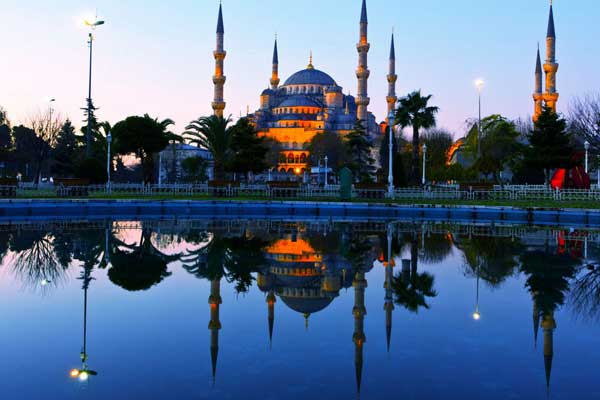
    During his recent visit to Turkey, President Obama spoke about the promise of a new era in Turkish-U.S. relationship that can serve as a “model partnership” between the West and the Muslim world. America’s quest to find a “model” Muslim partner is not new. In January 2008, then U.S. President George W. Bush during his visit to Dubai described the United Arab Emirates (UAE) as a “model Muslim state.” UAE’s economic progress and moderate political views made it a cause célèbre. But now many are predicting Dubai’s demise as the global economic crisis strangles easy credit, which was critical in fueling its growth.

    The euphoric crowning of UAE in 2008 and the hasty predictions of its demise a year later, both miss an important point. Beneath the glittering gold lies an underbelly that the rulers in the region are fighting to hide with the government planning to impose a fine for “carrying misleading news that harms the national economy.”

    Dubai is one of seven emirates that make up UAE, which today stands seventh in GDP per capita in the world. It ranks third highest among Muslim majority nations (only behind neighboring Qatar and Kuwait). A fairy story has been unfolding in the desert. In my visits to the region, I was awestruck by the sheer audacity of their dreams.

    Dubai’s rise as an economic powerhouse is not unprecedented in the region. Following the rapid raise of oil prices in the seventies, Saudi Arabia too had stunning economic growth. And yet it did not transform the country into a “model Muslim state.” Like Saudi Arabia then, Dubai today is unable and unwilling to grant its citizens and residents socio-political freedoms that must go hand-in-hand with economic success to propel a country’s rise into a model state.

    UAE is home to the largest number of foreign-born residents in the world. A few of these residents enjoy great luxuries but most live a life of hopeless servitude. Unlike legal immigrants in most countries, the foreign-workers in UAE and the neighboring states will never gain equal rights in a country where they work, live and perhaps die.

    Johann Hari (Huffington Post contributor) writing for the British newspaper, The Independent presents a heart-tugging expose of the many shattered dreams in the desert as a global recession converts Dubai (and perhaps the region) from being “Under Construction” to now teetering “Under Collapse.”

    A 2008 ABC News report describes working conditions in Dubai (could be said for the other countries in the region as well) as follows, “You are working in a system where you are not really free to leave your job. You actually need employers’ consent to change jobs. You’re working in a system where your passport is withheld. And really, if you displease your employer, you are going to find yourself on a plane right back to Sri Lanka or Bangladesh or India. Most of the workers live in labor camps an hour outside the city …. The men putting up the world’s finest buildings live six to eight, sometimes 12, to a room.”

    Johann Hari further reports that, “This is all supposed to be illegal. Employers are meant to pay on time, never take your passport, give you breaks in the heat – but I met nobody who said it happens. Not one. These men are conned into coming and trapped into staying, with the complicity of the Dubai authorities.”

    In an oped to the Britain’s The Independent, Sultan Sooud Al Qassemi, a Dubai-based journalist, reacted by calling writers like Johann Hari, who are exposing the evil of slave-like labor practices, as “Dubai-bashers.” He then went to recount the social shortcomings of British society. Such defensive and evasive responses to real problems in Muslim societies may give the satisfaction of poking someone back in the eye after they have exposed one of our shortcomings, but they will never solve our problems. Two wrongs do not make a right. The proper attitude idea ought to be to provide solutions to human misery whether they are in Britain or in Dubai. Evading them by pointing a finger at someone else’s problems is not a model Muslim behavior.

    For the moment, setting aside the debate about separation of mosque and state, a “model Muslim state” at the bare minimum must embody Islam’s normative ethics. At the foundation of any state lies its attitudes towards those (workers) who help build the state. This idea of justice is beautifully expressed in the Quran, “Give just measure and weight, nor withhold from the people the things that are their due.” (7:85) In addition verses 42:38, and 3:159, instructs that governance is best when based on “mutual consultation,” or shura, which must be infused with three essential elements — equal rights for all citizens, majority rule for public policy and the upholding of justice and human dignity.

    Prophet Muhammad said, “Your servants are your brethren upon whom God has given you authority. So, if someone has their brethren under control, they should feed them with the like of what they eat and clothe them with the like of what they wear. You should not overburden them with what they cannot bear, and if you do so, help them in their hard job.”

    Dignity of labor is well established in the Quran. “Serve God, and make not any partners with Him in His divinity. Do good to parents, kinsfolk, orphans, those in need, neighbors who are near, neighbors who are strangers, the companion by your side, the way-farer (you meet) and those whom your right hands possess (your workers): for Allah loves not the arrogant, the vainglorious.” (4:36-37). In addition the Quran emphasizes justice, “Woe to those that deal in fraud. Those who, when they have to receive by measure, exact full measure. But when they have to give by measure or weight, give less than due. Do they not think that they will be called to account?”(83:1-6).

    UAE like many of its neighbors have indeed made giant strides in transforming the region’s commerce and culture. U.S. exports to UAE are expected to surpass those to Israel and Saudi Arabia. Perhaps this economic growth is precursor to other freedoms, particularly those pertaining to democracy and worker rights. But if history is any guide, the translation of economic success into socio-political freedoms will not be automatic or organic. It will require an effort by all who benefit from the status quo to look beyond their immediate comforts and aspire to doing well while doing good. There is no reason why economic well being should come at the expense of common sense decency and values?

    A model Muslim state will uphold those values that the faithful most desire to see reflected in state policies. John Esposito and Dalia Mogahed analyzing a recent worldwide survey by Gallup write, “Muslims across the world want neither secularism nor theocracy. They want freedom, rights and democratization.” A model Muslim state will not only dazzle the world with commerce but also exhibit moral leadership in addressing common concerns like environmental stewardship and bridging the growing economic disparity between the haves and the have-nots.

    Turkey perhaps stands a chance of achieving leadership that, in the words of President Obama, is “respectful,” “secure,” and “prosperous.” And yet, it too is not bereft of shortcomings such as its draconian ban on public expression of faith in outlawing headscarves and yarmulkes from universities and other state institutions. States like UAE, Saudi Arabia and Qatar have achieved economic success but little of anything else. In any case, American President’s should not try too hard to sell “a model Muslim state.” The world will know one, when they see one.