بسم الله الرحمن الرحيم

Author: Dr. Mahbubur Rahman

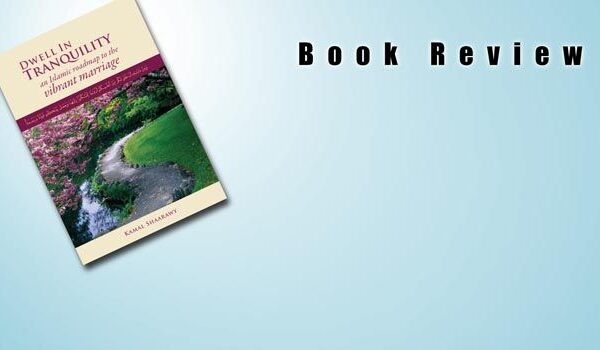
  • Book Review: Dwell in Tranquility: An Islamic Roadmap to the Vibrant Marriage

    Book Review: Dwell in Tranquility: An Islamic Roadmap to the Vibrant Marriage

    Title: Dwell in Tranquility: An Islamic Roadmap to the Vibrant Marriage

    Paperback: 344 pages

    Author: Kamal Shaarawy

    Publisher: Salaam Hearts, Inc.

    Price: $17.95 (order at livingeman.com)

    ISBN-13: 978-1885677006

    Our marriages are what we make them. With proper mindset and manner, we can make the marriage relationship peaceful and joyous. The opposite is also true: when we ignore the fundamentals that support and nurture successful marriage, we risk living in misery. The success of a marriage depends on more than physical chemistry; it requires cooperation, commitment, and know-how from both partners. Seldom do couples realize that knowing how to make the marriage work is necessary, and that the know-how is available for those who seek it.

    Unfortunately, people in troubled marriages are quick to blame their spouse, and just as ready to overlook their own issues that contribute to the dysfunction. The notion that a happy marriage is simply a matter of luck, or a guarantee by default, is put to rest by Kamal Shaarawy, author of Dwell in Tranquility: An Islamic Roadmap to the Vibrant Marriage. The author is a certified counselor, based in Phoenix, Arizona, who has provided help and support to countless couples for more than 20 years.

    The book has three parts and twelve chapters. Part one addresses the significance of marriage and the importance of preparing oneself for married life. It also provides guidelines for a smart, principled, and safe spouse-selection process. Part two addresses the origins of an unhealthy relationship, including influences from one’s family of origin, one’s own negative habits in daily living, and unhealthy relationship dynamics that can sabotage the marriage. Part three highlights the foundation of an Islamic model of marriage, and the many blessings that flow from such a union when properly understood and implemented. The author presents some essential tools such as communication skills (including listening skills), patience, gratitude, and the very Islamic practice of silence and reflection. What is at the heart of the successful marriage? Br. Shaarawy offers two overriding principles: honoring the spouse; and commitment to lifelong growth and change.

    Dwell in Tranquility is very distinctive in its content, style, and the quality of the author’s understanding based on extensive research and counseling experience. He shares a multitude of real-life counseling stories (with names and some details altered to protect privacy) to illustrate the back story of what went wrong, as well as, and most importantly, how the couples worked hard to gain knowledge and skills to correct their course and start to build a foundation for success and happiness.

    Br. Shaarawy rightly points out that Islam signals the importance of compatibility (“kufu”) in choosing a spouse; and then highlights how essential are “mawaddah” and “rahmah” (love, compassion, understanding, cooperation, tolerance, etc.) to nourish the marriage relationship. The author also points out that a husband or wife could be outwardly pious, performing all his or her religious rites and rituals, and yet be ignorant, negligent, or ineffective in contributing to a God-conscious, mature, and loving, relationship.

  • Thoughts on Thankfulness

    Thoughts on Thankfulness

    How can we thank Almighty Allah for all His great blessings upon us? For sure we are unable to do so properly or adequately in any ultimate way, as His bounties and blessings are endless. We can’t ever comprehend the extent of the favors granted to us, and if we try to count them, we can’t do it. As the Qur’an says: “But if you count the favors of Allah, never will you be able to number them” (Al-Qur’an 14:34). Everything that we possess including our health, wealth, and talents—all are given by Him. Our very existence and our continuing sustenance are also dependent on Allah’s will and favor. So whatever praise is due, it is due to Him alone, for nobody has the power to give us anything except by His will. It is for this reason that Allah (swt) commanded Prophet Ibrahim to say: “It is He who has created me, and so it is He who guides me; it is He who gives me to eat and drink, and whenever I am sick it is He who heals me; and it is He who makes me die and then will bring me to life. And upon Him, I pin my hope that He would forgive my sins on the Day of Judgment” (Al-Qur’an 26:77-82).

    The Prophet (pbuh) made it clear that expressing our  gratitude to Allah by thanking Him also involves thanking people who benefit us  or do favors for us

    Allah governs and sustains everything in this universe, and whatever happens to us — even the things we call personal afflictions or natural disasters — are also from Allah. To quote Ibn Ataa, “When Allah puts one of us to a test by losing one, two, or even five blessings, he feels that he is faced with a severe crisis. While in reality he has billions of blessings which Allah is bestowing on him every moment. In every cell in your body, there are countless blessings. In every second you live, there are countless blessings. In every breath you breathe, there are countless blessings. In every glance you make, there are countless blessings. Allah is the One who is worthy of [receiving our] thankfulness.”As a matter of fact, in times of calamity and distress, there is always some good for us, provided we respond appropriately. The Prophet said: “How wonderful is the case of a believer! There is good for him in whatever happens to him — and none, apart from him, enjoys this blessing. If he receives some bounty, he is grateful to Allah and this bounty brings good to him. And if some adversity befalls him, he is patient, and this affliction, too, brings good to him” (Muslim).

    So how can we express our gratitude to Allah (swt)? The first and foremost way for us to thank Allah is to be aware of His presence and His power at all times and in all places, and to keep in mind all the favors He has granted to us, whether these favors are seen or unseen. This awareness has tremendous impact upon our daily life, as this brings us to submission and servitude to our Lord. Eman (belief) implies shukr or gratefulness, while kufr (disbelief) indicates overlooking, ignoring, or concealing the favors. Obviously, if a man is ungrateful, Allah is unaffected, but if that man becomes grateful, then he is the one who gains in all ways. Gratitude for blessings brings us more blessings. As Allah says: “And [remember] when your Lord proclaimed: ‘If you give thanks, I will give you more [of My blessings]; but if you are thankless, verily, My punishment is indeed severe’” (Al-Qur’an 14:7).

    Second, our gratitude to God should be expressed through gratitude of the heart, gratitude of the tongue, and gratitude of the physical faculties. As Imam Ibn al-Qayyim explained: “Gratitude may be in the heart, in submission and humility; on the tongue, in praise and acknowledgement; and in the physical faculties, by means of obedience and submission” (Madaarij al-Saalikeen-2/246). As for the verbal expression of gratitude which is contradicted by action, Al-Tabari says, “the one who does that, does not deserve to be called grateful at all.”

    Third, we should also remember that gratitude is a sense of genuine fulfillment, not because we have ceased to want or desire the good things in this life, but because we have cultivated a profound sense of knowing that Allah has already blessed us with what we need. In one of the hadiths, the Prophet (peace be upon him) said: “…if the son of Adam has one valley, he will wish that he had a second, and if he had two valleys, he would wish that he had a third. The stomach of the son of Adam will be filled only with dust [i.e., he is never satisfied]…” (Ahmad – 5/219). If we wish to transcend that state of malcontentedness, we should learn to truly appreciate what we have rather than fretting over what we don’t.

    Finally, gratitude should help us recognize other people’s favors to us as well. The Prophet (pbuh) made it clear that expressing our gratitude to Allah by thanking Him also involves thanking people who benefit us or do favors for us. He (pbuh) said: “He who does not thank people, does not thank Allah” (Ahmad, Tirmidhi). He also said: “Whoever does you a favor, then reciprocate, and if you cannot find anything with which to reciprocate, then pray for him until you think that you have reciprocated him” Abu Dawood (1672).

    Truly in gratitude we can find our contentment and fulfillment, our peace and final salvation.


  • Family Campaign Resolution

    Family Campaign Resolution

    The family is indeed the most fundamental unit of society – it is the cornerstone and the foundational unit of the social, cultural and religious structure of our world. It is a divinely inspired and ordained institution that came into existence with the creation of man. A sound family can grow and flourish only if man, woman and children are bound in a solid relationship of love, care, compassion and kindness, which has far-reaching results for both individuals and the society.

    Like all great religions, Islam also emphasizes the institution of marriage. God says in the Holy Quran: “And among His Signs is this, that He created for you mates from among yourselves, that ye may dwell in tranquility with them, and He has put love and mercy between your (hearts): verily in that are Signs for those who reflect.” (30:21) Marriage in Islam is considered to be “half of faith,” as related in a famous tradition of Prophet Muhammad, peace be upon him.

    The Qur’anic commandments are clear that require Muslims to be mindful about their marital responsibilities and obligations. The Islamic prescription for success in married life is based on taqwa (fear and consciousness of Allah) which is the basis of all aspects of Islamic life. This is why Surah an-Nisa, which gives many commands regarding rights and responsibilities of spouses, begins with repeated reminders of taqwa (God-consciousness).

    In order to prevent the increasing breakdown of marriages, counseling must be adopted as the very first priority within every community. We should teach our young men and women in the community what it means to be a good husband or wife. Our masajid, Islamic community centers and national Islamic organizations must arrange premarital and marriage counseling on a regular basis. Healthy marriages should be part of a curriculum within our youth programs, conferences, and seminars as well as part of our adult programs in our masajid and in our Jumuah khutbahs.

    Secondly, our community needs to take a strong stand against abusive spouses. Sadly, violence against women is a reality in our society and it must be addressed collectively by our community members. We must respond to all complaints or reports of abuse as genuine and we must take appropriate and immediate action to ensure the victim’s safety, as well as the security of any children that may be involved. Women who seek divorce from their spouses because of physical abuse should get full support from the community and should not be viewed as someone who has brought shame to herself or her family. In addition, we should not make it easy for people who have a previous history of abuse to remarry if they have already victimized someone. Further, we should support people who work against domestic violence in our community, whether they are educators, social service providers, community leaders, or other professionals. Through these measures, we will send a strong message that domestic violence, under no circumstances, will not be tolerated.

    Thirdly, parents and children must mutually work toward having open communication in order to diminish the generation gap which naturally arises. In order to successfully implement this, the spouses must first be in harmony and agreement; for this, it is necessary for the two of them to work in partnership and reinforce one another, instead of giving mixed signals to their children. Parents must express their love for their children, respect their feelings and opinions and recognize their need for self-esteem, especially among their friends. They must treat all their children, whether boys or girls, equally. All respect is reciprocal. Children love and respect those parents who love and respect them. Also, if we respect our parents, then our children will respect us.

    Fourthly, the mosque must take up the responsibility to keep our youth busy with positive and stimulating activities. Attractive alternatives must be provided to the youth so that they prefer worthwhile activities such as community service, sports, and Islamic study circles over “hanging out” at the mall/pizzeria, free mixing with members of the opposite gender, and being at risk for indulging in drinking, drugs and sexual immorality. Counseling for the youth, when necessary, must be an available option too.

    Lastly, all efforts should be made from the community as well as the media that a sustained focus on family is emphasized – one which tries to provide stability, serenity, and support to families in general. In this vein, support groups within communities will go a long way as well. Indeed, a healthy family helps build a healthy society. This is not just a slogan – it is part of our collective wisdom. Yet, in the face of growing social evils and challenges to the institution of family, we must proactively and consistently work together to convert this inherent belief into a reality.

  • Getting Rid of the “Greed is Good” Culture

    Getting Rid of the “Greed is Good” Culture

    As the whole world is experiencing unprecedented pain and panic because of the ongoing global financial crisis and is wondering how to get out of this hell hole, the Vatican suggested on March 4, 2009, that the basic rules of Islamic finance could relieve suffering markets and particularly international financial systems. In an article titled “Islamic finance proposals and ideas for the West in crisis,” which was published in its weekly newspaper, ‘L’Osservatore Romano, the Vatican observed that ethical principles upon which Islamic finance is based offers the best chance of getting banks closer to their clients and “to the true spirit that should mark every financial service.” While the Vatican has always been critical of the destructive excesses of the interest-based conventional financial system, it is perhaps the first time the Vatican has endorsed the values of Shariah-compliant finance as a solution to the problems in the world of conventional, interest- based finance. We applaud the Vatican’s encouraging statement and hope all practitioners would pay attention to it.

    It is worth mentioning that for many decades, “economists were largely dismissive- even derisive-of what they viewed as the somewhat ‘extreme’ and ‘regressive’ precepts of Islamic economics.” Islamic economy has been a neglected phenomenon almost everywhere, and its principles remained generally unnoticed in the West and in most part of the Muslim world, even though several Islamic Banks started operating there since the early eighties and established themselves as successful financial ventures.

    The general disenchantment and/or denial attitude toward Islamic finance (IF), however, got changed and this unconventional financial principles started making a lot of sense to our financial experts in the West, as “it reels under the astronomical amounts of debt created by its interest-based banking system and speculation-driven derivatives.” It is reported that the global debt caused by financial instruments and derivates alone is over $600 trillion today, which is more than 10 times the world’s GDP. The present crisis is so acute and unnerving that many mainstream economists have started questioning their faith in capitalism itself. Even before the current financial crisis surfaced, John Nofsinger and Kenneth Kim, for example, wrote their famous book “Infectious Greed: Restoring Confidence in America’s Companies” (2003), wherein the learned authors asserted that “corporate financial scandals have shaken investor confidence more than any event since the Great Depression.” Almost similar assertions were made in another book: “Wall Street versus America: A muckraking look at the thieves, fakers, and charlatans who are ripping you off” which was written by Gary Weiss (2006).

    Recently, when it became clear that no stimulus package is going to rescue the global financial system from further fall out, a former Austrian Chancellor argued that “the free-for-all capitalism should be quickly replaced with a financial-economic system that equitably takes care of the socio-economic needs of people in order to prevent such exploitation and greed now wrecking financial/economic havocs worldwide”.  He argued that “profitability” of a business is relegated to a mere necessity to enable to serve society rather than a luxury vehicle for serving greed of CEO’s and those related individuals at the expense of innocent investors and society.

    Interestingly, this is what was ordained by God in the Qur’an and taught by His Last Messenger, Prophet Muhammad (peace and blessings of God be upon him) more than 1429 years ago.  The Qur’an says: “Allah has permitted trade and forbidden usury (Riba).” (Al-Baqarah:75); “Allah will deprive usury of all blessings, but will give increase for deeds of righteousness and charity.” (Al-Baqarah: 276); “Do not eat up your property among yourselves for vanities, nor use it as a bait for the judges with intent that you may eat up wrongfully and knowingly a little of other people’s property.” (Al-Baqarah:188. The Prophet Muhammad (pbuh) instructed, “Leave what raises doubt and turn to what you see is clear.” (At-Tirmidhi and An-Nasai); “The person who violates his oath draws on himself Allah’s wrath and punishment.” (Al-Bukhari). In other words, Islamic guidelines require and ensure fair play, trust and transparency and want to create a strong sense of God-consciousness and accountability in the hearts of the people which would make it difficult for them to be driven by greed. It speaks for the practice of socio-economic equitable justice, banking system without Riba (interest/usury), non-monopolistic enterprises, non-hording of goods, payment of Zakat and Sadaqah (fulfilling the societal obligations by the rich) and observing strict ethical standard.

    To be honest, the global crisis we are facing today is a man-made disaster. Unless we become more humane and change our course of actions and adopt appropriate measures to address this challenge, the existing “greed is good” culture will ruin our society and economy further and the future of humanity will be even at a much bigger risk. The early we get rid of this malaise, the better for the humanity.

  • WHO IS MUHAMMAD ﷺ?

    WHO IS MUHAMMAD ﷺ?

    “Perhaps the world was never in greater need of an accurate account of Prophet Muhammad’s life than it is now.” So states Adil Salahi, author of Muhammad: Man and Prophet. After 9/11, for whatever reason(s), many people began asking themselves: Just who is this Muhammad? As a result, awareness of Islam and the Prophet Muhammad has increased considerably. And yet so many people still do not really know who he was and what legacy he left behind. The recent infamous caricatures are a further reminder that many people’s understanding of Muhammad is indeed flawed and far from the facts.

    Such a lack of knowledge is, however, rather surprising, for unlike most other prophets or religious personalities whose life stories are full of myths and legends, Muhammad lived in the full light of history. Almost every aspect of his life was recorded by those who lived with him and knew him intimately, and so we do not have to guess at what he said or did. When we read this vast body of literature, we can see that he was a man of exalted character and compassion, one who was kind and considerate to all people, regardless of how they treated him, and even to animals and plants. His revolutionary message changed not only his own society, but the very course of history, facts that even his bitterest enemies have acknowledged. Today, more than 1,400 years later, more than 1.5 billion people revere him and follow him as God’s last messenger.

    The veneration of Muhammad is not limited to his followers, for many great philosophers, thinkers, and reformers have praised him and said that it would be to humanity’s great benefit to follow his teachings. George Bernard Shaw called him “the savior of humanity” and said, “I believe that if a man like him were to assume the dictatorship of the modern world, he would succeed in solving its problems in a way that would bring it much needed peace and happiness” (The Genuine Islam, Singapore, Vol. 1, No. 8, 1936). Echoing him, French historian Lamartine wrote, “As regards all standards by which human greatness may be measured, we may well ask, is there any man greater than he?” (Histoire de la Turquie Paris: 1854) Similar statements were made by Thomas Carlyle, Edward Gibbon, and Mahatma Gandhi, to name only a few.

    Born in Makkah in 570, Muhammad grew up as an orphan: his father died before he was born, and his mother died when he was only six years of age. He remained unlettered along with most of his contemporaries. But his noble and upright character, as displayed in his dealings with people while he was growing up, raised his status so high in the eyes of his fellow people that they nicknamed him al-Ameen (the trustworthy) long before he received revelation from God. It was only after Muhammad declared his prophethood did the Makkan polytheists turn against him.

    When the Makkan leaders unleashed their hostility against him and his companions, he could still be heard saying, “O Allah. Forgive my people, for they don’t know.” For example, when he went to Ta’if, a village about 50 miles southeast of his hometown, Makkah, to spread Islam, they set the street urchins upon him to chase him and throw rocks at him until they drove him out of town. Even at that point, when he was utterly exhausted and bleeding from head to foot, all he said was, “O my Lord, guide my people along the true path, as they are ignorant of the truth.” This is just one of the many examples in the life of the Prophet who faced constant death threats, actual attempts on his life, and abuse and humiliation at the hands of those threatened by his simple yet profound message: there is no God but Allah and Muhammad is His Messenger.

    When the Makkan Quraish forced him and his companions to leave Makkah, the Prophet migrated to Madinah. Even in Madinah, the Prophet and his followers were not left alone to practice their religion. The Makkan leaders rallied forces to eliminate him and his followers. It was in this context that the Prophet took up arms to defend himself and his followers. Yet, while doing so, he never compromised the sacred principle of sanctity of life and the ethics of just war. He never allowed the killing of anyone except those involved in the fighting; he issued clear orders against killing of civilians, including women, children, and even those who were engaged in worship of any kind. Later, when Muhammad prevailed over the Quraish and conquered Makkah, he pardoned his enemies and let them go free.

    Muhammad, the man, is the greatest testimony to the truth he preached. Let’s know this man and explore his truths…

    Today no matter how Islamophobes taunt him or label Islam, the fact is that Prophet Muhammad never preached violence. It’s simply mind-boggling that he would be made responsible for any individual Muslim’s misreading of his message and committing any mischief in the name of Islam. Contrary to the widely held notion in the West and some parts of the East, the very concept of ‘holy war’ even does not exist in Islam. According to Islam, war can only be characterized as either just or unjust, not holy. The Qur’an is categorical in denouncing all wars of aggression. “And fight in God’s cause against those who wage war against you, but do not commit aggression—for, verily, God does not love aggressions” (Al-Baqarah 2:190). The Qur’an also forbids Muslims from attacking anyone who allows others to live in peace. “Thus, if they let you be, and do not make war on you, and offer you peace, God does not allow you to harm them” (An-Nisaa’ 4:90).

    As a matter of fact, Muhammad preached mercy and respect to all of God’s creation. His heart was filled with love for people irrespective of their caste, creed, color or gender. He advised his companions to regard all people as their brothers and sisters. He said, “You are all Adam’s offspring and Adam was born of clay.” The Prophet is also reported to have said, “By God, he is not a believer, by God, he is not a believer, by God, he is not a believer, with whom his neighbors are not secure.” The Prophet never tolerated any indecent manner, let alone injustice done to anybody. He warned the Muslims against the mistreatment of non-Muslims in a Muslim-dominated land by saying, “Whoever oppresses the non-Muslim subjects shall find me to be their (oppressed people’s) advocate on the Day of Judgment (against the oppressing Muslims). He also said, “Those who commit injustice upon people in this world will be the most losers in the hereafter and will find their place in the Hellfire.” The Prophet thus taught people how to live among others like flowers, not like thorns.

    The Prophet’s own example was testified by Anas ibn Malik, who served the Prophet for ten years. He said that the Prophet never ever rebuked him. “When I did something, he never questioned my manner of doing it; and when I did not do something, he never questioned my failure to do it. He was the most good-natured of all men.” Indeed, the Prophet was an extremely kind-hearted person. “Repel evil with good” was his dictum and dictate. He was considerate to his family and friends. He was a loving father, a generous husband, and a caring neighbor. His gentleness, dignified demeanor, his universal benevolence and courtesy, his equal treatment of friends and strangers, the powerful and the weak, and his generosity to the latter naturally endeared him to those who came in touch with him, and gained him respect, admiration, and love. He was the exemplifier and embodiment of the best a person can think of or aspire to be.

    In short, Muhammad preached a religion, founded a state, laid down a moral code and brought out reforms. His sublime teachings have passed the test of time and place in that these are universal values sought after by mankind in all ages and places. Following his footsteps is the surest way to establish “kingdom of God” on the earth once again.

    The world has witnessed many prophets including the towering figures of Abraham, Moses and Jesus (peace and blessings of God be upon them all), and Muhammad paid high tributes to all of them and made it incumbent upon his followers to do the same. Many great thinkers, philosophers and leaders also made great contributions to human civilization, but none of them superseded the achievements and impacts of Muhammad. His greatness is truly unique. A mercy to the mankind, he is the most remarkable man ever to have set foot on this earth.

    How can anyone mock and malign such an icon of history – someone who is the pride of the whole of humanity? Surely, it’s either ignorance or prejudice that is breeding this sort of bigotry. It is also an insult on human conscience and intelligence.

    Muhammad, the man, is the greatest testimony to the truth he preached. Let us know this man, explore his truths and make this world a better place to live in.